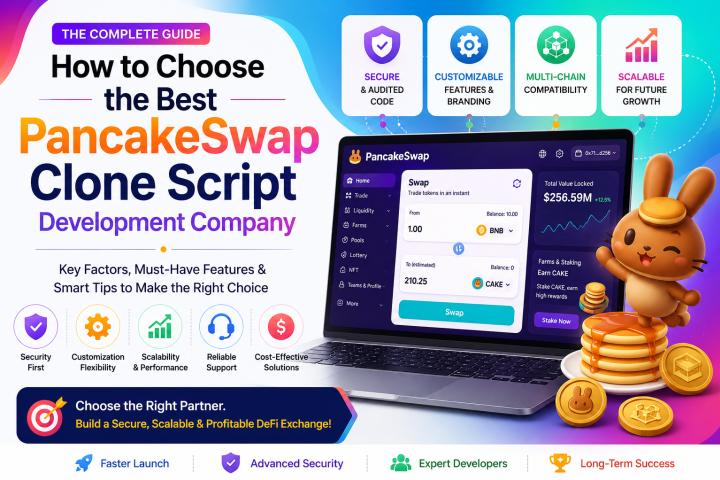
A PancakeSwap clone script is a ready-to-use software package that helps you build a decentralized exchange like PancakeSwap quickly. It offers features like token swapping, liquidity pools, and yield farming, all set up for blockchain networks such as Binance Smart Chain. With customizable designs and smart contracts, you can launch a DeFi platform efficiently, saving time and effort while entering the growing DeFi market.
Understanding PancakeSwap’s Role in DeFi
PancakeSwap is a leading decentralized exchange, known for its low fees and fast transactions on Binance Smart Chain. It allows users to trade tokens, add liquidity, and earn rewards through various programs. Its simple interface attracts both new and experienced users.
The platform uses an automated market maker system, where prices are set by liquidity pools, not order books. Contributors to these pools earn fees, supporting active participation. Additional features like lotteries and NFT trading make it engaging. A clone script replicates these functions, enabling you to create a similar platform.
Launch your DeFi platform today! Get a PancakeSwap clone script to create a secure, scalable exchange fast. Contact a trusted provider now to join the DeFi market!
Why Use a PancakeSwap Clone Script for Your DeFi Platform
A clone script speeds up the launch process, letting you deploy in weeks instead of months. It reduces costs by using pre-built, tested code, avoiding extensive development work.
Customization options allow you to adjust branding or add unique features to target specific audiences. Built for scalability, it handles growing user bases. Operating on Binance Smart Chain ensures low transaction costs, making it accessible to more users.
The script’s familiar interface attracts PancakeSwap users, boosting adoption. It’s a practical choice for entering DeFi quickly.
Step 1: Choose a Reliable PancakeSwap Clone Script Provider
Start by selecting a trusted provider offering a high-quality clone script. Look for clean, audited code and good support. Check reviews or community feedback to ensure reliability.
Download the script and review its documentation to understand setup requirements. Confirm it includes core features like token swapping, liquidity pools, and staking. A solid provider offers updates and technical assistance, easing the launch process.
Step 2: Set Up Your Server and Hosting Environment
You’ll need a server to host your platform. Choose a domain name and hosting service that supports blockchain integrations. Ensure the server has enough capacity for traffic and transactions.
Install necessary software, like Node.js, for running the script. Configure security settings, such as SSL certificates, to protect user data. A stable hosting environment ensures smooth operations and user trust.
Step 3: Deploy Smart Contracts on Binance Smart Chain
Deploy the script’s smart contracts on Binance Smart Chain. This includes the factory contract for creating liquidity pools and the router contract for handling trades.
Use tools like Remix or Truffle to deploy contracts. Test them on a testnet first to verify functionality, such as token swaps and pool creation. Ensure the contracts are secure and audited to prevent vulnerabilities.
Step 4: Connect Frontend and Backend Systems
The clone script typically includes a React-based frontend. Connect it to the backend using Web3 libraries to interact with smart contracts. This enables features like trading and staking.
Test the connection to ensure users can perform actions like depositing tokens or viewing balances. Check that the interface is responsive on desktop and mobile devices for better accessibility.
Step 5: Configure Liquidity Pools and Token Pairs
Set up liquidity pools by adding initial token pairs. The script’s factory contract creates these pools, allowing users to deposit tokens and earn fees.
Configure trading pairs based on your target market, such as stablecoin-token pairs. Ensure the pools have enough liquidity to minimize slippage during trades. Provide clear instructions for users to add liquidity.
Step 6: Set Up Yield Farming and Staking Features
Enable yield farming by configuring contracts that reward users for staking LP tokens. Set reward rates carefully to balance incentives and token supply.
Add single-token staking pools for simpler options. Test these features to confirm users receive rewards correctly. Clear dashboards showing earnings help users track their returns.
Step 7: Integrate Wallets for User Access
Integrate popular wallets like MetaMask, Trust Wallet, or Binance Wallet for seamless user access. Use secure APIs to connect wallets without storing private keys.
Test wallet interactions, such as connecting and signing transactions. Support for BEP-20 tokens ensures compatibility with Binance Smart Chain assets. Easy wallet access improves user onboarding.
Step 8: Customize the Platform’s Design and Features
Customize the platform’s look with your branding, including logos, colors, and fonts. Adjust the interface to be intuitive and visually appealing.
Add unique features like governance voting or NFT marketplaces to stand out. Ensure customizations don’t break core functions, testing thoroughly after changes.
Step 9: Test Your Platform on a Testnet
Launch a testnet version to identify bugs. Test key actions like swaps, deposits, and reward claims. Invite beta testers to provide feedback on usability and performance.
Fix any issues, such as slow loading or transaction errors. A stable testnet ensures a smoother mainnet launch.
Step 10: Launch on the Mainnet and Monitor Performance
Once tested, deploy the platform on the mainnet. Announce the launch through social media and crypto communities to attract users.
Monitor performance using analytics tools to track total value locked, user activity, and transaction volumes. Set alerts for issues like network congestion or suspicious activity.
Security Measures for Your DeFi Platform
Security is vital to protect funds. Use audited contracts to avoid vulnerabilities like reentrancy attacks. Implement time locks for admin changes and emergency pauses for threats.
Encourage third-party audits and bug bounties to catch issues early. Add two-factor authentication for user accounts and educate users on safe practices, like verifying transactions.
Marketing Your DeFi Platform Post-Launch
Promote your platform with social media campaigns, sharing airdrops or launch events. Partner with crypto influencers to reach wider audiences.
List on aggregators like CoinMarketCap for visibility. Host community events, such as AMAs, to build trust and engagement. Tutorials and guides keep users informed.
Handling Challenges During DeFi Platform Operations
Regulatory changes can impact DeFi, so stay updated on laws. Technical issues, like chain congestion, require backups and monitoring.
Educate users to avoid errors, such as incorrect deposits. Offer clear support channels to address concerns quickly.
Scaling Your Platform as Users Grow
Plan for growth by upgrading servers and optimizing contracts. Layer-2 solutions can handle increased traffic.
Test under high loads to ensure stability. Scalability ensures your platform supports a growing user base without issues.
Adding Advanced Features to Your Clone Script
Enhance your platform with features like cross-chain support for Ethereum or Polygon. NFT minting or trading can attract new users.
Oracles for real-world data enable prediction markets. Governance voting engages the community. Test all additions to maintain core functionality.
Analytics for Tracking Platform Success
Use tools like Dune Analytics to monitor metrics like daily users and trading volume. Dashboards display key data for quick insights.
Alerts for unusual activity help prevent losses. Data-driven decisions improve platform performance and user satisfaction.
Tokenomics for a Sustainable DeFi Platform
Design a native token with clear uses, like rewards or voting. Use burns or buybacks to manage supply.
Fair token distribution builds trust. Balanced tokenomics support long-term growth and user confidence.
Future Trends for DeFi Platforms
DeFi is adopting layer-2 solutions for faster, cheaper transactions. Privacy features like zero-knowledge proofs are gaining interest.
Cross-chain interoperability expands token access. Sustainable blockchains appeal to eco-conscious users, shaping DeFi’s future.
In closing, a PancakeSwap clone script offers a clear path to launching a DeFi platform. Follow these steps, prioritize security, and focus on user needs to build a successful exchange.