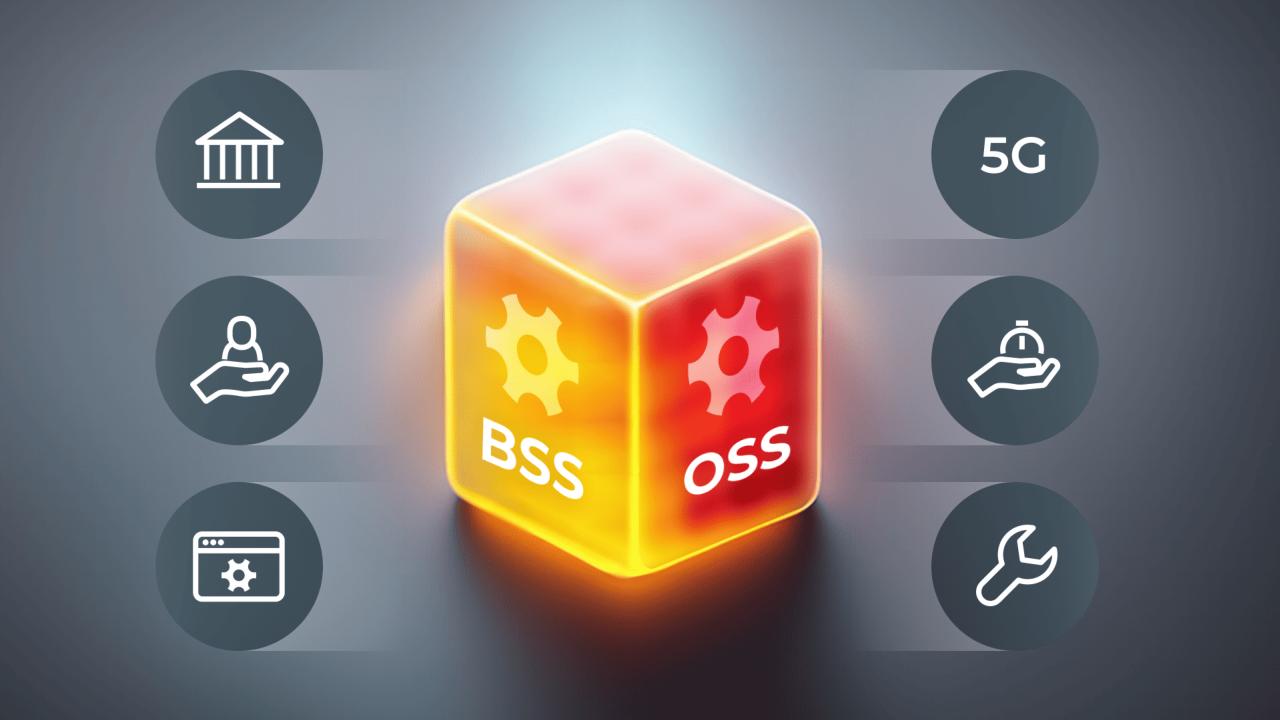
In the invisible engine room of the world's telecommunications networks, a silent revolution is underway. Operational Support Systems (OSS) and Business Support Systems (BSS), the once-backoffice software platforms, have been thrust into the spotlight. They are no longer mere utilities; they are the critical digital brainstem that enables telecom operators to innovate, automate, and compete in the era of 5G, IoT, and hyper-personalized services.
The strategic importance of this technological core is reflected in its staggering growth. According to Straits Research, the global OSS BSS landscape was valued at USD 68.79 billion in 2024 and is projected to reach from USD 78.39 billion in 2025 to USD 222.83 billion by 2033, growing at a CAGR of 13.95% during the forecast period (2025-2033). This expansion is directly fueled by massive 5G deployments, the urgent need for network automation, and the competitive drive to launch new digital services at unprecedented speed.
Key Players and the Cloud-Native Shift
The competitive field is a mix of legacy vendors and agile new entrants. Ericsson (Sweden) and Huawei (China) continue to be dominant forces, leveraging their deep network expertise to offer tightly integrated OSS/BSS suites. Ericsson's recent focus has been on its 5G core and BSS solutions, enabling operators to create granular network slicing offers and real-time charging for enterprise clients.
The most significant shift, however, is towards cloud-native, open-architecture platforms. Amdocs (USA) is a leader in this space, recently announcing major updates to its microservices-based suite, which allows Communication Service Providers (CSPs) to deploy new services in days instead of months. Similarly, Netcracker (USA, subsidiary of NEC Japan) is gaining ground with its fully digital portfolio, emphasizing AI-driven analytics for customer engagement and revenue assurance.
Global Trends: Automation, AI, and 5G Monetization
The overarching trend is hyper-automation. CSPs are investing heavily in OSS that can autonomously manage network resources, predict failures, and self-heal. This is crucial for managing the complexity of 5G networks. In the BSS domain, the focus is on monetization. AI-powered systems are now essential for creating personalized customer plans, managing loyalty programs, and preventing revenue leakage in real-time.
Another key trend is the move towards BSS/OSS convergence. The traditional silos between the network operations (OSS) and business/customer operations (BSS) are breaking down. Integrated platforms now allow a customer's service issue to be instantly correlated with network performance data, enabling proactive customer care and vastly improved experiences.
Regional Developments and Recent News
Strategic moves are happening globally. In a significant recent development, IBM (USA) expanded its partnership with a major European telecom vendor to co-develop hybrid cloud solutions for OSS workloads, addressing data sovereignty concerns in the region.
From India, tech giant Tech Mahindra has made a strategic push into the OSS space, acquiring specialized firms to build out its capabilities for managing multi-vendor networks. This positions them as a key systems integrator for operators in emerging economies. Meanwhile, in the Middle East, a consortium of operators has partnered with Oracle Communications (USA) to implement a new, cloud-based BSS platform aimed at standardizing and streamlining digital services across the Gulf region.
Summary
OSS and BSS have evolved from backend systems into the central nervous system of modern telecom operators, enabling 5G, IoT, and customer-centric innovation. Driven by cloud-native transformation and AI, key global players are helping providers automate operations and create new revenue streams. This technological evolution is fundamental to the business survival and growth of communication providers worldwide.