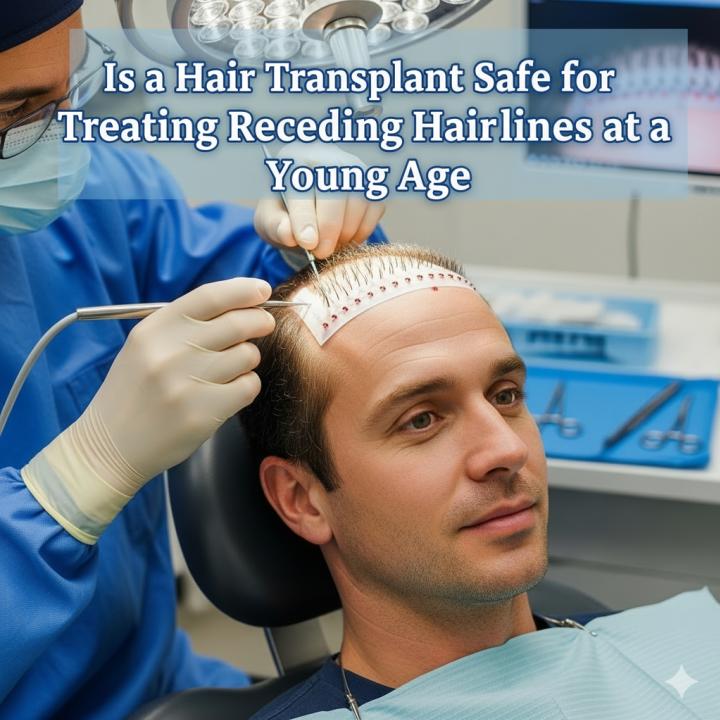
It is not uncommon to encounter young men asking, "Should I consider a hair transplant at this age with receding hair?" In the realm of hair restoration treatment, which has transformed over the years, there is not a yes or no answer to this question. Your timing, scope for any future hair loss, skill of your hair transplant surgeon in Varanasi, and personal circumstances apply here. Overall, if hair transplants were safe and effective, transplants could provide young men with a natural and consistent lasting result for hair loss; however, proper planning is the key.
Younger Men's Receding Hairlines
Receding hairlines are not just seen in older men. Many younger men in their 20's and early 30's begin to see thinning at the temples or frontal scalp, which can be considered early signs of male pattern baldness.
Common Causes
- Genetics remain the primary cause of early loss of hair in men.
- Hormonal Changes, which may include too much dihydrotestosterone (DHT) secretion, shrink hair follicles leading to receding hairlines.
- Life>
The Norwood Scale is often used by physicians to monitor hair loss progression. However, the progression can appear quite vague for young men, starting with early or mild patterns, and can progress rapidly. Evaluating younger men for progressive hair thinning and loss as early as possible is imperative.
Evaluating the Candidacy for a Hair Transplant in Young Men
Despite the fact that a hair transplant can technically be performed as early as age 20, not all young men are suitable candidates. The physicians take into account a variety of considerations before recommending surgery:
- Age and Hair Loss Maturity: Hair loss should be stable enough, which usually occurs after age 25.
- Stability of Hair Loss: If transplanted too early, the surrounding hair will continue to thin out, creating unnatural gaps.
- Quality of Donor Hair: The overall success of a hair transplant depends heavily on the quality of hair follicles (dense and healthy) from the back and demonstrated side areas of the scalp.
- Family History of Hair Loss: Family history and the pattern in which hair loss occurs lay good groundwork for planning a long-term hair restoration approach.
- Medical History: Consider any underlying conditions such as an underactive thyroid or low vitamin levels that should be ruled out as possible causes of hair loss.
Risks of Early Hair Transplantation
An early hair transplant may be satisfactory in the short term, but thought through in the long term:
- Continued Hair Loss: Patients may experience continued hair loss, and transplants may look patchy.
- Multiple Surgeries: More than one session may be needed as their baldness continues.
- Unrealistic Expectations: Younger patients expect a hair transplant to be instant, permanent, and undisputed without a full understanding of how hair loss is progressive.
Surgical Procedures for Younger Men
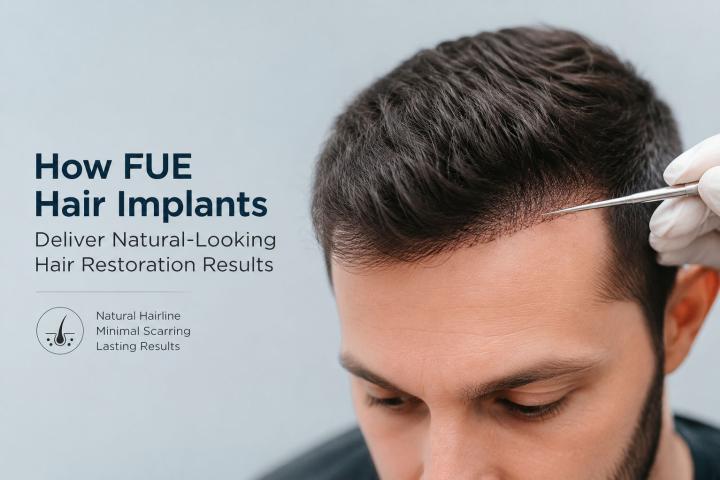
1. Follicular Unit Extraction (FUE):
- Extraction of individual grafts and subsequently implanting as individual grafts.
- Minimally invasive procedure, no linear scar.
- Suitable for younger, active men who prefer to keep their hair shorter.
2. Follicular Unit Transplantation (FUT):
- Removal of a strip of scalp and the removal of individual grafts, and subsequently inserting into sections.
- It typically affords a higher number of grafts to be harvested in one session.
- Suitable for extensive coverage or restoration, although a fine horizontal scar will remain.
3. Direct Hair Transplantation (DHT):
- Extraction of grafts and immediately implanting them into the desired bald area on the scalp.
- The handling time is reduced, maximizing the viability of grafts to survive.
- Reduces the time for healing, and typically provides a more dense result.
Conclusion
Is it safe for younger males with progression male pattern baldness to consider hair restoration? Yes, of course, if it is done slowly, thoughtfully, and specifically for the individual. The best and safest method will involve stabilising the hair loss first, medically treating the individual, and then considering surgical hair restoration when there is a predictable loss (the restoration should be guided when hair loss may be predictable). With the appropriate timing, simple planning, and simple technique restoration can restore not just the hairline but restore the confidence that was lost along with hair - naturally and safely. Get in touch with your hair transplant surgeon in Varanasi for more insights.
Learn more: Is hair transplant a safe procedure?