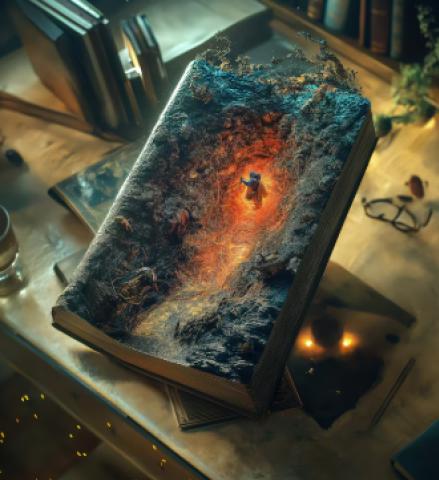
Storytelling Meets the Digital Age
For decades, Dungeons & Dragons
has been the ultimate exercise in imagination. At the table, the Dungeon Master
is both narrator and referee, weaving sprawling tales of adventure while
improvising around the unpredictable choices of the players. Storytelling is at
the heart of this game but in the age of artificial intelligence, even that
sacred role is changing. AI is no longer just a buzzword in tech circles; it is
becoming a co-creator in entertainment, and tabletop role-playing games are no
exception. Many Dungeon Masters now experiment with AI story generators to draft characters and lore, polish dialogue
with an AI humanizer, or use a conclusion generator to brainstorm
dramatic endings. It is as if the DM suddenly has a silent co-DM, always ready
with fresh ideas when the dice roll into chaos.
How
DMs Are Already Using AI
The applications are surprisingly
diverse. A campaign often lives or dies on the strength of its non-player
characters, but inventing personalities and backstories for every tavern
keeper, guard captain, or mysterious stranger can drain a DM’s creative reserves.
Here, an AI story generator
can step in, producing a quick sketch of a character’s history, motives, or
even snippets of dialogue. What was once a vague idea “a suspicious merchant in
the market” can be fleshed out into a fully realized figure in seconds,
complete with quirks, secrets, and emotional layers.
Worldbuilding, too, benefits from
AI’s assistance. Fantasy maps that once required painstaking drawing or
expensive commissions can now be conjured through AI-driven image tools. A DM
might request “a sprawling desert city with hidden catacombs beneath it,” and
within minutes, have a visual prompt to inspire descriptions. The same applies
to dungeon puzzles or traps. A DM faced with a creative block can ask the AI
for riddles involving light, sound, or magical mechanics, and then adapt the
suggestions to fit their world. Even quests and side missions the bread and
butter of keeping campaigns dynamic can be sparked by AI prompts. Instead of staring
at a blank page, DMs can generate a handful of hooks and choose the one that
feels most exciting.
And then there are endings. Campaign finales are some of the hardest moments to plan because they must balance closure with flexibility. Some DMs are experimenting with conclusion generators to explore possible arcs: perhaps the villain is redeemed, the realm is shattered by war, or the heroes ascend to godhood. These AI-suggested conclusions serve as scaffolding that the DM can shape into something uniquely suited to the players’ journey.
The Benefits of Machine Creativity
For Dungeon Masters, the advantages
are hard to ignore. The most obvious is time. Preparing for sessions can be a
heavy workload, especially when juggling full-time jobs or school. With AI,
preparation becomes faster, giving DMs more energy to focus on improvisation at
the table. It also opens the door to endless creativity. AI doesn’t tire or run
out of ideas; it can generate as many NPCs, traps, or quests as needed,
providing a reservoir of inspiration whenever creativity falters.
Another benefit is surprise.
Sometimes DMs themselves want to be shocked by where a story could go. Feeding
prompts into an AI tool can yield unexpected twists, which can be woven into
the campaign to delight both players and DM alike. AI can also help maintain
consistency. If a DM is running a large campaign with multiple story arcs,
using an AI humanizer
ensures that the narrative voice stays polished and unified, even when
different parts were drafted at different times. Finally, these tools lower the
barrier to entry for new DMs who might feel overwhelmed by the enormity of
worldbuilding. With a little AI help, even a beginner can run a campaign that
feels rich and layered.
Blending
Human and Machine
So how should a Dungeon Master
integrate AI without losing their own creative spark? The key is to use AI as a
drafting assistant, not a replacement. Let it handle the heavy lifting of
brainstorming names, drafting side quests, or suggesting environmental
descriptions. Then layer on your own creativity the quirks, humor, and personal
touches that make your world feel alive. Dialogue is a good example. AI can
generate a rough monologue for an NPC, but running it through an AI humanizer
or rewriting it yourself ensures it flows naturally and matches your campaign’s
tone.
It also helps to set limits. Maybe
you use AI for only one or two aspects of prep each week, such as generating a
puzzle or filling out an NPC’s backstory. This keeps the balance between human
creativity and machine assistance. Another best practice is to maintain a
campaign bible a record of lore, names, places, and events so you can check AI
outputs against your established world. This prevents contradictions and keeps
your story cohesive. Finally, don’t be afraid to involve players. Share an
AI-generated side quest hook and let them choose how to adapt it. This
collaborative approach gives everyone more investment in the narrative while
ensuring the AI doesn’t dominate.
A
Glimpse of the Future
Looking ahead, it’s not hard to
imagine a world where fully AI-curated campaigns are possible. Picture a DM
starting a new campaign by inputting preferences into a story generator: the
tone, the setting, the themes. The AI drafts an entire arc, complete with NPCs
and branching quests. During play, when the party takes an unexpected turn, the
DM prompts the AI for an instant description of a haunted marsh or a new
villain. At the end, a conclusion generator offers multiple epilogues based on
the choices made. The result is seamless, polished, and endlessly scalable.
But will it feel the same? Probably not. What makes Dungeons & Dragons enduring isn’t just the story but the imperfections the jokes that spiral out of control, the NPCs who become beloved by accident, the sudden failures that rewrite destinies. Those chaotic, deeply human elements are difficult for any algorithm to replicate. Even if an AI creates flawless maps and plots, it lacks the spark of improvisation that comes from genuine human connection around a table.
The Human Touch Remains Supreme
AI has an undeniable role to play in
the future of tabletop storytelling. A Dungeon Master with access to story
generators, image tools, humanizers, and a conclusion generator
wields a toolkit that can streamline prep, inject surprises, and broaden
creative horizons. But the heart of the game the laughter, the tears, the
unpredictable choices still belongs to the humans at the table.
The best campaigns will be those
where AI and human imagination blend seamlessly: the machine offering sparks of
creativity, the DM shaping them into a tale that feels alive. Players don’t
just want polished prose or clever puzzles. They want to feel that their
choices matter and that the world responds in ways no script could predict.
That will always require a human storyteller at the helm.
For those curious about how these
tools are evolving beyond gaming, check out this detailed review of MyEssayWriter.ai. It shows how AI writing systems are growing more advanced,
more flexible, and, yes, more controversial. Just as in journalism or academia,
the conversation is not about whether AI should be used, but how transparently
and creatively we choose to use it.
Whether you’re drafting essays or guiding a band of adventurers through dragon-infested dungeons, one truth remains: machines can generate, but only humans can truly tell stories.
Want to
read more? Check out these blogs:
From
Pen to Algorithm: How AI is Quietly Becoming the Writer’s Co-Author
How
We Went From Pen and Paper to Code and Cloud