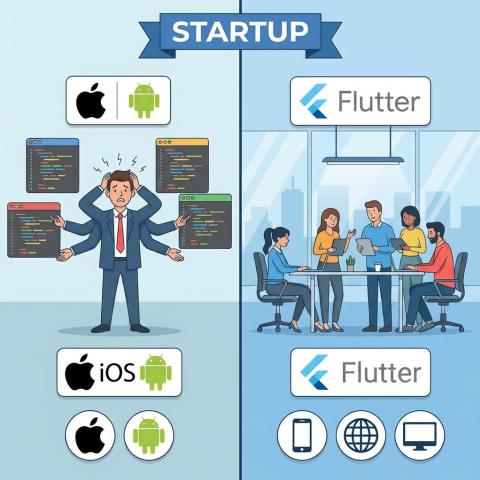

When selecting a partner to build your mobile application, choosing the right Flutter App Development Company is a major decision that influences the final product's quality and speed. This guide simplifies the selection process, focusing on the specific technical, process, and communication skills needed to ensure success. A suitable company should demonstrate deep technical skill in Flutter, use clear project management methods, and show commitment to providing ongoing support after the application launches. The goal is to find a reliable team that can effectively use Flutter's single-code efficiency to build a fast, visually consistent app for both Android and iOS devices.
A Complete Guide to Choosing the Right Flutter App Development Company
Building a mobile application is a significant investment for any business, and the choice of the development partner will largely determine the outcome. With Flutter being the premier choice for cross-platform efficiency, finding a specialized Flutter App Development Company is key. This complete guide outlines the essential qualities, technical skills, and procedural steps a business should evaluate when making this important decision. The right partner acts as a strategic asset, ensuring the application is built efficiently, securely, and with the high quality needed to succeed in competitive app markets. Making an informed choice based on these criteria helps ensure project success and long-term application stability.
Initial Assessment: Defining Your Project Needs
Before beginning the search for a development partner, a business must clearly define what it wants to build. A clear understanding of the project's scope simplifies the selection process and helps filter out unsuitable candidates.
Clear Documentation of App Features and Goals
The first step is to create detailed documentation that specifies every feature the application must have. This includes listing core functions (like user login, shopping cart, or data visualization), technical requirements (like speed expectations and data security levels), and the overall business goals the app is intended to achieve (like increasing sales or improving customer service). This clear feature list gives potential development partners a solid foundation for evaluating the project and determining their approach. Ambiguity in the planning stage often leads to problems later in development.
Establishing the Technical Requirements for Flutter
While Flutter is the chosen framework, the business needs to define the technical requirements around it. This includes specifying which devices and operating system versions the app must support (e.g., Android 10 and up, iOS 14 and up). It also involves identifying the need for native integrations, such as GPS, device camera access, or third-party APIs. Understanding these specific technical needs helps the business evaluate Flutter development companies based on their demonstrated ability to handle these exact requirements, ensuring they possess the specific expertise needed for the project.
Planning for App Scalability and Future Growth
A mobile application should not just meet current needs; it must be built to handle future growth. The initial plan should define the expected user growth over time. The development partner should be questioned on how they plan to build the application’s architecture to support a growing number of users and increasing transaction volumes without a loss in performance. Building for scalability from the start prevents expensive and disruptive rebuilds later, making the application a long-term asset.
Evaluating Technical Skill and Flutter Expertise
The core of choosing the right partner lies in assessing the technical depth and specific experience the company has with the Flutter framework. Generic mobile development experience is not enough; specialization matters.
Deep Knowledge of Dart Language and Flutter SDK
Flutter uses the Dart programming language. The selected company’s team must have deep, specific proficiency in Dart. This includes knowledge of its modern features and how to write efficient, clean, and maintainable code. Furthermore, they must be experts in the Flutter Software Development Kit (SDK), including its unique widget system, animation capabilities, and build processes. A superficial understanding of Flutter will not be sufficient for building a high-quality, complex application. Ask candidates about their methods for utilizing Flutter’s advanced features.
Assessing Flutter Development Team Capabilities
The team's structure and individual skill sets are crucial. Beyond general developers, the company should have specialists in several key areas. This includes UI/UX designers who focus on the cross-platform nature of Flutter, backend engineers skilled in setting up secure APIs for the mobile app, and dedicated quality assurance engineers. A complete team ensures that every aspect of the application—from the user interface to the server communication—is handled by experts in that field. Evaluating the team's composition provides insight into their overall readiness for a full-scale project.
Proficiency in State Management Techniques
State management—the process of handling and updating application data across different screens and components—is one of the most technical and critical parts of building a large Flutter application. A qualified company should be able to discuss and justify their chosen state management approach (such as BLoC, Provider, or Riverpod). The ability to implement an effective state management strategy is a strong indicator of their technical expertise and their commitment to building a clean, bug-free, and scalable codebase.
Experience with Native Code Integration
While Flutter aims for a single codebase, specific functions often require interaction with native code (Swift/Kotlin) using 'Platform Channels.' A skilled Flutter App Development Company should demonstrate competence in this area, showing they know when and how to access device-specific features like biometric sensors, unique hardware, or custom operating system APIs without breaking the cross-platform integrity of the app. This ability is essential for any application that needs to utilize the device’s full capabilities.
Reviewing the Development and Quality Assurance Process
A company's process, or the steps they take to build the application, is just as important as the code they write. A clear, well-defined process leads to predictable results and fewer setbacks.
The Importance of Agile Methodology in Flutter Projects
The company should use a flexible and iterative development method, with Agile being the most common and effective choice. This approach involves breaking the project into short work cycles (sprints), delivering working software frequently, and soliciting client feedback at regular intervals. This ensures that the client is continually engaged in the project, can request changes as needed, and that the final product remains closely aligned with business goals. A clear understanding of Agile practices is non-negotiable for project success.
Rigorous Testing and Quality Assurance Protocols
Given the critical nature of mobile applications, the testing procedures must be exhaustive. The development partner should detail their Quality Assurance (QA) plan, which must include various types of testing:
Unit Testing: To verify small parts of the code.
Widget Testing: To check UI components.
Integration Testing: To ensure different parts of the app work together.
Performance Testing: To guarantee the app handles speed and high user load.
Security Testing: To find vulnerabilities.
A company that treats testing as an essential, structured phase of development shows commitment to quality.
Clear Code Structure and Documentation Standards
The company should adhere to high coding standards. The code they write must be clean, well-commented, and logically organized. This is important because it makes the application easier for others to update, maintain, and understand in the future, whether by the same team or a different one. They should also provide comprehensive technical documentation upon project completion, which acts as a manual for the entire application structure and helps the business retain ownership and control over its digital asset.
Communication, Collaboration, and Support
The working relationship between the business and the development company determines the smoothness of the project. Effective communication and clear support policies are vital for a successful partnership.
Transparency in Project Reporting and Tools
The right partner provides complete transparency regarding project progress. They should use professional project management tools (like Jira, Trello, or similar systems) and give the client direct access to view tasks, progress, and issue logs in real time. Regular, scheduled status meetings should be standard practice. This open approach builds trust and allows the client to provide timely direction or assistance when required, preventing misunderstandings that can derail a project.
Defined Communication Strategy and Responsiveness
Clear communication is a necessary requirement for successful remote work. The company should define the main communication channels (e.g., email, chat, video calls), set expectations for response times, and assign a dedicated project manager who serves as the primary point of contact. This focused communication plan ensures that questions and concerns from the business are addressed quickly and that the development team has all the information it needs to proceed efficiently.
Post-Launch Maintenance and Technical Support for Flutter Apps
The final check before choosing the right Flutter App Development Company should be their plan for after the launch. Software is never truly "finished." A reliable partner offers clear, comprehensive support and maintenance plans. This includes handling bug fixes that appear after the app is live, managing security updates, and ensuring compatibility with new releases of iOS and Android operating systems. Long-term support is necessary for protecting the business’s investment and keeping the application running securely and effectively over time.
Intellectual Property Rights and Code Ownership
It is essential to confirm that the business retains full intellectual property (IP) rights and complete ownership of the source code upon project completion. The agreement should clearly state that all code, documentation, and design assets developed during the project belong exclusively to the client. This confirmation protects the business's investment and allows them to transition the application to a different team or manage it internally if necessary in the future.