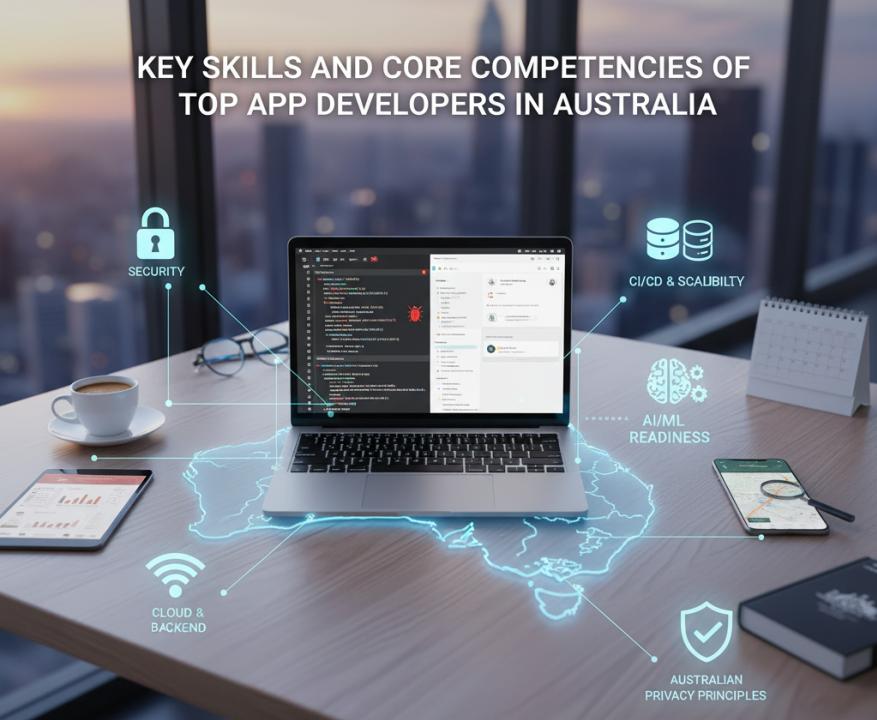
The leading-tier Australian app developers distinguish themselves through a sophisticated blend of technical mastery, commercial acumen, and strict adherence to local compliance and international best practices. Whether businesses seek android app development services in Australia or full-scale iOS solutions, these competencies define success in a highly competitive market.
1. Advanced Proficiency in Programming Languages and Modern Ecosystems
App developers must have a strong, demonstrable command over the specific programming languages relevant to the platforms they target, coupled with an understanding of their underlying architectures.
- Native Mastery: For iOS, this is expert proficiency in Swift (with an understanding of Objective-C legacy integration); for Android, it is Kotlin (with robust Java proficiency for existing systems). This native expertise is vital for performance-critical applications requiring direct hardware interaction or handling high data throughput.
- Cross-Platform Command: Expertise in modern frameworks like Flutter and React Native is essential for balancing budget and comprehensive market reach. Top developers must not only code in these frameworks but also understand the core principles of the Dart and JavaScript ecosystems, and be able to implement platform-specific modules where necessary for optimal performance.
- Quality and Maintainability: Proficiency extends beyond mere syntax; it requires rigorous adherence to architectural design patterns (e.g., MVVM, BLoC, Clean Architecture), implementing best practices for unit testing, integration testing, and leveraging mature Continuous Integration/Continuous Deployment (CI/CD) pipelines to ensure code is clean, stable, and ready for frequent, automated updates.
2. Strategic UI/UX Design Psychology and Implementation
Creating market-leading applications requires developers to treat UI/UX design as an integrated, psychological component of the engineering process, ensuring maximum user retention.
- Design-to-Code Translation: Developers must be able to accurately translate high-fidelity designs (produced in tools like Figma or Sketch) into pixel-perfect, interactive applications. This requires a nuanced understanding of motion design and state management to ensure a fluid, responsive user experience.
- Platform-Specific Cohesion: Acknowledging the subtle but critical differences in user expectation is key. Developers must maintain full adherence to Apple’s Human Interface Guidelines and Google’s Material Design to create an app that feels innately natural and trustworthy to the user on their respective operating system.
- Accessibility Standards: Comprehensive knowledge of WCAG (Web Content Accessibility Guidelines) is crucial to ensure the app is fully usable by all segments of the Australian population, including those with disabilities—a critical social, ethical, and legal compliance requirement.
3. Robust Backend Architecture and API Development Expertise
The stability, speed, and long-term scalability of any mobile application are fundamentally rooted in the competence of its backend architecture.
- Cloud Infrastructure and Scalability: Expertise in scalable backend technologies like Node.js, Python, or Go, and robust deployment on major hyperscale cloud platforms (AWS, Azure, or GCP) is non-negotiable for enterprise-level applications requiring reliability and high availability.
- Efficient Data Management: Developers must be highly skilled in efficient database design (including both relational SQL and non-relational NoSQL databases) and managing complex server logic for demanding applications.
- Advanced API Creation and Consumption: Deep knowledge of building and consuming highly performant APIs (often using the modern, data-efficient GraphQL or highly compatible RESTful protocols) is crucial for enabling mission-critical features like secure payment gateways, real-time data sync, and seamless integration with existing enterprise systems (ERP, CRM).
4. Advanced Security Engineering and Stringent Regulatory Compliance
Security is not merely a feature; it is the cornerstone of brand trust and data integrity, particularly within the strict regulatory environment of Australia.
- Security-by-Design Philosophy: Developers need to implement secure architecture from the project’s inception. This includes using robust encryption protocols, implementing secure authentication methods (OAuth 2.0, Multi-Factor Authentication, Biometrics), and conducting continuous, automated vulnerability testing.
- Australian Privacy Law Compliance: Crucially, developers must possess a comprehensive, up-to-date awareness of the Australian Privacy Principles (APPs) under the Privacy Act, and understand the complex implications of the Consumer Data Right (CDR) for data management within financial services, energy, and telecommunications sectors.
- Industry and Payment Standards: For specific, regulated industries, strict compliance with standards like PCI DSS (Payment Card Industry Data Security Standard for payment apps) or specific government-mandated Health Record system standards (for HealthTech applications) is an absolute, non-negotiable requirement.
5. Cross-Platform Expertise for Market Agility and Cost Efficiency
The ability to deliver a consistent, high-quality user experience across multiple operating systems efficiently is a hallmark of modern Australian development strategy.
- Strategic Framework Selection: The choice between Flutter, React Native, or Xamarin should be a strategic one, justified by business goals. Expertise in these frameworks allows for significant reduction in development time and cost while ensuring consistent branding and user flow across both iOS and Android.
- Managing Performance Trade-offs: This expertise is coupled with the ability to diagnose and tune code to achieve near-native performance, effectively resolving the common performance bottlenecks that can challenge poorly executed cross-platform projects, particularly those involving heavy graphical rendering or complex animations.
6. Acute Problem-Solving, Analytical Rigour, and AI-Readiness
Top developers are highly analytical thinkers who can proactively anticipate architectural challenges and design flexible, future-proof solutions, positioning the business for technological evolution.
- Algorithmic Optimisation: They excel in identifying and addressing the root cause of performance bottlenecks, debugging complex concurrency errors, and optimizing algorithms to ensure high efficiency and ultra-low latency, which is essential for real-time user-facing applications.
- Future-Proofing with AI: An increasingly vital skill is the practical readiness to integrate AI/ML functionality (such as sophisticated predictive analytics, highly accurate recommendation engines, and natural language processing features) into the app architecture, ensuring the product can seamlessly leverage the latest advancements in artificial intelligence.
In short, choosing an Australian developer in 2025 for android projects requires evaluating not only their coding expertise but also their adaptability, security-first mindset, and readiness to innovate. These are the qualities that will define the next generation of app development leaders in Australia.