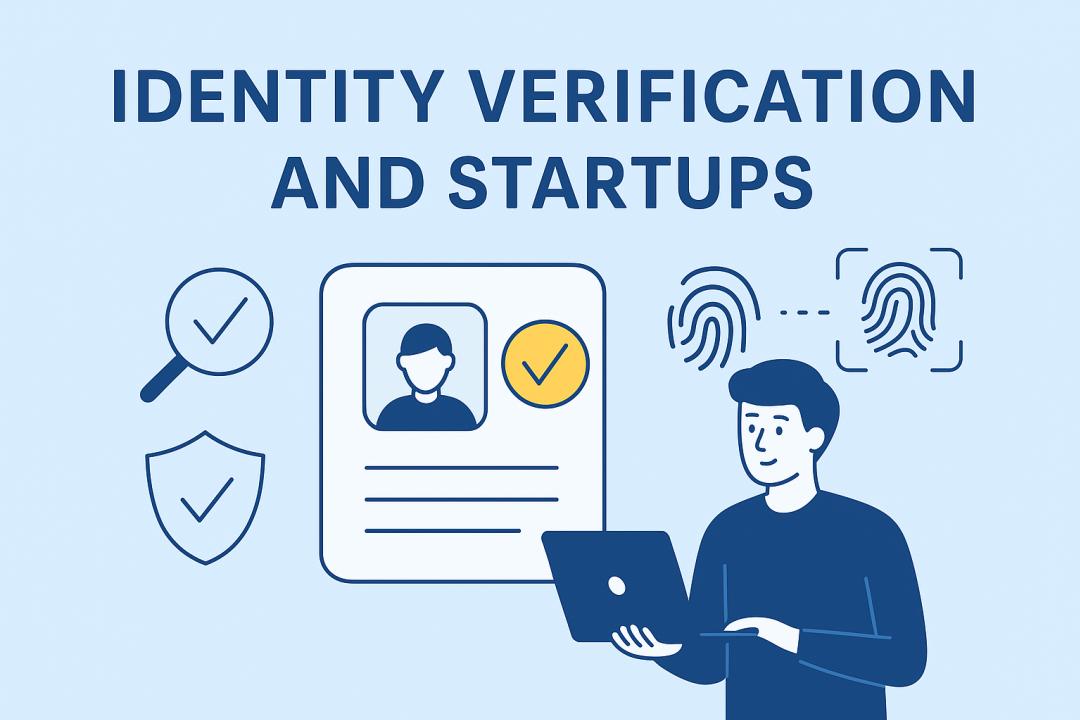
In the rapidly evolving technology, where all aspects of life such as banking, shopping among others take place online, it is more important than ever to verify who somebody is. Identity verification has become the foundation of digital trust regardless of whether we are registering an app, opening an online wallet, or paying an online bill. In the last 10 years, this has become a requirement, and a new generation of startups has emerged on the basis of solving one of the largest problems of our age: proving identity in a virtual world.
Conceptualization of Identity Verification.
Fundamentally, identity verification is the act of ensuring that an individual is who they are claiming them to be. Conventionally, this included presenting an ID card or a passport at a checkout. However, physical inspections were not feasible with the emergence of online platforms. Companies are now required to authenticate identities remotely, in real-time and safely.
This has resulted in the invention of digital identity verification systems. These systems rely on the latest technologies such as artificial intelligence (AI), machine learning (ML), and biometric recognition to authenticate users based on their documents, selfies, or scan of their faces. Manual reviews can take days before the user is confirmed but this has changed and now users are confirmed within a few seconds.
This change has not only to do with convenience, but also safety. Internet fraud, personal data breach, and identity theft are increasing. Identity verification solutions minimize all of these risks so as to ensure business legal compliance with international regulations such as KYC (Know Your Customer) and AML (Anti-Money Laundering), and user confidence.
Why Startups Stepped In
Startups are built on the basis of solving current issues, and identity verification was an ideal chance. With the digitalization of such industries as fintech, healthcare, and e-commerce, a significant loophole in the way companies handled the process of user verification emerged. The old ways were time-consuming, costly and inefficient.
This heralded the entry of tech-driven startups that have the potential to integrate AI, automation and cybersecurity to build smarter systems. An example of this is the company of Shufti Pro which came up with the thought of applying technology in the process of achieving the simplification of digital verification. It is among a number of startups which developed automated systems that could identify identities at any point in the globe, in hundreds of document types and languages.
Startups such as these did not simply provide software, they redefined the way business considers trust and compliance. They enabled even small online organizations to conduct business in any part of the world by offering scalable verification systems they did not have to worry about frauds or complexity in regulations.
The Startup Psychology of Digital Identity.
The culture of identity verification space is a representation of the finest startup culture: innovation, agility, and global thinking. The majority of these companies initially had small teams of developers who believed that there was inefficiency in the existing processes. They have been aware that digital businesses could not expand securely without trustworthy verification tactics.
Another commonality between the startups in this area is that they all believe that the basis of all digital interactions is trust. It could be the process of using a social media account or sending money over the Internet; in any case, the trust has to be provided immediately. The basis of that trust relies on the ability to check identity at a rapid pace and with accuracy something that startups made possible through automation and AI.
Startups were able to experiment, iterate and adapt their systems to fit in various industries unlike big companies which take a long time to do so. They were taught through user response, enhanced algorithms and more features to be able to comply with global standards.
The impact of Technology on Verification
Contemporary identity identification is very much dependent on technology. AI models are trained to identify the pattern on the ID cards, passports, and drivers licenses. They identify forged documents and compare them with live facial scans to verify the authenticity. Machine learning makes systems smarter as time passes and recognizes different forms of forgeries or detects deepfakes.
There was also innovation in biometric authentication as a part of startups like facial recognition, fingerprint scans and voice verification. Such mechanisms provide additional security and facilitate the process to the users.
Simultaneously, startups have to find a compromise between technology and privacy. As such, kyc identity verification is associated with sensitive personal information, which is why startups like Shufti Pro and others are concerned with encryption, data protection, and adherence to such privacy regulations like the GDPR. Such a responsible strategy contributes to the creation of long term credibility within an industry where a single security breach can ruin trust.
The Development of Identity Verification Market.
Digital identity verification is a term that has increased in demand in different industries at a very high rate. Onboarding customers requires fintech businesses to have it. It is used to stop fraud of funds in e-commerce sites. It is used in online education systems to check students, and in medical systems to check patient identities.
This expansion has made identity verification a multi-billion-dollar business with various startups, financial investors, and large corporations all taking an interest. The development of digital wallets, cryptocurrencies, and work-from-home has only intensified the necessity to conduct instant and secure identity verification.
This shift has been very beneficial to startups. Some of them started small pilot projects and went global within several years. Their development shows how innovations in technology and demand can fit ideally in the modern ecosystem of startups.
Challenges Startups Face
Irrespective of their advancements, identity verification startups have significant challenges. One of them is regulatory complexity. Various nations implement various verification regulations and information security provisions. These rules are different and startups need to build systems that are flexible enough to accommodate them.
Cybersecurity is another problem. As this move to make verification more digital, cybercriminals are discovering novel methods of counterfeiting identities by using synthetic data and images produced through AI. Startups should continuously revise their models to be in line with changing threats.
Also, it has a rising controversy regarding privacy of users and surveillance. Startups must make sure that they gather only the required data and disclose the information regarding the data storage and utilization.
Lessons of Startup Evolution.
The case of identity-checking businesses such as Shufti Pro can have important insights into the general entrepreneurial community. It demonstrates that startups can find a problem that is global and then apply technology to solve the problem and scale without huge resources.
It is also indicative of the trend in which modern startups are becoming more mission-driven. They do not merely develop apps, they are developing solutions which will help the digital societies operate safely. Innovation and compliance combined with trust have become the new formula of success.
In addition, identity verification startups point out the nature of transformation experienced by industries on the convergence of technology and need. A decade ago, nobody had ever thought that the process of authentication of an identity could be made an automated and internationalized process. In the modern day, it is one of the major facilitators of the digital economy.
The Future of Identity Verification.
Identity verification will change with the change of technology. New businesses are investigating the concepts of blockchain-based digital identity, decentralized validation and self-sovereign identity systems that can enable individuals to have complete agency over their information. Users could soon have one digital identity that is known anywhere in the world, as opposed to having to log in and go through several checks and verifications.
All these innovations are leading to a new day when identity would be more than a security feature that is a part of digital empowerment. Considerable importance will always be on startups that can create safe, transparent and accessible systems that can shape this future.
Conclusion
Identity verification and startups are one of the most interesting trends of modern technology. It is the account of how an increasingly digitalized world needed a more robust system of trust, and how new startups emerged to serve it.
One example of how new ideas can transform industries, companies such as Shufti Pro are the ones that represent this shift, not as commercial goods but as prototypes of how the company can change the industries. They make us remember that the startup spirit is not only about disruption but also about solving real problems that will make digital life safer for all.
This will create a foundation of digital trust over the next few years, as technology further enters everyday life, and identity checking will be at the center of the process, and startups will be the ones driving a secure and connected future.