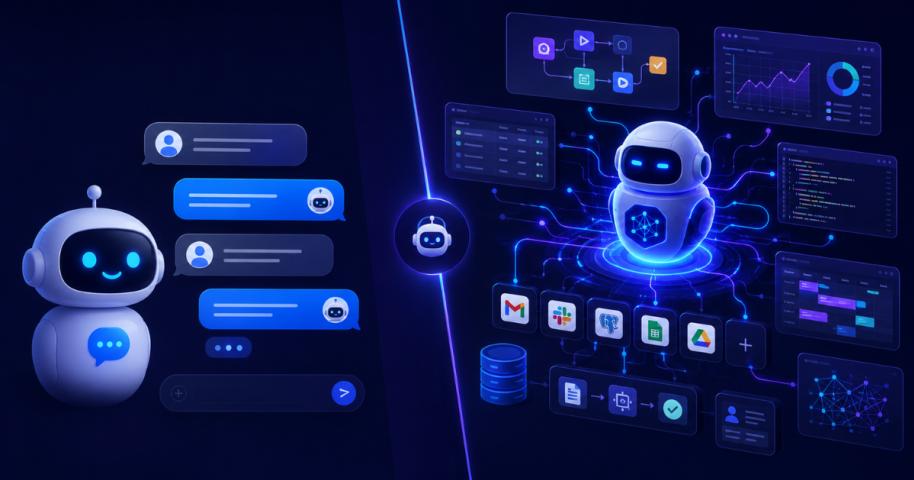

With the emergence of AI-powered interactions, especially in the field of intimate communication, the digital companionship industry has evolved significantly. AI sexting chatbot development is at the forefront of this change, enabling platforms to create hyper-personalized, emotionally sensitive interactions. By leveraging advanced AI technologies, businesses can simulate realistic conversations that go beyond standard chatbots, providing users with immersive experiences that feel both engaging and emotionally resonant. Leading chatbot development companies are focusing on integrating increasingly sophisticated frameworks to ensure that these AI systems balance realism with ethical and safe operation.
How Emotional Intelligence Shapes AI Sexting Interactions
Emotional intelligence lies at the heart of immersive AI sexting experiences. AI must understand the tone, context, and mood of the user and respond appropriately. By analyzing user input in real-time, the chatbot can customize its responses to maintain a sense of connection and engagement. Emotional modeling in AI involves neural networks trained on large datasets to recognize patterns in human behavior, making each interaction feel tailored and authentic.
For AI sexting chatbot development, this level of emotional understanding is crucial. This ensures that AI can emulate subtle human cues, such as empathy, humor, or flirtation, creating a more believable and engaging conversational experience.
The Role of NLP and Sentiment Analysis
Natural language processing (NLP) and sentiment analysis are at the heart of the intelligence behind AI sexting chatbots. NLP allows AI to interpret sentence structures, idiomatic expressions, and contextual meanings, while sentiment analysis assesses emotional undertones.
In practice, these technologies help AI differentiate between playful, serious or affectionate messages and respond accordingly. By integrating sentiment metrics, AI sexting chatbot development ensures that the chatbot's answers are context-aware and emotionally coherent, enhancing user immersion.
Integrating Personality Framework For Adaptive Behavior
A key aspect of immersive AI interactions is the ability to display consistent personality traits. Chatbots can be designed with frameworks inspired by personality psychology to simulate specific character traits such as humor, assertiveness, or empathy.
Adaptive AI learns from user interactions, developing its personality over time. For example, a user who favors playful banter will experience a chatbot that increasingly reflects that >
Balancing Realism with Privacy and Security
While realism is essential, maintaining privacy and data security is equally important. AI sexting chatbot development involves handling highly sensitive user interactions. Encryption protocols, secure data storage, and compliance with regulations like GDPR and CCPA ensure that personal information remains confidential.
Modern AI platforms include measures such as token authentication, anonymized data processing, and secure cloud infrastructure. These security measures allow users to engage freely, with confidence that their intimate conversations are secure.
Third Party API Integration
Third party API integration plays a vital role in enriching AI sexting chatbot capabilities. By leveraging external services, chatbots can access advanced voice synthesis, image recognition, or emotion recognition modules, increasing the realism and versatility of conversations.
For example, integrating voice APIs helps chatbots generate lifelike vocal responses, while emotion recognition APIs help AI dynamically adapt tone and phrasing. Such integrations ensure that AI interactions are deep, multidimensional, and responsive to real-time user signals.
Crafting a Scalable App Development Solution
Creating immersive AI sexting experiences requires a comprehensive app development solutions that seamlessly integrates AI intelligence, user interface design, and data security. Microservices architectures are often used to separate conversational engines from storage and analytics modules, thereby reducing security vulnerabilities while allowing independent scaling of features.
By leveraging cloud infrastructure and modular frameworks, platforms can maintain high-performance interactions even as user engagement increases. This ensures that chatbots remain responsive, emotionally aware and able to handle complex, real-time conversations without latency or disruption.
Continuous Learning and Adaptive AI
Continuous learning enables AI sexting chatbots to refine their conversation abilities over time. Reinforcement learning algorithms analyze user responses and behavioral patterns to optimize future interactions.
As AI adapts, it becomes more attuned to the user's preferences, improving emotional resonance and immersion. This iterative learning process allows chatbots built through AI sexting chatbot development to remain dynamic, responsive, and engaging over a long period of time.
Conclusion
AI sexting chatbot development represents the convergence of technology, emotional intelligence, and user-centered design. By integrating NLP, sentiment analysis, personality frameworks, and strong security measures, platforms can deliver deeply immersive experiences that feel human-like. Leveraging third party API integration, mobile app life cycle optimization, and continuous learning, chatbot development companies are shaping the future of digital intimacy. These intelligent systems offer users personalized, secure, and emotionally resonant interactions, setting a new standard for AI-powered companionship