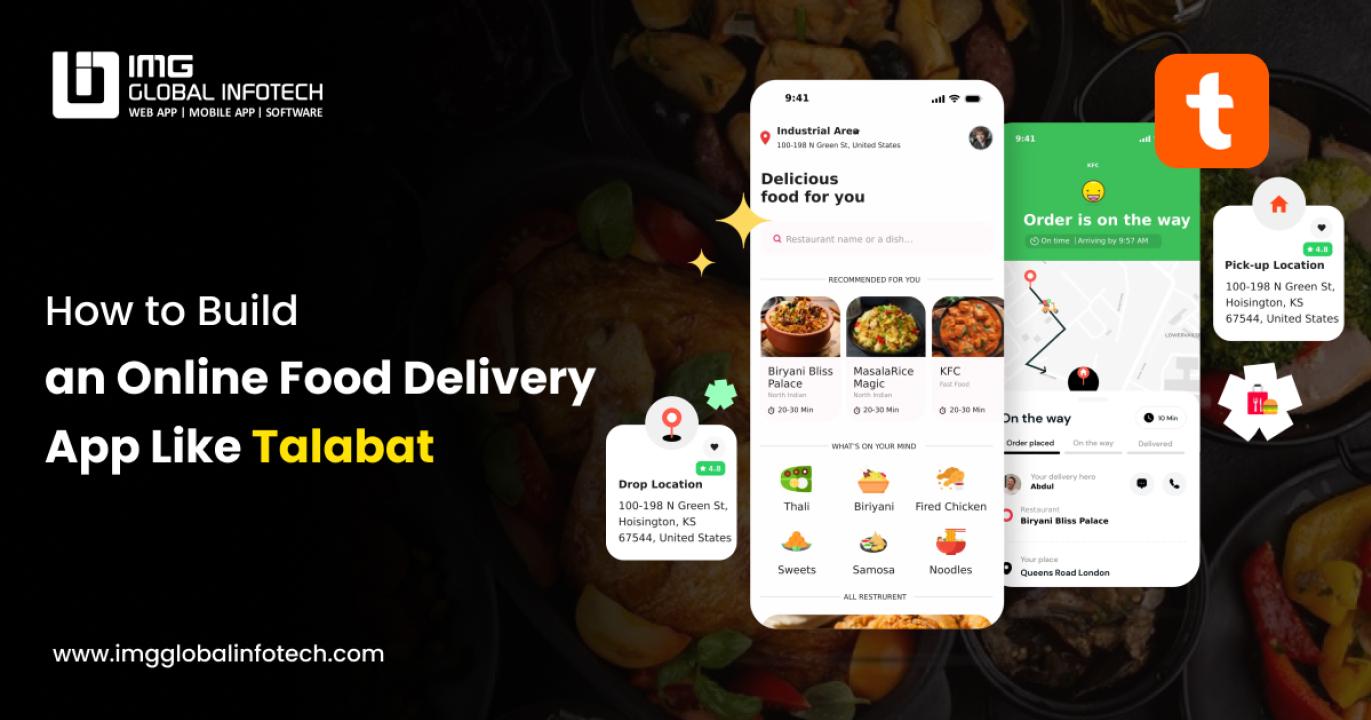
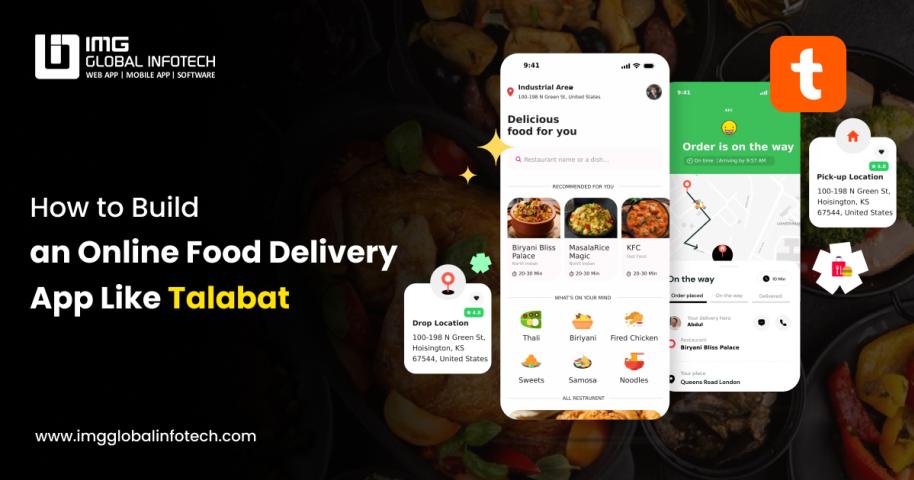
In recent years, the online food delivery sector has experienced considerable growth in its popularity. Convenience, urban living, and mobile technology have disrupted traditional food ordering. Talabat and many other apps have raised the bar, especially in the Mideast by providing users streamlined access to many restaurants in a very simple and convenient manner. If you are aspiring to create a food delivery app much like Talabat, it is imperative to understand the industry, the technology, and the app differentiation features - this article is an extensive overview that will guide you in building a great food delivery app.
1. Market Research and Planning
Before food delivery app development, it is important to do proper market research. Determine all aspects of your customer base's food habits; their food preferences, typical ordering patterns, and peak ordering times. Review Talabat, Uber Eats, Zomato, and any competitor's strengths and weaknesses.
Decide on the delivery model:
- Marketplace Model: The app shows many restaurants, and manages delivery from all of them.
- Restaurant Model: The app will only show one restaurant's menu, and the restaurant manages delivery.
- Hybrid Model: used on an app that integrates both models, so the user can choose both the restaurant and the delivery method.
Finding a unique selling point (USP) will help separate your food delivery app development from the competition. It might be faster delivery, or a partnership with a famous restaurant, or discounts.
2. Key Features of a Food Delivery App
In a Talabat->
A. User App Features
The user-facing app is the core of your platform, important features include:
- Registration and Sign-In: Capability to register or sign-in using email, phone number, or social media accounts.
- Explore Restaurants: Filter by cuisine, restaurant rating, price, or delivery time.
- Search and Filters: Quickly find restaurants or food items.
- Cart Options and Checkout: Easy add-to cart experience, multiple payment options, e.g. digital wallets, credit cards, cash-on-delivery.
- Track Order in Real-Time: Visibility of order placement all the way through preparation and delivery.
- Ratings and Reviews: Ability to provide feedback to enable quality assurance.
Push notifications to send updates on orders, promotions, discounts.
B. Features of Restaurant Apps
To handle orders and menus, restaurants require an effective interface:
- Create a profile by adding hours, cuisines, and business information.
- Menu management: Make changes to the products, costs, and pictures.
- Order management includes tracking preparation time and accepting or rejecting orders.
- Analytics: Keep an eye on customer behavior, sales, and peak hours.
C. Delivery App Features
- Apps that optimize delivery partners' operations are essential:
- Verify your identity and background when registering or logging in.
- Order Assignment: Accept and verify the deliveries that were assigned.
- GPS-guided, effective routes are known as route optimization.
- Order Status Updates: Monitor the status of deliveries.
- Earnings and History: View orders and payments that have been completed.
D. Admin Panel Features
The entire ecosystem is managed by the admin panel
- User Management: Keep an eye on and oversee users who have registered
- Restaurant Management: Authorize and oversee the profiles of restaurants
- Delivery Management: Monitor drivers and orders in real time.
- Management of Payments and Commissions: Complete transactions and take platform commissions out.
- Analytics and Reporting: Assess results and spot patterns.
- Customer service: Effectively address grievances and questions.
3. Technology Stack
App security, scalability, and performance all depend on selecting the appropriate technology stack:
- Frontend Development: Swift (iOS) and Kotlin (Android) for native apps; React Native or Flutter for cross-platform apps.
- Backend Development: To handle server-side logic, use Ruby on Rails, Django, or Node.js.
- Database management: Use Firebase, MySQL, or MongoDB to store information about customers, restaurants, and orders.
- Integration of Payment Gateways: PayPal, Stripe, or regional choices for seamless transactions.
- GPS and maps: Use Mapbox or the Google Maps API to track in real time.
- Cloud & Hosting: For scalability and dependability, use Microsoft Azure, Google Cloud, or AWS.
Using the appropriate technology guarantees that your app can manage heavy traffic, respond quickly, and stay safe..
4. UI/UX Design Considerations
The frequency of use of your app is determined by the user experience. Important things to think about are:
- Easy Navigation: It should only take a few steps for users to place an order.
- Customization: Make suggestions based on past purchases.
- Fast Performance: To minimize drop-offs, pages and menus should load rapidly.
- Engaging Design: Appeal is increased by eye-catching images and seamless transitions.
Effective UI/UX design promotes repeat use, raises conversion rates, and improves user retention.
5. Development Process
Developing an app that is similar to Talabat necessitates a methodical approach:
- Collecting Requirements: Describe the technical requirements, target audience, and features.
- Wireframing and prototyping: Make a graphic representation of the application's flow
- Frontend and Backend Development: Create the server-side logic and user interface.
- API Integration: Include analytics, push notifications, GPS, and payment gateways
- Testing: To verify functionality, conduct unit, integration, and beta testing
- Deployment: Open the application from the Google Play Store and App Store.
A methodical approach reduces mistakes and guarantees a successful launch.
6. Monetization Strategies
A food delivery app can generate revenue through multiple streams:
- Commissions: Charge restaurants a percentage of each order.
- Delivery Fees: Collect small fees from users for delivery.
- Subscription Plans: Offer premium features for users or restaurants.
- In-App Advertising: Promote partner restaurants or brands.
Using multiple monetization channels ensures sustainable revenue and scalability.
7. Marketing and Launch
Launching the app effectively requires strategic marketing:
- Pre-Launch Campaigns: Create buzz through social media and email campaigns.
- Referral Programs: Encourage users to invite friends.
- Discounts and Offers: Attract first-time users with promotions.
- Feedback-Based Updates: Continuously improve the app based on reviews.
A well-planned marketing strategy ensures rapid adoption and long-term success.
8. Challenges and Solutions Developing and managing a food delivery app comes with challenges:
- Logistics Optimisation: Implement advanced routing and dispatch algorithms.
- Peak Hours Management: Allocate additional resources during busy periods.
- Food Quality Control: Partner with restaurants that maintain high standards.
- Customer Complaints: Provide prompt and responsive customer support.
Proactively addressing these challenges ensures a reliable service and high user satisfaction.
Conclusion
Developing an online food delivery app like Talabat requires thorough planning, a solid technology stack, intuitive UI/UX design, and a clear monetization strategy. By focusing on seamless user experience, efficient logistics, and continuous improvement, your platform can compete successfully in the growing food delivery market. With careful execution and strategic marketing, you can create a scalable and profitable food delivery app that delights users, restaurants, and delivery partners alike.
FAQ – Frequently Asked Questions
Q1: How much does it cost to build a Talabat-like food delivery app?
The cost depends on features, platform (iOS, Android, or both), and technology stack. On average, a basic food delivery app can cost anywhere from $20,000 to $50,000, while feature-rich platforms can go beyond $100,000.
Q2: How long does it take to develop a food delivery app?
A basic app usually takes 4-6 months, while a full-featured, multi-platform app can take 8-12 months, including testing and deployment.
Q3: Can I launch the app for one city first?
Yes, launching in a single city allows you to test operations, gather user feedback, and optimize logistics before scaling.
Q4: Which payment methods should I integrate?
Offer multiple options such as credit/debit cards, PayPal, Stripe, and local wallets. Cash on delivery is also popular in certain markets.
Q5: Do I need separate apps for users, restaurants, and delivery partners?
Yes, separate apps streamline operations and provide tailored interfaces for each type of user, ensuring efficiency and clarity.
Q6: How can I retain users after launch?
Use loyalty programs, push notifications, personalized discounts, and referral incentives to keep users engaged and returning.
Q7: What technology is best for cross-platform development?
Flutter and React Native are highly recommended as they allow simultaneous development for Android and iOS, saving time and cost.
Q8: How do I handle peak demand during lunch or dinner hours?
Use predictive analytics to forecast demand, optimize delivery routes, and hire flexible staff to manage peak hours efficiently.