Introduction
In today's connected world, LTE technology powers billions of mobile connections worldwide. Whether you are streaming videos, video chatting, working remotely, or browsing social media, LTE likely enables it. Despite its widespread use, many people use LTE without fully understanding what it is, how it functions, or why it is important. This guide explores LTE technology, its capabilities, benefits, and practical applications to help you make informed decisions about wireless connectivity.
Understanding LTE: The Basics
LTE stands for Long Term Evolution and is the wireless communication standard for 4G mobile networks. Developed by the 3rd Generation Partnership Project (3GPP), LTE was designed to tackle the rapid growth in mobile data use and lay the groundwork for future advancements. It arose in response to the limitations of 3G, which struggled to meet the increasing demands for video, social media, and bandwidth-heavy applications.
The term "Long Term Evolution" reflects LTE's design approach. It is a flexible and scalable platform that evolves gradually rather than requiring complete replacement every few years. This method allows LTE to improve continuously through software updates and infrastructure upgrades. It also protects the significant investments carriers have made around the globe.
LTE does more than just provide faster mobile internet; it redefines wireless networks as data-centric. Unlike earlier generations that focused on voice calls, LTE treats all communications as data packets, including voice transmitted via VoLTE (Voice over LTE). This change leads to more efficient network operation and supports the rich multimedia experiences we expect from modern devices.
How LTE Technology Functions
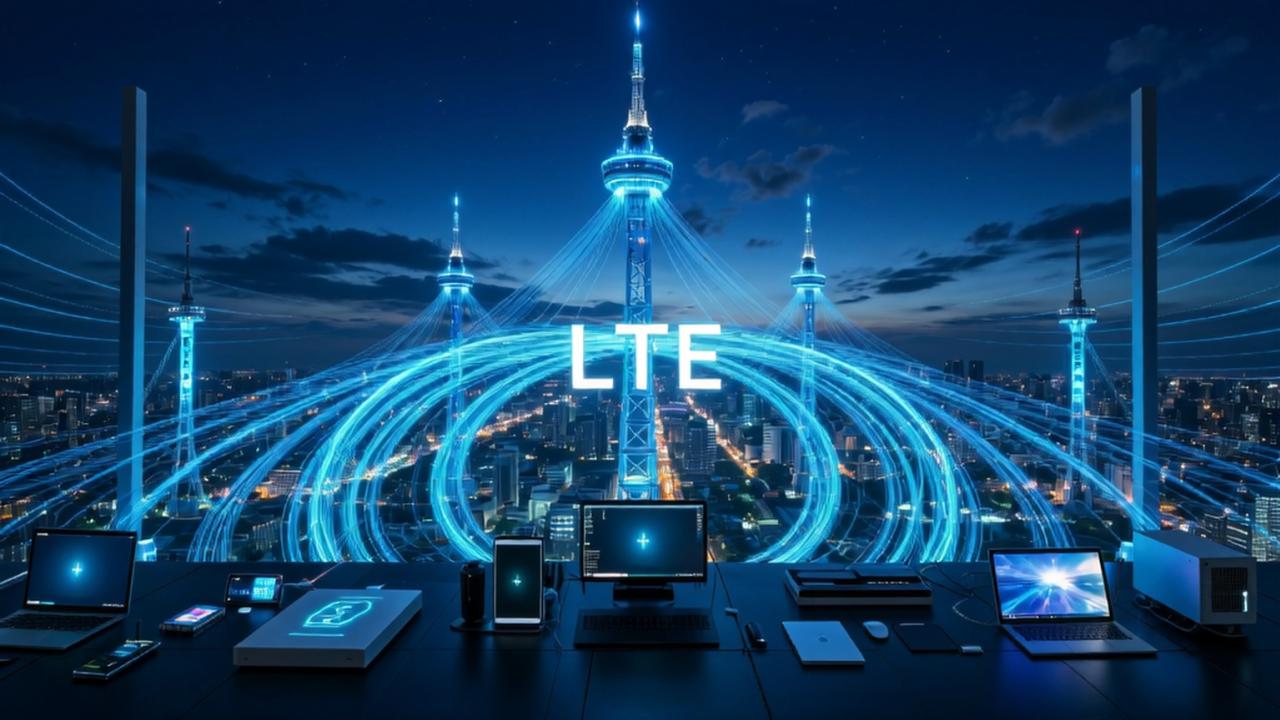
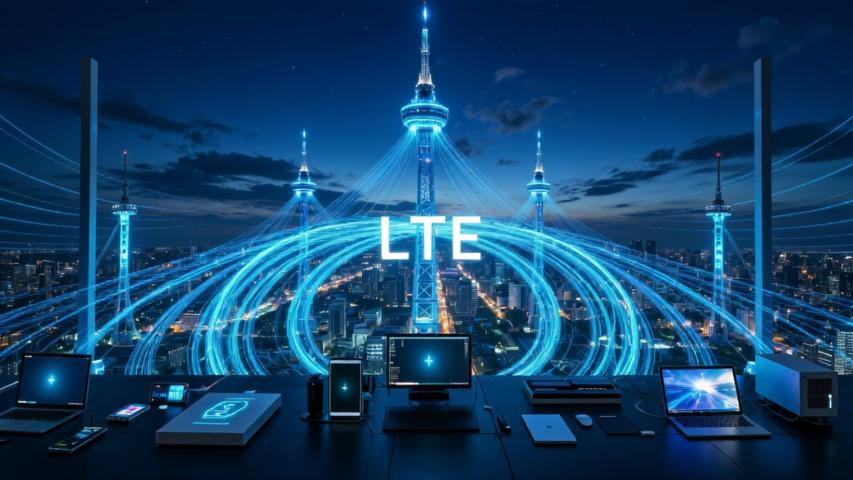
LTE networks rely on a complex system of radio towers, network infrastructure, and advanced transmission technologies. Cell towers equipped with eNodeB (evolved Node B) base stations transmit and receive signals that connect mobile devices to the network.
These towers use specific LTE frequency bands, usually ranging from 600 MHz to 2600 MHz. Lower frequencies like 700 MHz provide excellent coverage and better indoor penetration, making them ideal for rural areas. Higher frequencies, such as 2100 MHz or 2600 MHz, offer faster speeds but cover shorter distances, making them suitable for dense urban environments.
Advanced technologies enhance radio transmission efficiency. OFDMA (Orthogonal Frequency Division Multiple Access) manages downloads by dividing the spectrum into sub-carriers, allowing multiple users to share the network while reducing interference. For uploads, SC-FDMA (Single Carrier Frequency Division Multiple Access) transmits efficiently and helps conserve battery life.
MIMO (Multiple Input Multiple Output) technology further boosts performance by using multiple antennas at both the towers and devices, allowing simultaneous transmission of multiple data streams. Advanced configurations like 4x4 MIMO enhance capacity and signal reliability, delivering exceptional speeds in areas with strong coverage.
Behind the towers, the Evolved Packet Core (EPC) takes care of data routing, security, quality of service, and mobility between towers. This all-IP architecture lowers latency and improves efficiency compared to older networks, providing the fast experience that modern users expect.
LTE Speed and Performance Capabilities
LTE has transformed mobile internet from a luxury into a necessity. Standard LTE (Category 3 and 4) can theoretically support download speeds of 100-150 Mbps and upload speeds around 50 Mbps. LTE Advanced (LTE-A) pushes speeds even higher, reaching 300 Mbps to 1 Gbps using carrier aggregation and advanced MIMO.
In real life, speeds are usually lower due to factors like network congestion, distance from towers, building materials, terrain, and device capabilities. Most users see download speeds of 10-50 Mbps and upload speeds of 5-15 Mbps, which are still suitable for HD streaming, large downloads, video calls, and gaming.
Latency, the time it takes for data to travel between devices and servers, is important. LTE typically achieves 30-50 milliseconds, which is much better than 3G's 100+ ms. This ensures smooth video calls, gaming, and remote desktop access.
Key Advantages of LTE Technology
LTE offers many benefits that drive global adoption. The most obvious is speed: streaming HD video, downloading quickly, and responsive browsing are now possible on mobile devices.
Low latency improves interactive applications. Video calls become more natural, gaming response times get quicker, and cloud applications feel responsive. This means mobile devices can often replace desktops for many tasks.
Network capacity allows LTE to support more simultaneous connections, handling crowded areas like airports, stadiums, or downtowns without drastic slowdowns.
Energy efficiency benefits both users and carriers. LTE devices have power management features that extend battery life, while network equipment works more efficiently, reducing operational costs and environmental impact.
The all-IP network architecture simplifies infrastructure, cuts costs, and allows for quicker service deployment. Carriers can roll out new features faster, speeding up innovation.
Coverage improvements arise from flexible frequency use and advanced signal processing, optimizing connectivity for various environments and ensuring strong connections even in tough conditions.
LTE’s design allows it to stay relevant. Networks can be gradually upgraded through software and equipment improvements, protecting investments in infrastructure while delivering improved performance over time.
LTE Applications Beyond Smartphones
While smartphones are the most visible application, LTE powers many other solutions:
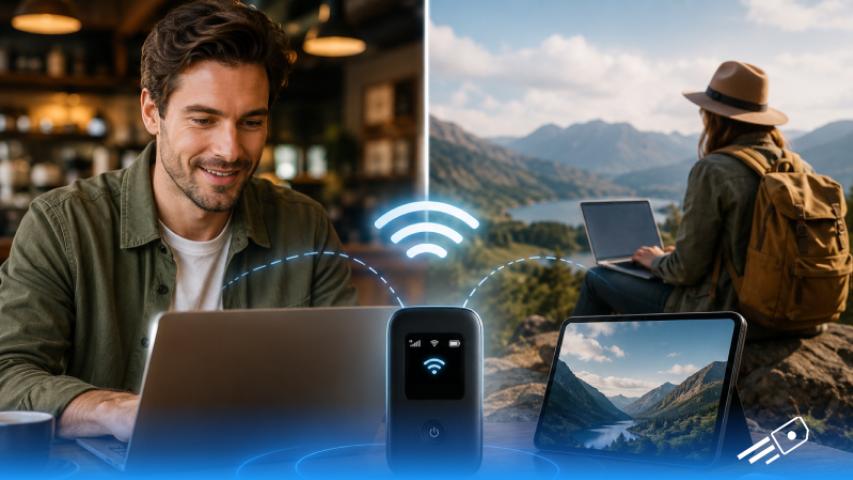
- Mobile hotspots give internet access to laptops, tablets, and other devices, making them perfect for travelers and remote workers.
- Fixed wireless access brings broadband to rural areas where cable or fiber options are not practical.
- IoT devices use LTE-M and NB-IoT for low-power, low-bandwidth applications like smart city systems, agriculture sensors, and asset tracking.
- Vehicle connectivity provides navigation, entertainment, emergency services, and advanced driver assistance.
- Emergency services use LTE networks like FirstNet for reliable, low-latency communications in critical situations.
How UbiFi Harnesses LTE Technology
UbiFi uses LTE to offer reliable high-speed internet where traditional broadband options fall short. Millions in rural areas lack cable or fiber access, and LTE provides speed, coverage, and reliability that are better than satellite or DSL alternatives.
LTE delivers fast connections suitable for video conferencing, gaming, streaming, and general browsing. UbiFi focuses on leveraging LTE’s proven strengths to provide dependable service, helping to bridge the digital divide and deliver modern connectivity to underserved areas.
FAQ On LTE Network
1. What does LTE mean on my phone?
When you see LTE on your phone, it means your device is connected to a 4G LTE network, the fastest widely available mobile data connection. This means you have high-speed internet for browsing, streaming, and downloading, typically much faster than 3G and sufficient for most mobile tasks, including HD video streaming.
2. Is LTE better than 4G?
LTE and 4G are effectively the same. LTE is the technology implementing 4G standards. Early LTE did not technically meet the original 4G requirements, but LTE Advanced fully meets and exceeds them. When carriers advertise 4G service, they refer to LTE networks, making the terms essentially interchangeable in practical use.
3. Why is my LTE so slow sometimes?
LTE speeds can fluctuate due to network congestion during peak hours when many users access the network simultaneously. Other factors include your distance from cell towers, physical barriers blocking signals, and possible data deprioritization if you’ve exceeded certain usage limits on unlimited plans. Weather, building materials, and device capabilities can also impact performance, leading to noticeable speed fluctuations.
4. Can LTE work for home internet?
Yes, LTE works effectively as home internet, especially in rural areas lacking cable or fiber. Many households successfully use LTE-based fixed wireless or mobile hotspot solutions as their main internet connection. With typical speeds of 10-50 Mbps, LTE handles streaming, video calls, and general browsing well, though heavy users should keep data caps in mind.
5. How long will LTE networks stay active?
LTE networks will likely remain operational for many years, possibly into the 2030s. Carriers continue to invest heavily in LTE infrastructure, and it serves as vital fallback coverage when 5G is not available. With billions of LTE devices in use and ongoing network upgrades, LTE will coexist with 5G rather than being replaced quickly.
6. What's the difference between LTE and 5G?
5G is the next-generation technology that offers potentially higher speeds, lower latency, and greater capacity than LTE. However, 5G coverage is still limited compared to LTE's wide deployment. LTE typically provides 10-50 Mbps, while 5G can exceed 100 Mbps in areas where it is available. For most users, LTE currently offers better coverage and sufficient speed for everyday needs.
Conclusion
LTE is one of the most successful wireless innovations, transforming global connectivity. Its advanced radio technologies, low latency, broad coverage, and evolutionary design make it suitable for smartphones, home internet, IoT devices, and emergency services.
As 5G develops, LTE remains essential, providing proven speed, coverage, and reliability. Understanding LTE helps users appreciate the technology behind their mobile and home connectivity, leading to informed choices about internet use. LTE’s extensive infrastructure, ongoing upgrades, and flexibility make it the foundation of modern wireless communications.