
SAP Business One is a reliable ERP solution specifically for
the financial sector that wants more control, more reporting, and secure data
management. Whether a small investment fund or rapidly growing fintech company,
SAP Business One helps with compliance, automates accounting, and enables
improved decision-making.
In this article, we showcase notable financial institutions
that are using SAP Business One to scale faster and strengthen their
operations.
Why Financial Institutions Choose SAP Business One
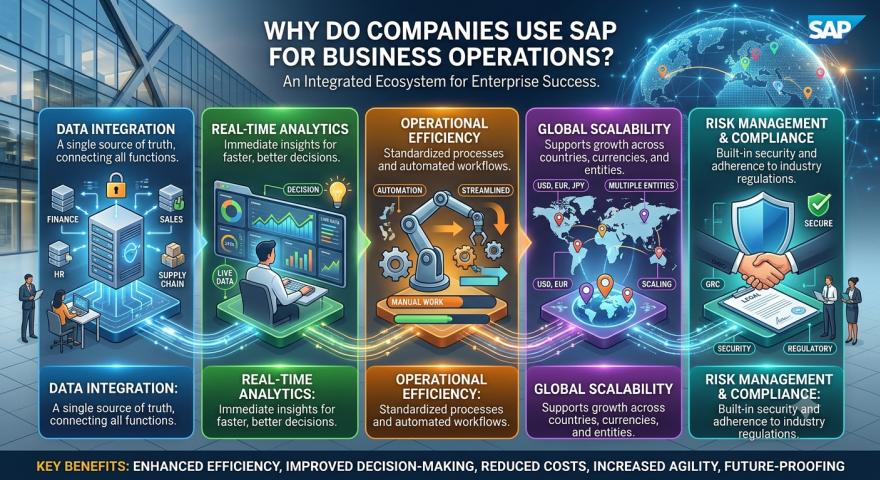
Financial institutions adopt SAP Business One because it
provides transparency, speed, and compliance in a unified system. Institutions
can empower their teams to manage financial records faster and with minimal
manual work while being ready for audits. Reasons for adopting SAP Business One
include:
·
Centralized financial data
·
Real-time dashboards and reporting
·
Speed to comply with regulations
·
Supports multi-branch and multi-currency
·
A scalable platform for future growth
Global Financial Institutions Leveraging SAP Business One
Many fast-growing financial institutions across the world
are embracing SAP Business One in order to receive reliable reporting, aligned
compliance, and consolidated back-office functions. For example, large
enterprise banks may leverage SAP's enterprise suite; nonetheless, regional
banks, microfinance institutions, investment advisory firms, insurance
brokers, and lending companies prefer SAP Business One for its easier hosting
and more favorable economics.
The platform allows operations in multiple countries and
allows finance teams to manage tax structures, cross-border transactions, and
visibility into their risks and exposures in real time. Institutions appreciate
its robust data governance, ease of use, and integration with their customer
relationship management (CRM), payroll, and core finance systems.
Global usage is prevalent among:
·
Regional and community financial institutions
with multi-branch operations
·
Microfinance institutions that are expanding to
new geography
·
Investment advisory and portfolio management
firms
·
Leasing and lending service providers
·
Insurance brokerages distributing networks of
clients
·
fintech companies developing hybrid businesses
Companies that want to reach financial institutions
using SAP Business One can greatly benefit from a verified and authentic
customer list. The SAP Business One Customers List presents
comprehensive information about companies that have already deployed this ERP
software. It enables companies to develop partnerships, help identify
potential customers, and contextualize industry-wide ERP penetration.
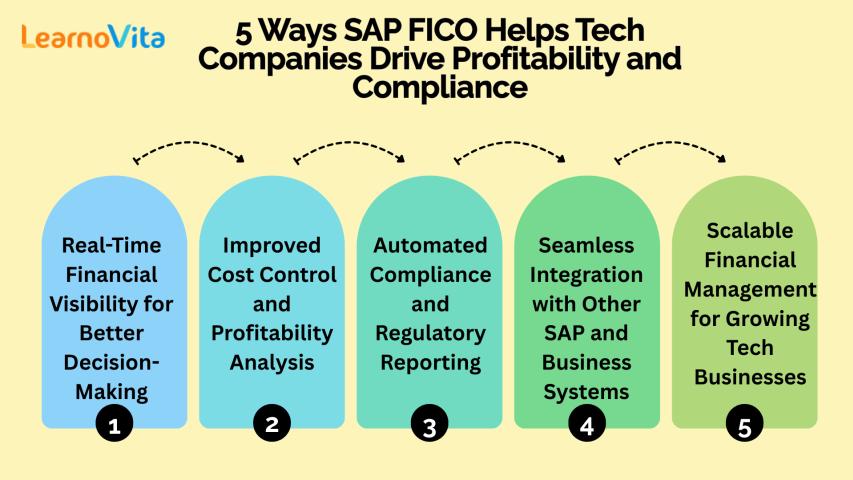
Advantages of SAP Business One for Financial Services
·
Increases financial transparency by aggregating
information into a single place that allows finance teams to view all
transactions across branches.
·
Simplifies reporting with real-time dashboards
to narrow the time spent on budgeting, forecasting, and performance monitoring.
·
Improves compliance and audit readiness through
controls built into the system and the ability to trace documents, as well as
provides integrated risk management features to comply with regulatory
requirements.
·
Designed to scale seamlessly for institutional
growth- such as new branches, cultural service lines, and currencies - without
disrupting the institution's day-to-day operations
Conclusion:
SAP Business One remains a dependable Enterprise Resource
Planning (ERP) option for banks and other financial organizations that need to
have control, compliance, and the opportunity to grow. It is inherently
designed to bring clearer visibility to their operations, centralize their
data, expand and adapt as necessary to maintain productivity, and issue
appropriate reports for their multi-branch structure or oversight. Thus, SAP
Business One can help an organization improve visibility, enhance governance, and
expedite long-term performance, whether the organization is already established
or just getting started.