
The global fitness industry has witnessed an all-time digital transition in the recent past. With millions of people tracking health and fitness using smartphones and wearables, there lies unmet demand for good fitness apps. Building a fitness app, however, is no easy task. Developing an engaging app that is logically connected to devices and provides customized experiences involves careful planning, technical skills, and out-of-the-box imagination.
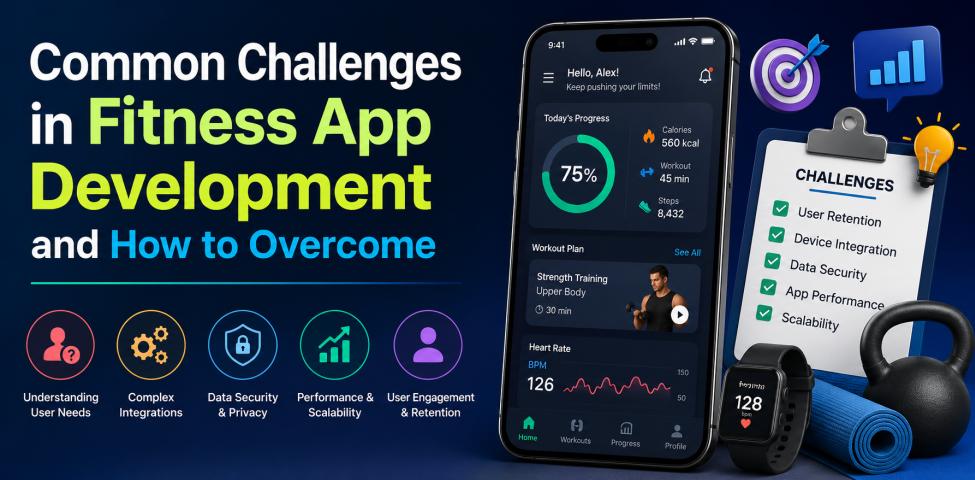
For businesses planning to enter this profitable niche, it is essential to hire a fitness app development company or a fitness application development agency. But even the best team of fitness app developers has issues that determine the failure and success of a fitness app. In this article, we introduce the fitness app development issues every developer faces and how to overcome them.
1. Providing a Personalized User Experience
The primary bigger challenge of creating a fitness app is offering a personalized experience. Users will have their respective unique sets of fitness goals, activity levels, dietary needs, and health concerns. Through the typical one-size-fits-all approach, it will barely ever be sufficient to retain users.
Developers will also have to incorporate AI-recommended recommendations, tailored exercise regimes, and adaptive dietary guidance to attend to individual requirements. Having access to a fitness application development company with experience incorporating AI can make this easier, more streamlined, and more accurate so the application can be significant to most users.
2. Integrating Wearable Devices and Sensors
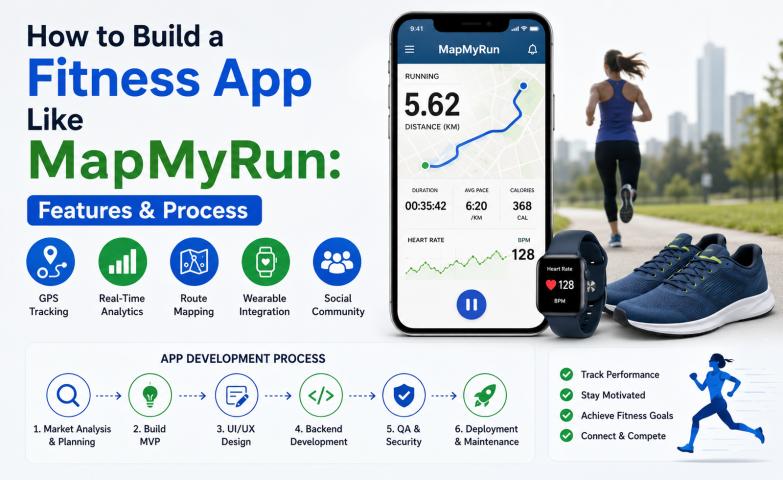
Fitness apps rely primarily on information contributed by wearables such as smartwatches, heart rate monitors, and fitness trackers. Ensuring seamless and trouble-free connectivity is perhaps the greatest challenge in developing fitness apps. Developers have to cope with multiple APIs, firmware revisions, and data formats without compromising on real-time data accuracy.
An organization involved in creating fitness apps and possessing the skill set to integrate devices can make this integration smooth, allowing the app to accurately measure health data like heart rate, steps, sleep, and calories burnt. Smooth integration not only makes the user satisfied but also assists in gaining confidence and trustworthiness.
3. Ensuring Data Privacy and Security
Health information is very confidential, and people desire their data to be in private mode. Adherence to privacy legislation and regulations such as HIPAA, GDPR, or local policies is one of the most well-known issues while developing fitness apps.
Minor data breaches can harm a brand's reputation and create legal issues. The best fitness app development company, for this reason, ensures the deployment of robust encryption, secure authentication, and regular security scans. With security prioritized, developers can safeguard user data and establish long-term trust.
4. Maintaining User Engagement
High user churn is the main issue for the fitness app industry. The majority of users download apps but abandon them after a few weeks. Helping the engagement of users is a main issue for fitness app development.
The features such as gamification, social sharing, leaderboards, push notifications, and reward upon milestones need to be integrated by the developers. A fitness app development company can design engaging experiences that make the user return to the application on a day-to-day basis, which can drive the application towards sustainable success.
5. Supporting Multiple Platforms
Today's customers are connected with apps on numerous different platforms like iOS, Android, and web interfaces. Cross-platform compatibility without degradation of performance is a big problem while developing fitness apps.
Choosing the optimal technology stack, such as React Native or Flutter, saves money and time in development while ensuring consistent performance on any device. A professional fitness app development firm can solve these issues and deliver a seamless experience to all.
6. Handling App Scalability and Performance
As a fitness app gains popularity, it must be capable of handling more users, processing information in real-time, and running analytics without hanging. Scalability and performance optimization are ongoing challenges to fitness app development.
Backend infrastructure, cloud-based platforms, and database management play a big role in maintaining app velocity and reliability. Hiring elite fitness app developers ensures the app scales automatically while providing a logical UI/UX design solution.
7. Incorporating AI and Machine Learning
AI and machine learning are currently necessary in providing personalized fitness advice and predictive analysis. AI integration, however, is difficult with the development of fitness applications.
Developers must train algorithms on different data sets, make it correct, and update models occasionally based on user behavior. An AI-based company can build intelligent systems that optimize engagement, enhance results, and distinguish themselves.
8. Creating an Intuitive User Interface
User interface (UI) is the initial thing individuals notice. Too convoluted navigation, distracting screens, and baffling layouts lead to immediate application abandonment. Creating an attractive yet simple-to-use UI proves challenging for daily fitness app development.
A company developing a fitness app focuses on user-first design to enable users to simply monitor exercises, track progress, and leverage social or gamification elements. Responsive and lightweight design boosts user joy and retention.
9. Implementing Payment and Subscription Models
Various fitness apps are based on freemium or subscription models. Integration of secure payment gateways and subscription management platforms is another challenging area of designing fitness apps.
Developers have to support many payment modes, handle recurring billing, and provide a seamless checkout. With the services of a fitness app development agency, organizations can use secure and scalable monetization strategies without disrupting the user experience.
10. Keeping Up with Fitness Trends
The world of fitness is constantly evolving, with virtual training, live streaming, health coaching, and natural health being some of the present amenities that are popular. Keeping up to date and incorporating trending aspects is a perpetual fitness app development challenge.
Having an agency that is up-to-date with market trends ensures your app is equipped with top-tier features that will attract and keep clients. These are constant upgrades and feature releases that ensure sustained success.
Conclusion
Developing a successful health app is not all about tracking steps or calories. From delivering personalized experiences and wearable device support to security, scalability, and monetization, there are a wide range of problems for developers to tackle while developing health apps.
Such organizations with the goal of creating top-performing apps ought to partner with the top fitness app development company or fitness application development company. Seasoned fitness app developer teams can solve these fitness app development issues, providing comprehensive information for a seamless, enjoyable, and secure experience for users.
Fixing these problems correctly not only raises the satisfaction of users but also turns the app into a real competitor in the fast-growing market of fitness tech. Knowing the largest fitness app development challenges every developer will face, companies can make more informed decisions and create apps that effectively help people with their fitness path.