As founders, we constantly seek out market inefficiencies, those significant gaps where technology can provide a real solution. In Education Technology (EdTech), the most persistent gap has been the college textbook crisis.
Every semester, students must choose between buying essential books and skipping meals. Although Open Educational Resources (OER), like the excellent content from OpenStax, have provided free digital textbooks, they face a major issue: the accessibility gap. A static PDF is not usable for auditory learners, students with dyslexia, or most modern learners who study on the go.
The solution isn’t just about creating new content; it’s about using AI to improve access to existing, high-quality material. This model is finally addressing the textbook crisis.
The Two-Pronged AI Attack on Inefficiency
The heart of this disruption lies in using AI not just for creating content but also for transforming it and personalizing access.
1. AI-Powered Production of Paid & Free Audio Textbooks
Turning a 700-page textbook into an audiobook used to take six figures and several months, relying on professional voice actors, a cost that ultimately falls on the student. AI completely changes this situation.
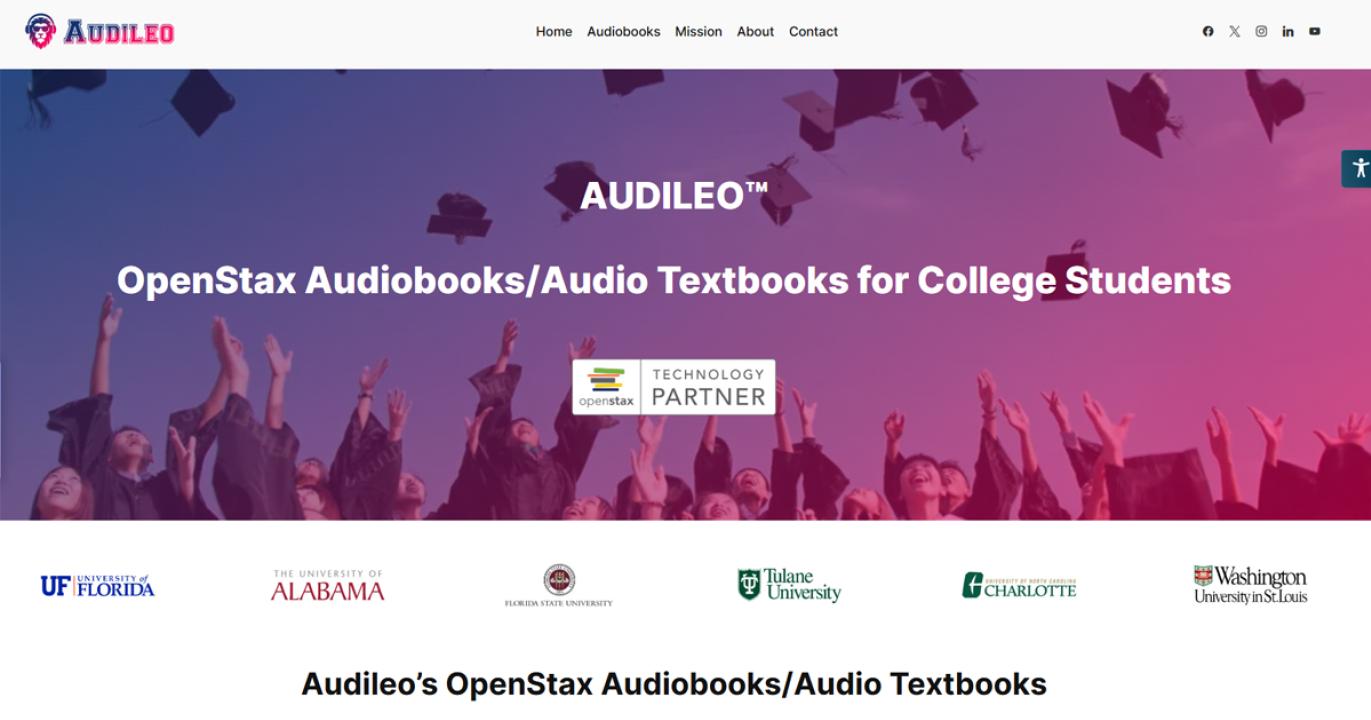
At Audileo, we recognized the challenges for auditory learners. Our hybrid model uses advanced AI narration to create the core audio for complex texts like Anatomy & Physiology 2e and Psychology 2e. Human reviewers ensure accurate scientific terms and polish the final product.
This approach has drastically reduced production time and costs, allowing us to provide high-quality, fully accessible versions of key OpenStax textbooks. This efficiency is why the concept of truly free audio textbooks is now a reality for thousands of students through library and institutional partnerships. The technology shifts the focus: acquiring content is no longer the challenge; providing accessible formats is the innovation.
Audileo: Paid & Free Audio Textbooks
2. The Rise of the Free AI Textbook Chatbot
Reading and listening are passive activities. True understanding requires active engagement. That’s where the second AI tool, the contextual chatbot, comes in.
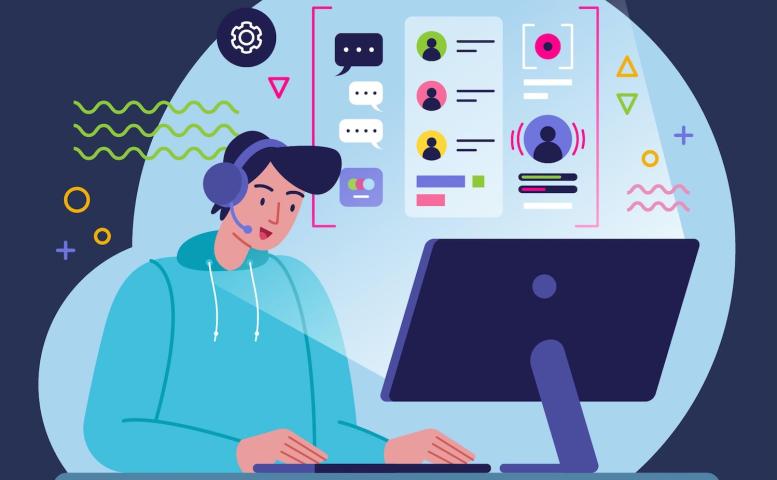
When a student struggles with a difficult concept in their Psychology chapter, searching online can be overwhelming and often misleading. We have introduced a free AI textbook chatbot that is carefully trained and limited to OpenStax content only. This creates a precise, private, and instant tutoring experience.
For example, if a student needs a clearer explanation of "cognitive dissonance" from Chapter 3 of their required text, the Audileo AI Chatbot provides a reliable, context-specific answer immediately, transforming a dense textbook into a responsive learning companion.
This multi-modal approach, offering both audiobooks and active inquiry through chatbots, greatly enhances student retention and accommodates various modern learning >
Conclusion
The future of EdTech isn’t about creating another proprietary curriculum; it’s about using AI to make the best, most reliable educational resources available to everyone. By leading the way with the free audio textbook model and pairing it with immediate AI support, we demonstrate that a startup can be both profitable and a strong advocate for educational equity. The textbook cost crisis won’t end with cheap PDFs; it will end with smart technology that changes how students learn.