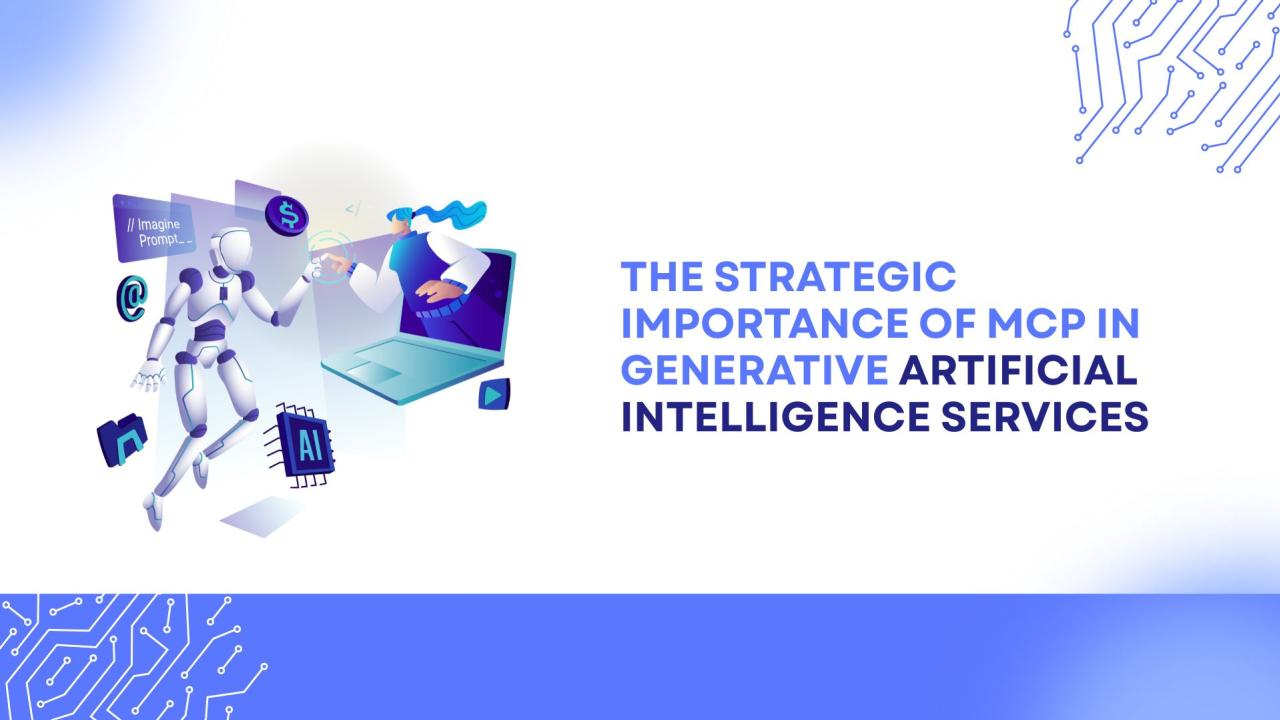
The rise of Generative Artificial Intelligence Services has redefined what’s possible across industries, from creating lifelike digital humans to automating enterprise decision-making. Yet, as advanced as today’s AI systems are, they still face challenges with interoperability, contextual understanding, and multi-model collaboration.
Enter Model Context Protocol (MCP) — a framework designed to connect, coordinate, & enhance communication among AI systems, APIs, and large language models (LLMs). Think of it as the connective integration that permits various AI tools to share context, reason collectively, & deliver seamless, intelligent outcomes.
In this article, we explore how MCP is transforming Artificial Intelligence Services, its growing role in the world of Generative AI Solutions, and why it stands as the foundation of the next evolution in intelligent systems.
What Is MCP? The Foundation of AI Interoperability
Model Context Protocol (MCP) represents a structured way for AI systems and APIs to share context dynamically. It defines how models communicate data, make inferences, and collaborate efficiently.
Traditional APIs are designed to request and respond to static data. MCP, however, allows AI models to share evolving context, enabling richer conversations, adaptive behavior, and smarter workflows. This innovation is particularly vital in Generative AI Services, where output often depends on prior contextual understanding, user feedback, and external data sources.
MCP is transforming how Artificial Intelligence Solutions are built and deployed. Rather than treating models as isolated silos, MCP unites them under one ecosystem, allowing multiple AI engines, from LLMs to domain-specific generators, to work in harmony.
“If AI is the brain of digital intelligence, MCP is the nervous system connecting it all.”
Why MCP Matters for Generative Artificial Intelligence Services
In Generative AI Services, the ability to share real-time data and context between systems determines success. Whether it’s generating dynamic marketing content or automating design workflows, context continuity is essential. MCP provides exactly that.
Here’s why MCP is a game-changer for Artificial Intelligence Services:
Smooth Model Collaboration: Models now have the ability to communicate with one another, enhancing precision and minimizing repetitive training.
Adaptive Learning Environments: MCP allows feedback mechanisms to run in real-time, & AI solutions become self-enhancing over time.
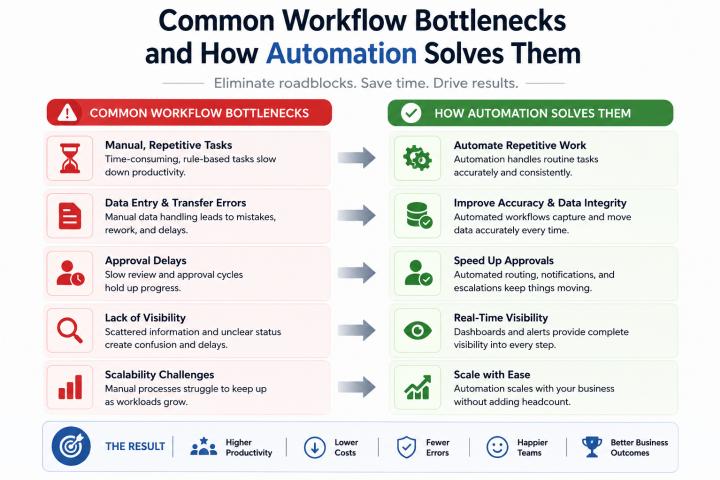
Cut in Operational Bottlenecks: APIs and models communication is automated and workflow is quickened.
Better Developer Experience: MCP makes integration easier, less time is wasted on bridging tools that cannot be used together.
In brief, MCP would make sure that the generative AI-ecosystems are not disjointed systems but linked, contextual-based networks of intelligence.
LLM vs. Generative AI: Understanding the Difference
As organizations explore Artificial Intelligence Services, a common confusion arises between LLM vs. Generative AI. While both are revolutionary, they serve distinct purposes within AI ecosystems.
| Aspect | LLM (Large Language Model) | Generative AI |
| Primary Function | Understand and generate human-like text. | Create new content, like text, images, audio, code, or video. |
| Core Technology | Transformer-based architectures (e.g., GPT, PaLM). | Multi-modal models (text-to-image, audio synthesis, etc.). |
| Use Cases | Chatbots, summarization, and documentation. | Content generation, simulations, creative design, automation. |
| MCP Role | Facilitates contextual communication between LLMs. | Enables collaboration between various generative models and APIs. |
MCP acts as the bridge between LLMs and Generative AI Systems, ensuring both can operate together efficiently. For instance, using an LLM to interpret input and a generative model to create visual or functional output.
This integration forms the backbone of next-generation Generative AI Solutions, capable of understanding, reasoning, and creating dynamically across modalities.
Key Advantages of MCP in Generative AI
MCP integration brings transformative benefits to Artificial Intelligence Services and developers in building Generative AI Solution. It introduces structure, speed, and scalability into workflows that were once complex and siloed.
Top Advantages of MCP Integration:
1. Unified Contextual Awareness – All models share and interpret the same data in real-time, improving precision.
2. Interoperability Across Systems – MCP bridges AI tools, databases, and APIs, fostering cross-platform compatibility.
3. Improved Scalability – AI services can scale horizontally without losing context or performance.
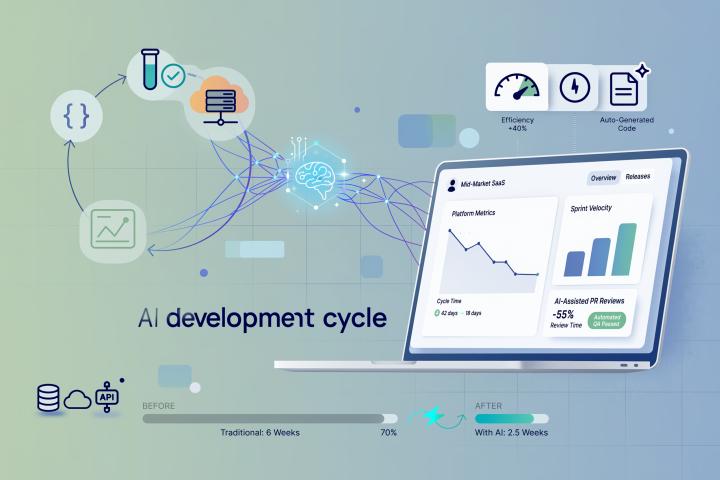
4. Faster Development Cycles – Developers can iterate rapidly through automation and standardized data flows.
5. Enhanced Decision Intelligence – AI agents can collaborate to provide more comprehensive insights and recommendations.
| Aspect | Without MCP | With MCP |
| Context Sharing | Limited to single application | Shared dynamically across systems |
| Scalability | Vendor-locked, isolated models | Open, modular, and scalable |
| Integration Time | Weeks or months | Hours or days |
| AI Accuracy | Context lost across sessions | Continuous contextual awareness |
| Innovation Speed | Slower iteration | Accelerated AI-driven innovation |
Use Cases: MCP in Action Across AI Services
The adoption of MCP is unlocking new dimensions in Artificial Intelligence Services, particularly in Generative AI Solutions.
1. Enterprise Automation
Businesses are leveraging MCP to unify diverse AI tools, from workflow automation bots to predictive analytics models, enabling real-time synchronization across operations.
2. Software Development
MCP-powered frameworks help developers automate testing, debugging, and code optimization by linking LLMs with DevOps APIs, drastically cutting development time.
3. Creative Industries
Generative AI platforms connected via Model Context Protocol can co-create, text models generating stories, image models visualizing them, and sound generators adding immersive audio.
4. Customer Support Systems
AI chat systems enhanced with MCP combine multiple LLMs and sentiment models to deliver more context-aware and emotionally intelligent responses.
5. Data-Driven Decision-Making
By integrating multiple AI ML tools under MCP, businesses can produce unified insights across marketing, finance, and logistics, all in real time.
The Technical Side: How MCP Enhances Generative AI Workflows
Technically, MCP functions as a standardized communication layer. It defines how different components including APIs, models, and agents, exchange information.
It supports context persistence, allowing Generative AI models to maintain understanding across sessions, conversations, or tasks. This is particularly vital for Artificial Intelligence Solutions that require consistent reasoning, such as financial forecasting or personalized recommendations.
MCP also simplifies the integration of ML & Artificial Intelligence Services, offering developers plug-and-play capabilities for connecting large language models, text-to-image generators, and predictive analytics systems.
Example Scenario:
A retail business uses an LLM to analyze customer sentiment, a generative AI engine to design marketing visuals, and an analytics API to forecast sales. MCP allows all three to communicate seamlessly, ensuring that every output is contextually aligned.
Challenges and Considerations
While MCP is transformative, adopting it requires careful planning.
Integration Complexity: Organizations must modernize legacy systems to support MCP-driven AI workflows.
Data Security: Context-sharing is also accompanied by the need to have a level of strong encryption and privacy controls.
Governance: It is important that ethical AI use is governed by setting up rules of multi-model collaboration.
Resource Management: AI coordination during MCP requires scalable resources and computational resources.
Nevertheless, the benefits accrued in the long-term such as efficiency, intelligence, and innovation are much greater relative to the difficulties of the transition.
MCP and the Future of Generative AI
With the ongoing development of AI, Generative AI Services will be more dependent on MCP to facilitate interoperability, collaboration, and creativity. MCP unites various models in effective workflows by linking them to create smart, self-organizing systems.
This technology will define the future world of Artificial Intelligence Solutions which will be:
Multi-agent collaboration — AI systems working together toward shared goals.
Contextual evolution — Models learning dynamically from new information.
Scalable innovation — Faster adaptation to emerging technologies and data sources.
MCP is also paving the way for Generative AI Solutions that go beyond automation, enabling AI to think, adapt, & co-create with human users.
By 2030, experts predict that over 70% of enterprise AI systems will integrate MCP or similar protocols, marking a major leap toward autonomous, interoperable intelligence networks.
Conclusion
Model Context Protocol (MCP) is rapidly becoming the cornerstone of the next-generation Generative Artificial Intelligence Services. It bridges gaps between models, unites workflows, and empowers AI systems to reason and act cohesively.
For organizations investing in Artificial Intelligence Services or building Generative AI Solutions, integrating MCP isn’t just a competitive advantage; it’s a necessity for future-proofing innovation.
The future of AI lies not just in smarter algorithms but in smarter collaboration. MCP makes that collaboration possible, driving the evolution from isolated intelligence to a connected, context-driven ecosystem that defines the future of artificial intelligence.