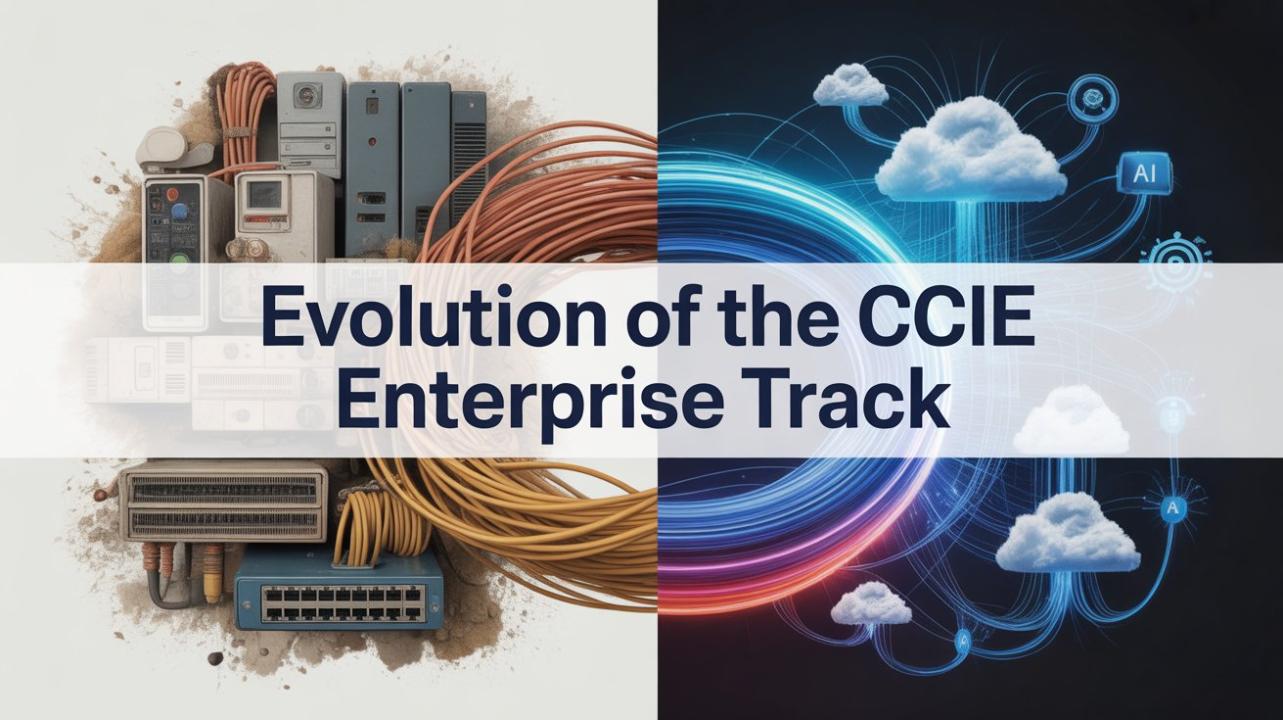
The world of networking has evolved dramatically over the
past decade, reshaping the skills required for IT professionals to stay
competitive. One certification that has consistently reflected this
transformation is the Cisco Certified Internetwork Expert (CCIE). Among
its various tracks, the CCIE Enterprise Track has undergone one of the
most significant evolutions — transitioning from the classic Routing and
Switching specialization to the modern Enterprise Infrastructure.
This change was not just a rebranding but a strategic move to align with
emerging technologies and the evolving demands of digital networks.
In the rapidly changing networking landscape, professionals
aiming for mastery turn to CCIE Enterprise Training, which equips them
with both foundational and future-ready skills. The shift to the Enterprise
Infrastructure track reflects Cisco’s commitment to blending traditional
networking expertise with cutting-edge technologies like SD-WAN, network
automation, and programmability.
The Legacy: CCIE Routing & Switching
For years, the CCIE Routing and Switching (R&S)
certification stood as the gold standard for network engineers worldwide. It
validated expertise in designing, implementing, and troubleshooting complex,
enterprise-level networks based on routing and switching protocols.
Professionals who earned this credential were recognized for their deep
understanding of core networking concepts such as:
- Advanced
IP Routing (OSPF, EIGRP, BGP)
- Switching
technologies (VLANs, Spanning Tree, EtherChannel)
- Network
security fundamentals
- Quality
of Service (QoS) and multicast configurations
While R&S engineers were highly skilled in managing
traditional infrastructures, the digital transformation wave demanded a new
skill set — one that integrated automation, virtualization, and cloud-native
networking. Cisco recognized this gap and, in response, redefined its
certification portfolio in 2020.
The Transition: From Routing & Switching to
Enterprise Infrastructure
In February 2020, Cisco officially retired the CCIE Routing
& Switching certification, replacing it with CCIE Enterprise
Infrastructure. This wasn’t merely a name change — it marked a paradigm
shift in how enterprise networks are designed and managed.
The updated track combined traditional networking principles
with modern, software-driven technologies. Cisco’s new direction focused on
preparing engineers for next-generation network environments that are:
- Programmable
and automated
- Cloud-integrated
- Software-defined
(SDN)
- Secure
and analytics-driven
This evolution signifies that CCIE professionals are no
longer just network troubleshooters; they are now network architects capable of
orchestrating dynamic, intelligent infrastructures that align with business
goals.
Key Technologies in CCIE Enterprise Infrastructure
The CCIE Enterprise Infrastructure track emphasizes
the integration of automation, virtualization, and security within enterprise
networks. Some of the core technologies and skills include:
- Software-Defined
Networking (SDN) – With the rise of Cisco DNA Center and SD-Access,
automation and centralized policy control are at the heart of modern
networks.
- Network
Automation and Programmability – Using tools like Python, REST
APIs, and Ansible, engineers learn to automate configurations,
optimize performance, and minimize errors.
- SD-WAN
– Cisco’s SD-WAN solutions empower enterprises to manage hybrid cloud
environments efficiently.
- Virtualization
Technologies – Virtual routing and network function virtualization
(NFV) are key to flexible and scalable network management.
- Security
Integration – Modern enterprise networks embed security at every
layer, ensuring resilience against emerging threats.
These additions make the certification more aligned with
real-world enterprise demands — ensuring that certified professionals are not
just technically proficient but strategically valuable.
Why This Evolution Matters
The transition to CCIE Enterprise Infrastructure
reflects how the IT industry has shifted from hardware-centric to
software-defined networking. Enterprises today demand agility, scalability, and
automation — capabilities that traditional networking couldn’t fully provide.
For professionals, this evolution offers immense benefits:
- Future-Proof
Skills: With automation, cloud, and SDN integration, the certification
ensures engineers stay relevant.
- Career
Advancement: Employers now prioritize professionals who can manage
end-to-end enterprise solutions rather than isolated systems.
- Higher
ROI: Organizations investing in CCIE-certified professionals witness
improved network efficiency and reduced operational costs.
Furthermore, by mastering CCIE Enterprise Training,
engineers gain the knowledge to adapt and lead in hybrid and multi-cloud
environments — a must in today’s digitally connected enterprises.
How Professionals Can Adapt to the New CCIE Enterprise
Track
Transitioning from Routing & Switching to Enterprise
Infrastructure requires a mindset shift. Professionals must go beyond
traditional networking and embrace programmability and automation. Cisco
provides multiple resources, including:
- Cisco
Learning Network for study groups and forums
- Cisco
DevNet for hands-on automation practice
- Authorized
CCIE Enterprise Training programs offered by Cisco Learning Partners
Combining these resources with real-world lab experience
ensures a strong foundation in both legacy and modern networking principles.
Conclusion
The evolution of the CCIE Enterprise Track from
Routing & Switching to Enterprise Infrastructure signifies more than a
certification update — it’s a reflection of the technological revolution
shaping enterprise networks. This transformation equips professionals with a
blend of traditional routing expertise and advanced automation capabilities,
making them indispensable in modern IT ecosystems.
As networks become more intelligent, software-defined, and
cloud-driven, CCIE Enterprise Training continues to be the gateway for
engineers to master next-generation enterprise solutions. In conclusion, the
CCIE Enterprise Infrastructure track stands as a testament to Cisco’s
forward-thinking vision — empowering professionals to lead the future of digital
networking with confidence and innovation.