
If you’ve ever looked inside your air vents and seen a layer of dust, you’ve probably wondered — do I really need to call a professional for this? It’s tempting to grab your vacuum and tackle it yourself, especially when you want to save money. After all, how hard can cleaning air ducts really be?
But here’s the catch: what you see on the surface is only a tiny part of your duct system. Deep inside your home’s ventilation network lies a maze of pipes, turns, and sealed passages where dust, mold, and allergens quietly collect. Getting to them — and cleaning them properly — takes more than a household vacuum.
That’s why the debate between DIY duct cleaning and professional duct cleaning is so common among homeowners in Kitchener and Mississauga. Let’s take a closer look at how the two methods differ, what’s actually at stake, and which option gives you the best results long-term.
1. Why Clean Your Ducts in the First Place?
Before comparing the methods, it’s important to understand why duct cleaning matters at all.
Your HVAC system continuously circulates air through the ducts — the same air you and your family breathe. Over time, these ducts collect:
- Dust and pet hair
- Pollen and allergens
- Mold spores
- Bacteria
- Construction debris
- Even rodent droppings in some cases
When the buildup grows, it doesn’t just affect air quality. It also reduces your heating and cooling efficiency, forcing your system to work harder — which means higher energy bills.
For homes in southern Ontario, where seasonal shifts mean the HVAC runs almost year-round, keeping the system clean isn’t a luxury — it’s basic home maintenance.
2. What DIY Duct Cleaning Actually Involves
Let’s start with the do-it-yourself approach. Most homeowners who try cleaning ducts on their own use standard household tools — a vacuum, a duster, maybe a shop vac, and a screwdriver to remove vent covers.
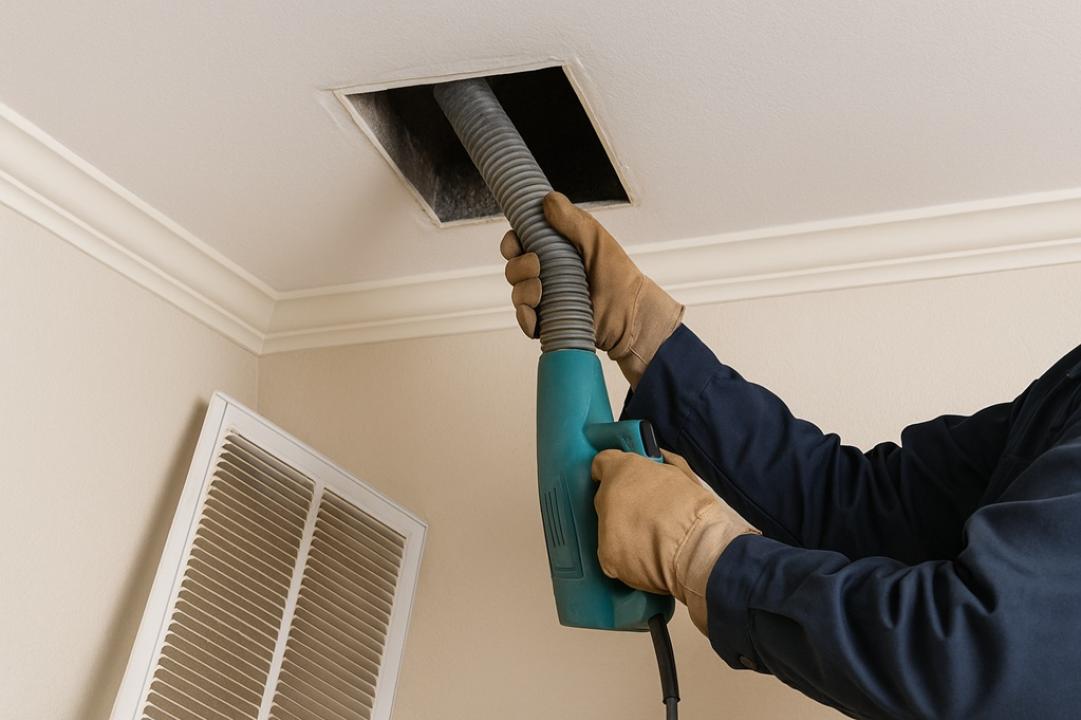
They vacuum what they can reach, clean around the registers, and maybe wipe down a few visible parts of the duct. In some cases, people rent portable duct vacuums from hardware stores, which provide a bit more power but still only reach a few feet inside.
While it feels satisfying to see visible dust gone from the vents, the reality is that this kind of surface cleaning barely scratches the surface of what professional equipment can do. Most of the contaminants — fine dust, debris, and microbial buildup — stay hidden deep inside.
3. What Professional Duct Cleaning Looks Like
Now, let’s look at what happens when you call experts like Cora Duct Cleaning. Professional cleaning involves far more than a simple vacuum and duster.
Here’s what a typical service includes:
- Inspection: Technicians use cameras or scopes to examine the duct interior.
- Powerful negative pressure: Industrial-grade vacuums (often truck-mounted) create a powerful suction to remove debris.
- Agitation tools: Brushes, air whips, and compressed air tools dislodge dirt that clings to duct walls.
- Full-system cleaning: Every component — including registers, main trunks, returns, and vents — is addressed.
- Sanitization: Optional antimicrobial treatments eliminate bacteria and mold spores.
- Post-cleaning inspection: A final check ensures the ducts are completely clear and airflow is optimized.
This process reaches every part of your HVAC system, including areas you can’t access without specialized tools. It’s not just about cleaning — it’s about restoring air circulation and improving your system’s health.
4. The Difference in Equipment Power
The biggest distinction between DIY and professional duct cleaning comes down to equipment.
Professional companies use truck-mounted vacuums that generate thousands of cubic feet per minute (CFM) of suction power — far beyond what any home vacuum can achieve. That strength allows them to remove years’ worth of compacted dust, debris, and contaminants that stick to metal and fiberglass surfaces.
By contrast, even high-end household vacuums max out at a fraction of that power. They’re simply not built to handle the deep layers of grime hidden inside duct systems.
So while DIY cleaning might make the surface look neat, it doesn’t actually remove what’s causing poor air quality or airflow issues.
5. The Expertise Gap
Experience matters more than most people realize. Professional technicians aren’t just cleaning blindly — they understand how HVAC systems are structured, where contaminants tend to settle, and how to clean without damaging components.
Improper DIY cleaning can actually cause problems, like:
- Dislodging duct joints or seals
- Damaging insulation inside ducts
- Pushing debris further into the system
- Breaking delicate parts like dampers or sensors
Certified professionals follow industry standards, such as those set by the National Air Duct Cleaners Association (NADCA). This ensures safe, effective, and thorough results.
6. The Health Impact: Clean Air vs. Recirculated Dust
Here’s where the real value of professional cleaning shines — your family’s health.
Every time your HVAC runs, it blows air through the same ducts. If those ducts are full of allergens, dust mites, or mold spores, you’re breathing that in daily. This can trigger allergy symptoms, coughing, and respiratory irritation, especially for children, seniors, or anyone with asthma.
For households in Ontario cities like Kitchener, where humidity levels vary through the seasons, duct moisture can also encourage mold growth. Mississauga homes near highways face a different challenge: fine pollution particles entering through vents and settling inside ducts.
By hiring professionals for duct cleaning Kitchener or duct cleaning Mississauga, you’re not just cleaning metal pipes — you’re improving the quality of every breath your family takes indoors.
7. The Efficiency and Cost Connection
Here’s something most homeowners overlook: dirty ducts make your system inefficient. When debris clogs up airways, your furnace or AC has to work harder to push air through. That extra strain consumes more energy and shortens the system’s lifespan.
DIY cleaning can’t remove that deep blockage, which means your equipment still runs inefficiently. Professional cleaning, however, restores proper airflow — lowering your monthly utility bills and reducing wear and tear.
Think of it like dental cleaning: brushing at home helps, but it doesn’t replace the deep clean you get from a hygienist.
8. When DIY Might Be Okay
To be fair, there are small maintenance steps you can do yourself between professional cleanings.
- Vacuum around registers: Regularly remove vent covers and clean the immediate area.
- Change filters frequently: Replace furnace or AC filters every 2–3 months.
- Keep floors and furniture dust-free: The less dust inside your home, the less ends up in your ducts.
- Check for visible mold or moisture: If you spot mold, call professionals immediately.
These simple habits help maintain air quality and reduce buildup — but they’re not a substitute for a full cleaning. They simply extend the time between professional visits.
9. How Often You Should Book Professional Cleaning
For most homes, scheduling a deep cleaning every 3–5 years is ideal. But if you have pets, smoke indoors, or recently renovated, it’s smart to do it sooner.
Older homes with original ductwork also benefit from more frequent service since decades of dust can accumulate unseen. And for newer homes, a first cleaning after construction removes leftover drywall dust and debris from installation.
In humid or dusty environments, yearly inspections are recommended to ensure your ducts stay dry and clear.
10. The Risk of “Too Good to Be True” Deals
One warning — not every company advertising duct cleaning offers real professional service. You’ve probably seen ads promising “whole-home cleaning for $99.”
These companies often perform superficial cleanings, skipping key parts of the system, or use underpowered equipment. Some even use scare tactics — claiming to find “mold” to upsell unnecessary treatments.