
Have you ever tried to load a video, only to see that little spinning wheel? Or maybe your video call froze right when you were making an important point. Slow internet is frustrating, especially when you're paying for "high-speed" service that doesn’t feel very fast at all.
If you’ve been thinking about a better way to get reliable, fast internet, there is one. It's called fiber optic internet. It’s quickly becoming the preferred choice for homes and businesses that want smooth, high-quality connectivity without constant buffering or lag.
So, what is fiber internet? Why is it faster? And is it worth switching from cable or DSL?
Let’s break it all down in a simple, friendly way.
What Is Fiber Optic Internet?
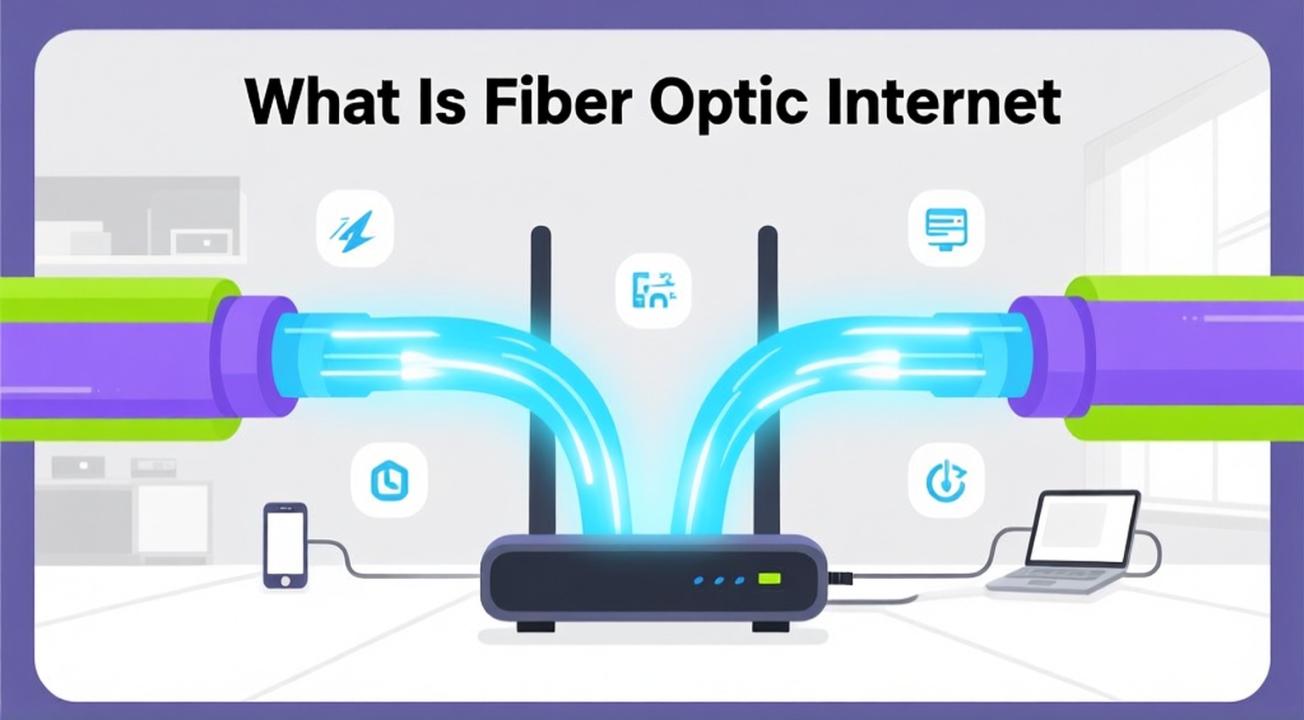
Simply put, fiber optic internet is a type of broadband that uses ultra-thin strands of glass or plastic to send data as beams of light. Instead of using metal wires, like cable or DSL, fiber sends data using light pulses. This allows it to travel very quickly with minimal signal loss.
Think of a fiber broadband network like an express highway where no one slows down. There’s no traffic, no bottlenecks, and no interruptions. Just pure speed.
A fiber internet connection is known for:
- Extremely fast download speeds
- Upload speeds that are just as fast
- Ultra-low latency (hello, gamers!)
- Highly reliable performance
- The ability to support many devices at once
It’s basically built for the internet-heavy life>
How Fiber Optic Internet Actually Works
Even though fiber sounds high-tech (and honestly, it is), the way it works is surprisingly easy to understand.
1. Data Turns Into Light
Your internet data, movies, music, websites, everything is converted into tiny pulses of light.
2. Light Travels Through Fiber Strands
These fiber strands are thinner than a human hair but strong enough to transmit information over long distances without losing speed or quality.
3. The Light Reaches Your Home
The signals travel through buried fiber cables until they reach an Optical Network Terminal (ONT) installed in your home.
4. The ONT Converts Light Back to Data
The ONT converts those light pulses back into digital information that your devices can understand, and just like that, you're online. That’s it. No interference, no slowing down over distance, and no copper wires getting overloaded. Just clean, fast, stable internet.
Types of Fiber Optic Internet Connections
Not all fiber connections are alike. The speed you experience depends on how close the fiber lines are to your home. Here are the main types of fiber optic internet connections:
1. FTTH – Fiber to the Home
This is the best connection available. Fiber cables run directly to your house, providing the full power of fiber with maximum speed and reliability.
2. FTTB – Fiber to the Building
Common in apartments or commercial buildings, fiber reaches the building, and then internal wiring distributes the internet to each floor or unit.
3. FTTC – Fiber to the Curb
Fiber reaches a cabinet or node near your home, usually on your street. The final part of the connection uses copper or coaxial cable, which can slightly reduce speeds.
4. FTTP – Fiber to the Premises
Similar to FTTH but often used for businesses, offices, and advanced setups that need extremely high performance.
If you want the fastest results, FTTH and FTTP are your top options.
Why Fiber Is Faster Than Traditional Internet
If you’ve ever wondered why fiber is so much faster, here’s the main reason: data travels faster as light than as electricity. Traditional internet technologies, like cable and DSL, use copper wires. Copper was originally designed for telephone signals, not high-speed internet. It works, but it has its limits. Fiber doesn’t have those limits.
Here’s why fiber broadband is faster:
1. Light Travels Faster Than Electrical Signals
Fiber uses light, which moves at nearly the speed of light. This gives fiber a huge advantage in speed and responsiveness.
2. No Interference
Copper wires pick up electromagnetic interference from appliances, cables, and even weather. Fiber doesn’t.
3. No Slowing Down Over Distance
Cable and DSL lose strength the farther you are from the provider’s hub. Fiber keeps its strength over long distances.
4. Symmetrical Speeds
Most fiber internet plans offer equal download and upload speeds, which is something cable and DSL cannot match.
5. Built for Multiple Devices
Because fiber is so fast and stable, you can run many devices at the same time without affecting your connection. Homes with smart devices, streaming TVs, gaming consoles, laptops, tablets, and security cameras benefit from fiber. It keeps everything running smoothly.
Benefits of Fiber Optic Internet
Switching to fiber isn’t just about speed. It comes with a whole list of advantages:
1. Reliable in All Conditions
Fiber cables aren’t affected by storms, distance, or electrical noise.
2. Perfect for Working From Home
No more video call freezes or lag when screenshare is on.
3. A Dream for Gamers
Low latency + high speed + stability = buttery-smooth gameplay.
4. Future-Proof Technology
Fiber networks can support extremely high speeds, so your internet won’t feel outdated anytime soon.
5. Great for Large Households
Everyone can stream, game, and browse at the same time without fighting over bandwidth.
Are There Any Downsides?
Of course, no technology is perfect.
1. Availability Is Still Growing
Some areas, especially rural regions, don't have fiber infrastructure yet.
2. Installation Can Take Time
Running fiber lines requires more setup compared to plugging in a cable modem.
3. Slightly Higher Cost in Some Areas
Fiber isn’t always the cheapest plan, but the performance upgrade usually makes up for it.
Is Fiber Internet Worth It?
If you care about speed, reliability, and a stress-free online experience, then yes, fiber is definitely worth it. From 4K streaming to gaming, remote work to smart home automation, a fiber internet connection offers performance that cable and DSL cannot match. As more providers expand their networks, fiber will only become easier to access and more affordable.
If fiber is available in your area, it's one of the best upgrades you can make to your digital life.
Conclusion
Fiber optic internet isn't just another internet connection; it's a major step forward in speed, stability, and modern connectivity. With its ability to transmit data as light, resist interference, and support many devices at once, fiber broadband is designed for how we use the internet today and how we'll use it tomorrow.
If you're tired of lag, buffering, and unreliable service, fiber provides the smooth, powerful, and future-ready experience you've been waiting for.
FAQs on Fiber Internet
1. What is fiber optic internet?
Fiber optic internet is a high-speed broadband connection that sends data as light pulses through thin fiber cables. This allows information to travel very quickly and reliably. It’s one of the best internet technologies available today.
2. Why is fiber faster than cable or DSL?
Fiber uses light signals instead of electrical currents, which means data moves faster and faces less resistance. It also avoids interference issues that affect copper-based networks. This results in smoother, more consistent speeds, even during peak hours.
3. Is fiber good for gaming and streaming?
Yes, fiber is excellent for both. It offers low latency and stable high speeds. You can enjoy smooth 4K/8K streaming and responsive online gaming with minimal lag. It’s perfect for homes with many devices running at the same time.
4. What equipment do I need for fiber?
Most providers install an ONT (Optical Network Terminal) inside your home, which converts light signals into usable internet. This connects to your router for Wi-Fi. You may also receive upgraded fiber-compatible routers.
5. Can I get fiber broadband in my area?
Fiber availability depends on your location and local infrastructure. Urban and suburban areas often have better access, while rural regions may still be expanding. However, fiber networks are growing rapidly worldwide each year.