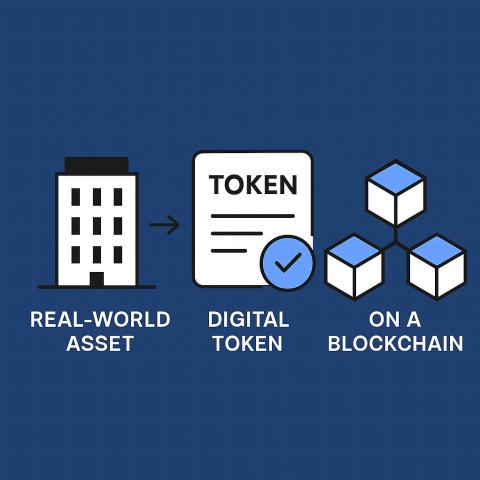
Tokenization the process of converting real-world and digital assets into blockchain-based tokens representing ownership or claims has evolved from a niche cryptocurrency concept into a transformative force reshaping global capital markets. What was once theoretical now manifests in practical deployments where real estate, securities, commodities, intellectual property, and collectibles exist as digital tokens enabling fractional ownership, instant settlement, and global trading accessibility previously impossible with traditional asset infrastructure.
The tokenization market reached approximately $7.2 billion in 2024 and projects to exceed $50 billion by 2026 as institutional adoption accelerates, regulatory frameworks develop, and infrastructure matures. This explosive growth reflects recognition that tokenization addresses fundamental inefficiencies in traditional asset systems transaction costs, settlement delays, geographic restrictions, and liquidity constraints that have persisted for decades despite technological progress. As 2025 unfolds, tokenization transitions from experimental pilot projects to mainstream adoption reshaping how humanity represents, trades, and manages valuable assets.
The Economics of Tokenization
Traditional asset markets suffer from structural inefficiencies accumulated over centuries despite incremental modernization. Securities markets settle trades in T+2 format (two business days after transaction), requiring substantial capital reserves held during settlement periods. Real estate transactions involve extensive documentation, legal reviews, and title insurance adding weeks to closure timelines and costs exceeding 2-5% of transaction value. Commodities trading concentrates in centralized exchanges limiting participation to institutions with established relationships and substantial capital.
Tokenization addresses these inefficiencies through several mechanisms. Programmable smart contracts automate transaction execution and settlement, enabling instant finality rather than multi-day delays. Fractional ownership enables investors to purchase asset portions rather than requiring full asset acquisition, democratizing access to previously restricted investments. Global accessibility through blockchain enables 24/7 trading across time zones and geographic boundaries without requiring relationship establishment with brokers or exchanges. Transparent pricing emerges naturally from global supply and demand rather than being set by centralized intermediaries.
The economic impact manifests in substantially lower transaction costs. Where traditional equity trading involves broker commissions, clearing fees, and settlement costs totaling 0.1-0.5%, tokenized securities can settle with transaction costs below 0.01%. Real estate tokenization eliminating title insurance, legal reviews, and extensive documentation could reduce transaction friction by 50-70%. Commodities trading without centralized exchange requirements eliminates intermediary markups, passing cost savings to market participants.
These cost reductions create powerful incentives for market participants to migrate toward tokenized infrastructure. Large institutions capture millions in cost savings through tokenized trading volume. Individual investors gain access to previously restricted investment opportunities through fractional ownership. Emerging markets participate in global capital markets without requiring relationships with established financial institutions. The economic leverage ensures tokenization adoption continues despite regulatory uncertainty and implementation challenges.
Fractional Ownership and Democratic Access
The most immediate impact of tokenization appears in enabling fractional ownership of previously indivisible high-value assets. Real estate traditionally required substantial capital accumulating for down payments and mortgage qualification. Tokenization enables purchasing real estate shares worth hundreds of dollars, enabling participation across broader wealth distributions. A property worth $1 million can be divided into 1 million tokens worth $1 each, enabling small investors to build real estate portfolios previously restricted to wealthy individuals and institutions.
This democratization extends across asset classes. Fine art historically required million-dollar transactions restricting market participation to collectors with substantial capital. Tokenized art enables purchasing artwork shares worth thousands of dollars while maintaining exposure to art market performance. Collectibles tokenization enables global marketplaces where rare items trade 24/7 to worldwide audiences rather than concentrating in localized auction houses. Intellectual property tokenization enables creators monetizing work through fractional revenue rights rather than requiring complete licensing transfers.
The social implications of democratic asset access reach beyond economic democratization to fundamental restructuring of wealth accumulation pathways. Historically, significant wealth accrual required either luck, inheritance, or access to exclusive investment opportunities restricted to the wealthy. Tokenization enables broader populations to access asset appreciation through fractional ownership, creating pathways toward intergenerational wealth building previously limited to wealthy families and institutional investors.
Enterprise Adoption and Real-World Implementation
Enterprise adoption of tokenization accelerated substantially through 2024-2025 as organizations recognized competitive advantages and cost reduction opportunities. Banking institutions developed tokenization platforms for securities trading and settlement. Real estate firms launched platforms enabling fractional property ownership. Commodity traders implemented blockchain infrastructure for agricultural products and precious metals trading. Supply chain organizations tokenized goods enabling transparent tracking and instant settlement.
Major financial institutions including JPMorgan, Banco Santander, and others deployed tokenization platforms processing substantial transaction volumes. Central banks worldwide developed digital currency projects representing fiat money on blockchain infrastructure. Institutional investors including BlackRock, Grayscale, and others expanded tokenized asset offerings. This institutional validation signals ecosystem maturation from speculative cryptocurrency stage toward mainstream financial infrastructure.
Enterprise implementations reveal practical benefits confirming theoretical advantages. Instant settlement eliminates counterparty risk during multi-day settlement windows. Programmable smart contracts enforce complex agreements automatically without intermediary intervention. Transparent auditing enables real-time compliance monitoring rather than periodic audits. Efficient custody through distributed storage eliminates single points of failure in centralized vault systems.
Regulatory Development and Framework Establishment
Regulatory clarity represents perhaps the critical enabler accelerating tokenization adoption beyond early adopters toward mainstream markets. Initial regulatory uncertainty created risks deterring institutional participation, as tokenized assets existed in legal gray areas with unclear tax treatment, securities classification, and compliance requirements.
Through 2024-2025, regulatory frameworks developed across major jurisdictions establishing clear guidelines. European Union implemented markets in cryptoassets regulation (MiCA) establishing regulatory pathways for tokenized securities trading. United States Securities Exchange Commission developed rules clarifying tokenized security requirements and custody standards. Singapore, Hong Kong, and other financial centers implemented frameworks explicitly permitting tokenized asset trading under appropriate licensing.
These regulatory developments transformed legal landscape from prohibitive uncertainty to managed frameworks encouraging innovation. Institutions can now participate in tokenized asset trading with legal confidence about compliance paths. Custody providers offer regulated infrastructure meeting institutional requirements. Exchanges operate under explicit regulatory oversight rather than uncertain gray areas. This regulatory maturation represents tipping point where institutional capital can confidently allocate to tokenized assets.
Infrastructure Maturation Supporting Ecosystem Growth
Tokenization maturity depends critically on infrastructure supporting tokenized asset trading, custody, and settlement. This infrastructure has evolved remarkably through 2024-2025, addressing early ecosystem limitations constraining mainstream adoption.
Custody solutions evolved from unregulated cryptocurrency wallets toward institutional-grade infrastructure meeting regulatory requirements. Major custodians including Fidelity, Northern Trust, and others established tokenized asset custody services. Hardware security modules protect private keys according to banking standards. Insurance products cover custody risks. Regular audits verify asset security. These custody innovations removed major obstacles preventing institutional participation.
Trading infrastructure similarly evolved enabling professional-grade tokenized asset trading experiences. Sophisticated platforms emerged supporting limit orders, advanced charting, and algorithmic trading previously exclusive to centralized exchanges. Multi-asset trading enables unified interfaces combining tokenized securities, real estate, commodities, and digital assets. API connections enable institutional order routing and algorithmic trading integration. Liquidity aggregation routes orders to optimal execution venues regardless of underlying blockchain.
Interoperability improvements enabled seamless tokenized asset trading across blockchains. Cross-chain bridges facilitate asset transfers enabling unified global markets rather than isolated blockchain silos. Atomic swap mechanisms enable simultaneous asset exchanges across blockchains without counterparty risk. These interoperability developments addressed early limitations where tokenized assets fragmented across incompatible blockchains.
White Label Crypto Exchange Platforms and Tokenized Trading
As tokenization gained momentum and diverse organizations recognized opportunities to launch specialized trading platforms, white label crypto exchange platform evolved to support tokenized asset trading. These comprehensive platforms enable rapid deployment of professional trading venues supporting diverse asset classes without requiring extensive development infrastructure.
Organizations leveraging white label crypto exchange solutions can launch tokenized asset trading platforms customized for specific markets and asset classes. A real estate firm can deploy a platform enabling tokenized property trading. A commodities company can launch infrastructure for tokenized metals and agricultural products. An institution can establish private trading venues for institutional clients. The turnkey nature of these solutions enables organizations to focus on market development and participant acquisition rather than technology infrastructure.
White label platforms supporting tokenized assets incorporate sophisticated features essential for institutional adoption including custody integration with regulated custodians, compliance tools automating KYC/AML and regulatory reporting, settlement mechanisms with instant finality, and professional user interfaces rivaling traditional exchange experiences. These platforms reduce deployment timelines from 6-12 months to 4-8 weeks, enabling organizations to capture early-mover advantages in emerging tokenized asset markets.
White Label Decentralized Exchange Software and Tokenized Asset Markets
The broader opportunity in tokenized asset trading extends beyond traditional centralized exchange models toward decentralized alternatives offering superior attributes including non-custodial trading, transparent smart contract settlement, and programmable liquidity provision. White label decentralized exchange emerged addressing this opportunity by providing comprehensive infrastructure for deploying decentralized tokenized asset trading platforms.
White Label Decentralized Exchange Software incorporates smart contracts automating tokenized asset trading, automated market maker algorithms enabling liquidity provision without centralized market makers, vault systems enabling secure custody through decentralized mechanisms, and governance frameworks enabling community-directed platform evolution. Organizations deploying these solutions offer users non-custodial trading experiences where assets remain under user control throughout transactions, transparent settlement visible on-chain, and resistance to centralized platform censorship or manipulation.
The sophistication of White Label Decentralized Exchange Software continues advancing with features addressing institutional requirements. KYC/AML integration enables regulated tokenized asset trading while maintaining decentralized trading mechanics. Custody integrations connect to qualified custodians meeting institutional standards. Permissioned liquidity pools enable institutions to provide restricted-access trading infrastructure. Compliance reporting automates regulatory submissions required by institutional frameworks.
These advanced capabilities position White Label Decentralized Exchange Software deployments to capture significant institutional tokenized asset trading volume. An institution can deploy a compliant, decentralized trading platform serving institutional clients without requiring extensive blockchain expertise. A regional exchange can offer decentralized trading of tokenized assets maintaining non-custodial principles. A DeFi protocol can integrate tokenized real-world assets alongside digital assets in unified marketplaces. This versatility enables diverse stakeholders to participate in tokenized asset trading aligned with their specific business models and regulatory requirements.
Security and Risk Considerations
Tokenization introduces new risk categories requiring careful management. Smart contract vulnerabilities could enable unauthorized token transfers or minting of fraudulent tokens. Custody systems could suffer breaches exposing private keys and enabling theft. Regulatory changes could retroactively render certain tokenized assets illegal. Market manipulation could distort prices through low-volume trading. These risks require addressing through comprehensive security frameworks, insurance products, and ongoing monitoring.
However, tokenization also reduces certain risks inherent to traditional asset systems. Counterparty risk during multi-day settlement periods disappears with instant blockchain settlement. Custody concentration risk declines as distributed systems replace centralized vaults. Market manipulation becomes more visible through transparent transaction recording. Fraud becomes harder to perpetrate through immutable audit trails. On balance, tokenization's risk profile compares favorably to traditional systems despite introducing novel considerations.
Market Catalysts and 2025 Developments
Several developments through 2025 are catalyzing tokenization adoption acceleration. Central bank digital currencies deployment creates infrastructure for institutional tokenized asset trading. Regulatory framework implementation enables institutional participation with legal confidence. Institutional custody solutions reach operational maturity. Enterprise blockchain projects demonstrate real-world tokenization benefits. Technology platforms enable cost-effective tokenization for diverse asset classes.
Major announcements through 2025 signal momentum: major custodians expanding tokenized asset offerings, central banks trialing tokenized securities settlement, real estate platforms launching tokenized property trading, and luxury goods brands tokenizing products enabling fractional ownership and authentication. These developments signal transition from pilot stage toward mainsteam adoption.
Challenges and Implementation Realities
Despite significant progress, tokenization faces implementation challenges requiring addressing for mainstream adoption. Technological challenges include scaling blockchain infrastructure handling tokenized asset volumes, ensuring cross-chain interoperability seamlessly, and maintaining custody security meeting institutional standards. Regulatory challenges include clarifying tax treatment of tokenized asset transactions, establishing custody standards, and addressing conflicts between jurisdictional requirements. Market challenges include building sufficient liquidity in emerging tokenized asset markets and educating market participants about tokenization benefits.
These challenges represent obstacles requiring solutions rather than insurmountable barriers. Technology improvements address scaling limitations. Regulatory engagement clarifies frameworks. Market development builds liquidity. Organizations investing early to solve these challenges position themselves to capture disproportionate value as tokenization matures.
Conclusion
Tokenization reshapes digital assets through fractional ownership, instant settlement, global accessibility, and transparent pricing that traditional asset infrastructure cannot match. The economic advantages in cost reduction, efficiency improvement, and democratized access create powerful incentives driving adoption. Enterprise implementation demonstrates practical benefits. Regulatory frameworks enable institutional participation. Infrastructure maturity supports ecosystem growth.
For organizations capturing early-mover advantages, tokenization represents tremendous opportunities. Real estate firms can reach global investors through tokenized property platforms. Commodity traders can access 24/7 global markets through blockchain infrastructure. Financial institutions can reduce costs and improve efficiency through tokenized settlement. Emerging market participants can access global capital markets without establishing traditional banking relationships.
The platforms enabling tokenization deployment from white label crypto exchange solutions supporting institutional custody and compliance to White Label Decentralized Exchange Software offering non-custodial decentralized trading remove technology barriers enabling diverse stakeholders to participate in tokenized asset ecosystems. As these platforms mature and adoption accelerates, tokenization transitions from emerging technology toward foundational infrastructure reshaping how humanity represents, trades, and manages valuable assets. The tokenization of global assets has begun the question facing organizations is not whether tokenization transforms markets but how to strategically position for the opportunities and challenges this transformation creates.