Ever tried streaming a movie, joining a Zoom call, or loading a webpage only to feel like your internet is slower than traffic during rush hour? You reboot the Wi-Fi, switch devices, and maybe even yell at the router. We’ve all been there, but the problem still lingers.
Here's something most internet users don't realize: the issue isn't always your Wi-Fi or your internet plan. It's often a hidden struggle between bandwidth and latency. These two terms quietly determine whether your internet feels fast or slow. Yet, they're often misunderstood, or worse, treated as the same thing.
Today, we’ll explain everything you need to know about bandwidth and latency in a simple, relatable way.
What Is Bandwidth? (The Size of Your Internet Highway)
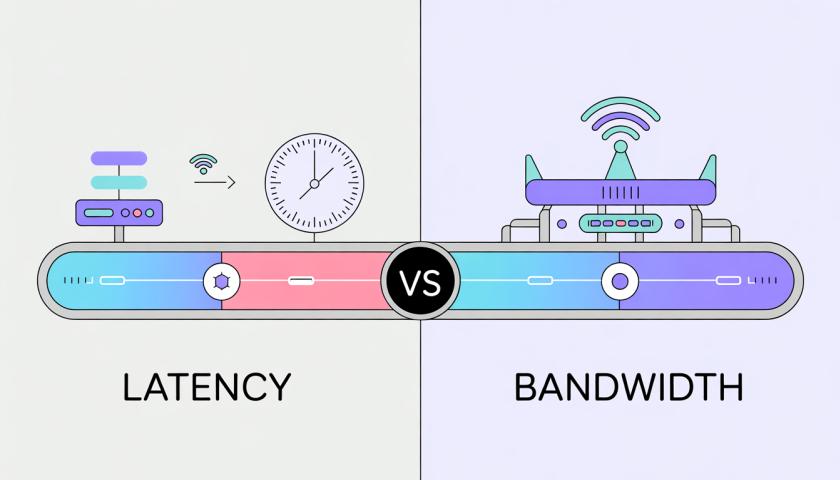
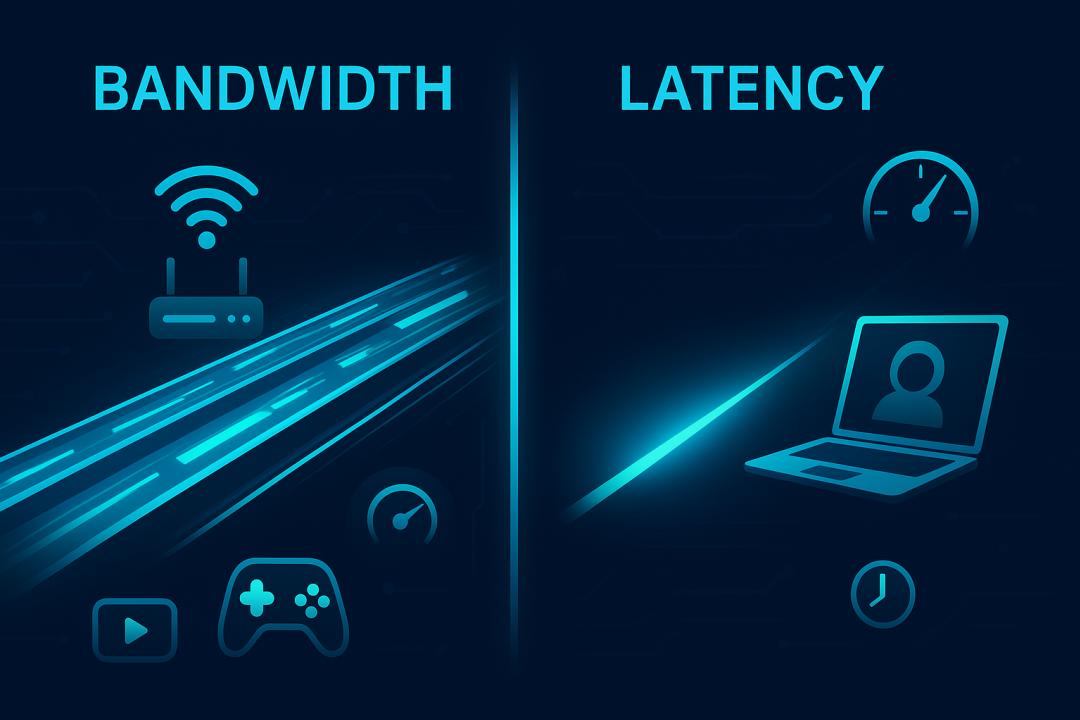
Think of bandwidth as the width of the road your data travels on. A wider road means more cars can fit at once. A narrower road leads to traffic jams. In internet terms, bandwidth is measured in Mbps or Gbps and shows how much data your connection can handle simultaneously.
When Bandwidth Matters
You feel bandwidth limitations when:
- Multiple people are streaming movies
- You’re downloading large files
- Your smart home devices all run together
- Kids are gaming while you're on a video call
- You run multiple apps that constantly sync to the cloud
If your family complains that “the internet slows down at night,” that’s usually bandwidth congestion.
What Is Latency? (The Speed of Your Response Time)
While bandwidth is the size of the road, latency is how quickly each car reaches its destination. Latency is measured in milliseconds (ms) and indicates how fast your data can travel from your device to the server and back. Low latency means a quick response, while high latency results in delays and frustration.
When Latency Matters
Latency makes a huge difference in:
- Online gaming (ping!)
- Video conferencing
- Trading platforms
- Remote work apps
- IoT devices (cameras, doorbells, smart assistants)
Even if you have massive bandwidth, high latency will make your internet feel slow.
Bandwidth vs Latency: Why Users Confuse Them
It’s easy to assume that “faster internet” just means more Mbps.
But here’s the truth:
- Bandwidth determines how much data can move at once.
- Latency determines how quickly data starts moving.
Think of ordering food online:
- Bandwidth is how many orders the kitchen can handle at once.
- Latency is how long it takes before the delivery driver even leaves.
Even the largest kitchen can’t help if your driver takes forever to start. This explains why someone with a 200 Mbps plan can still lag on video calls, while someone with 50 Mbps and good latency feels fast.
How Bandwidth Influences Your Internet Experience
Here’s how bandwidth affects daily internet tasks:
1. Streaming
Streaming in 1080p or 4K needs a lot of bandwidth. If multiple people stream at the same time, you’ll need a higher capacity.
2. Downloads & File Transfers
Downloading games, movies, software updates, and large ZIP files all require a faster, higher-capacity connection.
3. Multi-Device Homes
Every connected device from laptops to cameras to TVs uses up some bandwidth. Your connection can get crowded quickly.
4. Cloud Backups
Automatic backups, like iCloud, Google Photos, and OneDrive, quietly consume bandwidth in the background.
How Latency Impacts Real-Time Activities
Latency is the culprit behind tasks that require immediate communication:
1. Online Gaming
- Gamers call this “ping.”
- Under 20ms = fantastic.
- Over 100ms = noticeable lag.
2. Video Calls
Long pauses, awkward overlaps, and delayed reactions?
That’s latency, not bandwidth.
3. Live Streaming & Screen Sharing
Latency affects the smoothness and timing of your broadcast.
4. Smart Device Response
Ever notice a delay when you say, “Alexa, turn on the lights”?
Latency again.
Bandwidth vs Latency: Which One Do You Need More?
The answer depends on how you use your internet.
Choose More Bandwidth If You:
- Stream in 4K
- Download large files
- Run a smart home
- Have many users or devices
- Do cloud-heavy work
Focus on Low Latency If You:
- Game competitively
- Do remote work meetings
- Trade stocks or forex
- Use live apps or remote servers
Most households need a balance, not just high bandwidth.
Why Your Internet Feels Slow Even with Fast Mbps
Here’s the part that surprises people:
- High bandwidth cannot fix high latency.
You can buy a 500 Mbps plan and still get lag if:
- Your router is outdated
- Your signal is weak
- Your ISP has congested networks
- You’re on satellite or overloaded towers
- Your Wi-Fi has interference
A lot of “speed problems” are actually latency problems in disguise.
Common Causes of Bad Latency
Some connections naturally have higher latency:
- Satellite internet: longest travel distance = longest delay
- Cellular networks: tower congestion spikes latency
- Old routers: slow processing = delayed responses
- Weak signals: walls, distance, and interference play a big role
This is why improving latency can instantly make your internet feel faster, sometimes more than upgrading your plan.
How to Improve Bandwidth
- You can increase bandwidth or make better use of what you have:
- Upgrade your internet plan
- Use wired Ethernet instead of Wi-Fi
- Disconnect unused devices
- Limit background updates
- Get a modern router with dual-band or tri-band Wi-Fi
- Place your router in a central location
How to Improve Latency
Latency requires more precise fixes:
- Use Ethernet for gaming or streaming
- Reduce Wi-Fi interference
- Move closer to the router
- Update your router’s firmware
- Close apps that constantly sync
- Avoid peak usage hours
- Choose a low-latency provider (fiber > cable > wireless > satellite)
Small changes can significantly reduce your ping.
Final Thoughts: Why Both Bandwidth and Latency Matter
Now that you understand the difference between bandwidth and latency, you can see why your internet behaves as it does. They aren't enemies; they’re partners. You need bandwidth for capacity and latency for responsiveness.
A high bandwidth with bad latency leads to a laggy experience. Great latency with low bandwidth limits how many devices you can use. When both work together, your internet feels smooth, fast, and reliable. So the next time your connection slows down, you’ll know what to look for and what to fix.
FAQs About Bandwidth vs Latency
1. What is the main difference between bandwidth and latency?
Bandwidth is the amount of data your connection can handle at once, while latency measures how quickly data travels. Bandwidth affects streaming and downloads, while latency impacts real-time tasks like calls and gaming.
2. Why does my internet lag even with a fast plan?
Because lag is often caused by high latency, not low bandwidth. Even a high-Mbps plan can feel slow if your signal is weak, your router is old, or your network is congested.
3. Is bandwidth or latency more important for gaming?
Latency is much more important for smooth, responsive gameplay. Bandwidth helps with downloads, but low latency makes your actions register instantly.
4. How can I check my latency?
Run a speed test and look for the “ping” result. Lower numbers (under 50ms) are better; higher numbers lead to delays in real-time activities.
5. Does upgrading my plan improve latency?
Not always. Upgrading your plan increases bandwidth but doesn’t necessarily improve latency. That depends on connection type, network congestion, and signal quality. You might need better equipment, not just more Mbps.