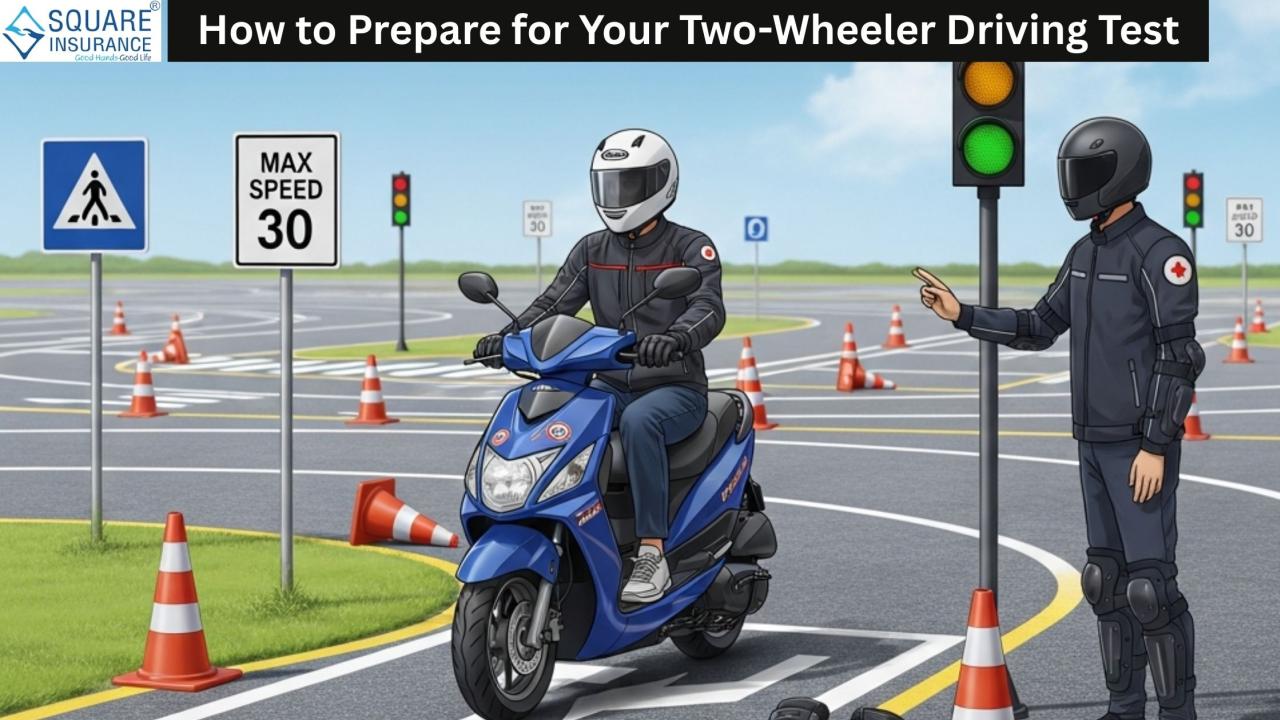
Riding a two-wheeler is considered one of the biggest milestones for people in India. But before hitting the road legally, one has to necessarily pass the two-wheeler driving test. Be it one's maiden license or upgrading one's license category, preparation would ensure that one passes confidently while building a good foundation for safe riding. This guide gives you the complete roadmap on how to prepare for your two-wheeler driving test, including practice strategies, common mistakes, tips regarding insurance consideration, and post-test advice.
1. Understanding the Two-Wheeler Driving Test
The two-wheeler driving test covers the assessment of your riding skills, traffic awareness, and safety knowledge. For two-wheelers, the test in India usually consists of two parts:
Practical Test: This is carried out on a driving circuit or in controlled traffic conditions to assess the driver's capability of managing the vehicle, executing maneuvers, and observing safety procedures.
Theory/Documentation Check: Includes checking your learner's license, age proof, and some basic understanding of the traffic rules. A few RTOs also conduct a small quiz related to traffic signs and safety.
Key competencies tested during the examination include:
- The balance and control at low and high speeds.
- Correct use of gears-smooth clutch control
- Turning, U-turns, and figure-eight maneuvers
- Braking, giving signals, and following road rules
You must pass this test to get your full driving license; it will also make a difference in your insurance. Most of the insurance companies require a valid driving license for issuing the policy.
2. Pre-Test Preparation: Choosing the Right Bike
Practicing and taking the test on the right two-wheeler can make a big difference in your confidence. Here are some recommendations:
- Automatic Scooters: These are good for beginners as no clutch operation is required. Examples include Honda Activa or TVS Jupiter.
- Gear Bikes: Suited for those who want to develop long-term biking skills. Prefer small bikes like Hero Splendor, Honda CB Shine, or TVS Sport, which are easy to handle.
- Proper Safety Gear: Always wear a helmet, gloves, and appropriate shoes. The fact that riders taking safety precautions represent a lower risk could influence premium rates with insurance providers in the future.
3. Step-by-Step Training Plan
Step 1: Basic Handling
Start by learning how to:
- Mount and dismount the bicycle safely
- Start, stop and use the clutch and brakes properly.
- Balance the bike at low speeds
Practice your riding in a closed parking area until you are able to handle the bike confidently without assistance.
Step 2: Slow-Speed Maneuvers
Focus on:
- Tight turns and U-turns
- Figure-eight and zigzag maneuvers
- Using mirrors and signaling
Slow-speed control is frequently the most difficult part of the on-road test, so invest ample practice time.
Step 3: Traffic and Road Practice
Once you are comfortable with slow-speed maneuvers, practice under real traffic conditions. Key areas to focus on:
- Lane discipline
- Following traffic lights and signs
- Overtaking safely
- Proper gear shifting
This stage will help you build up road awareness, which is important not just for the test but for safe riding throughout your life.
Step 4: Mock Test Practice
Practice mock testing with your friend or teacher who can imitate the RTO environment. Do timing while you do:
- Start/stop within marked zones
- Emergency braking
- Figure-eight and U-turn exercises
- Parallel parking-if required
Mock tests help in reducing anxiety and familiarize you with the format of the official test.
4. Common Mistakes to Avoid
Incomplete signaling: failure to indicate or give a hand signal will result in an instant fail.
- Repeated engine stalling: Practice clutch control and throttle management to avoid stalls.
- Poor balance while making a turn: slowdown accordingly and look at the direction you want to go.
- Not checking mirrors or blind spots: Always check for safety before maneuvering.
- Bad use of gears: Changing too early or too late causes instability and poor acceleration.
Knowing the common mistakes means you can target your preparation on areas most likely to affect your outcome on the test.
5. Mental and Physical Preparation
- Stay calm and confident: Anxiety is a common reason for test failure. Deep breathing exercises or short meditation before the test can help you.
- Get enough rest: Do not overpractice on the test day. Your reflexes and concentration are what will get you through.
- Nutrition and hydration: Eating light and staying hydrated will keep you alert during the test.
6. Knowing the Rules and Documentation
Before appearing for the test, ensure that you have:
- Learner’s license valid for the required period
- Age and ID proof
- Proper clothing and helmet
Familiarize yourself with the traffic rules, road signs, and basic safety protocols. Knowing such rules improves confidence and reflects well during the test.
7. After the Test: Getting Your Full Driving License
Once you pass:
- Get your driving license from the RTO
- Inform your insurance provider with your license details.
- Go for comprehensive two-wheeler insurance to guard against accidents, theft, or damage.
Besides the fact that it is required by law, licensing can also impact your insurance premium as most insurers charge lower rates to licensed riders.
8. Safety Tips for New Riders
Passing the driving test is just the beginning. Safe riding habits protect you, your bike, and your insurance record. Key tips:
- Wear your helmet, wear your protective gear.
- Obey traffic regulations and speed limits.
- Avoid riding in adverse weather conditions until experienced
- Also perform routine maintenance, including brakes, tyres, and lights.
Following these practices can lead to lower insurance premiums over time and reduce the likelihood of accidents.
9. Importance of Insurance after licensing
As Indian law requires a valid two-wheeler insurance policy, after licensure, consider the following:
- Comprehensive Insurance: Covers third-party liability, own damage, theft, and personal accident protection.
- Add-Ons: Zero depreciation, roadside assistance, and engine protection enhance the coverage.
- Premium Factors: Your license, age, bike model, and city are assessed by insurance companies to determine premiums.
- Insurance not only protects your investment but also provides peace of mind while riding.
Conclusion
Preparing for the driving test of your two-wheeler requires a combination of practical skills, traffic awareness, and being mentally prepared. Focus on confidence-building, mastering slow-speed maneuvering, real traffic practice, and safety rules. Choosing the right bike and wearing protection gear further enhance the prospects of being successful. The goal immediately after passing the test should be getting proper insurance cover so that your riding journey can begin safely and responsibly.
Follow this, and you won't just pass your two-wheeler test but also set a base for safe and confident riding for many years to come.
FAQs (Frequently Asked Questions)
Q1. How long should I practice before appearing for the two-wheeler driving test?
Practice regularly for 2–3 weeks, balancing, controlling the clutch, and riding in traffic.
Q2. Can I take the test on an automatic scooter?
Yes, automatically geared scooters such as Honda Activa are accepted for the learner and driving test.
Q3. What documents are required for the test?
Learner's license, age proof, identity proof, and in some cases, a medical certificate.
Q4. Is insurance required immediately after obtaining the license?
Yes, insurance is legally required to ride on public roads and serves to protect finances in case of accidents.
Q5. How can I decrease test anxiety?
Regular practice of mock tests and relaxation techniques, such as deep breathing before the test, will assist.