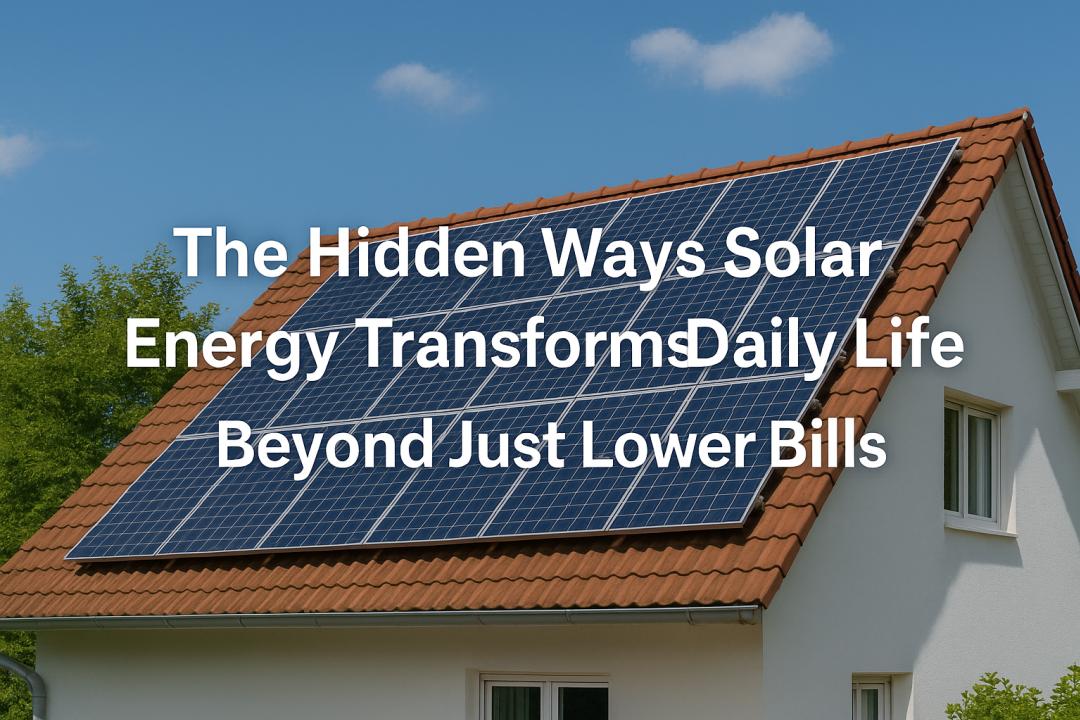

Most people talk about solar energy in the same predictable way—“it saves money,” “it’s good for nature,” “it reduces electricity bills.” While all of that is true, it barely scratches the surface.
What many people don’t realize is that going solar changes the rhythm of a household. It reshapes habits, thinking patterns, and even family decisions. It subtly upgrades everyday life in ways you can’t fully understand until you experience it.
This blog explores those lesser-known, but very real, transformations.
1. You Start Viewing Electricity Differently
Before installing solar, electricity is something people only think about when the bill arrives.
After installing solar, awareness becomes more natural:
- You notice peak sunlight hours.
- You schedule heavy-load tasks—washing, ironing, charging—during sunny periods.
- You become conscious of how much power each appliance uses.
Solar shifts the mindset from “How much did I spend this month?” to
“How can I use energy more intelligently?”
This awareness often reduces wastage without any forced effort.
2. Appliances Become Partners, Not Burdens
Most households hesitate to run appliances in the evening because grid units cost more at night or push bills up.
With solar, daytime becomes your power-golden-hour.
Families start using:Water heaters
Washing machines
Mixers
Irons
Charging points
during sunlight-rich hours with zero guilt.
Solar doesn’t just cut bills—it increases comfort by making these appliances feel free during the day.
3. Homes Become More Self-Reliant
A solar-equipped home has visibly fewer disruptions.
Even during power cuts, systems with battery backup or hybrid inverters keep essential appliances running.
People feel more secure.
A house no longer stops functioning just because the grid does. This independence reduces frustration, especially in regions where power cuts still happen.
4. Kids Become More Curious About Technology
This is a surprisingly common effect.
Children often ask:“How does the sun become electricity?
”“What happens if there’s no sunlight?
”“How does the inverter work?”
Solar panels on the roof become a real-life science lab.
Parents report children becoming more curious about engineering, environment, and innovation simply because solar made those concepts visible.
5. Your Roof Becomes a Functional Space
Before solar, the roof is typically unused.
After solar, people start appreciating:
- Cleanliness
- Panel placements
- Sun direction
- Shade management
It prompts better maintenance and smarter use of rooftop space.
Some even add rooftop gardens or hybrid systems because they’ve begun thinking about their roof as a valuable asset—not just a slab of concrete.
6. Conversations Change
Visitors start asking questions.
Neighbours get curious.
Friends want to know installation costs, performance, sunlight requirements, etc.
Solar systems naturally spark discussions around:
- Energy
- Sustainability
- Smart living
It creates a ripple effect of awareness in the community.
7. Long-Term Mindset Becomes Stronger
Solar is one of the few home investments that forces people to think about:5-year gains
10-year value
20-year savings
It builds patience and long-term thinking — something rare in daily life decisions.
Families begin applying this mindset to other areas like financial planning, home appliances, and life>
8. You Start Feeling “Future-Ready”
When a home produces its own power, there’s a subtle psychological shift:
You feel ahead.
You feel modern.
You feel more in control of your energy.
It’s not something people write about in brochures, but it’s one of the biggest emotional benefits of going solar.
Why This Perspective Matters
Most solar conversations are too technical or too sales-driven.
People forget the small, meaningful changes solar brings into normal life.
Energy awareness
Comfort
Security
Curiosity
Independence
Life>
These are the real reasons many solar users never look back.If you have made a decision to save energy don't forget to check out best solar company in kannur.