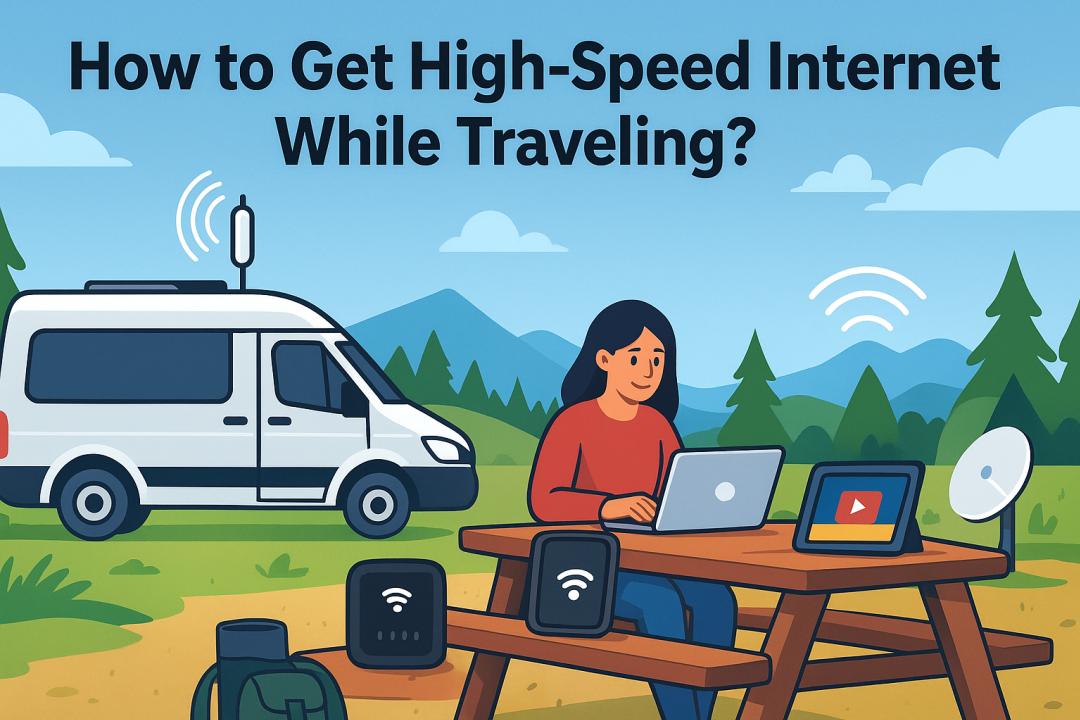
Nothing kills the excitement of a road trip or travel adventure faster than losing your internet connection. You might be trying to find your way in a new city, attending a work call from your RV, or uploading vacation photos when, suddenly, the connection is gone. So the big question is: what’s the best way to get the internet while traveling without dealing with slow speeds, spotty signals, or unpredictable coverage?
The truth is, staying connected on the road doesn’t have to be a guessing game. Today’s mobile hotspots, RV internet options, portable routers, and satellite internet give you more choices than ever to access high-speed internet while traveling, no matter where you go.
In this guide, we’ll look at the best internet options for traveling, compare what works in cities versus rural areas, and help you discover how to get Wi-Fi in your camper, RV, or hotel room without any confusion.
Why Travelers Need Reliable Internet More Than Ever
Whether you’re a digital nomad, a remote worker, a family on a road trip, or a weekend camper, reliable internet makes traveling smoother and safer. Think about it.
- GPS navigation
- Streaming music or movies
- Work emails and video calls
- Online payments and bookings
- Social media updates
- Emergency communication
When you're away from home, you may be in places with poor coverage. This is why finding the best way to get the internet while traveling is more about staying prepared than convenient.
Top Internet Options When Traveling
Let’s examine the most effective ways to get high-speed internet on the road, whether you're moving through cities or heading into the wilderness.
1. Mobile Hotspots (Phone Hotspot or Dedicated Device)
One of the easiest and most flexible ways to stay connected is using your phone or a dedicated hotspot device.
Why it works well:
Mobile networks today provide strong nationwide 4G LTE and 5G coverage. This makes hotspots one of the best internet options while traveling, especially for light to moderate use.
Pros
- Easy to set up
- Portable
- Supports multiple devices
- Works anywhere with network coverage
Cons
- Signal varies by location
- Can drain phone battery
- May throttle after data limits
Best For:
Road trippers, business travelers, and anyone who needs internet on the go without installing extra equipment.
2. RV-Specific Internet Solutions (Cellular-Based Services)
For RVers, van lifers, and long-term travelers, standard hotspots may not cut it. That’s where RV-specific cellular internet providers, like UbiFi, come in. They utilize major cellular networks paired with specialized hardware that captures stronger signals.
Why it’s effective:
These setups are designed for mobility and remote travel, making them a top choice when you need to get high-speed internet on the road consistently.
Pros
- Better signal capture
- Lower latency than satellite
- Works well while moving
- Ideal for campers and RVs
Best For:
People looking to get Wi-Fi in their camper or RV without the complexity of satellite setups.
3. Satellite Internet (Starlink, HughesNet, Viasat)
If you plan to go deep into rural, off-grid, or mountainous regions, satellite internet offers the widest coverage.
Pros
- Works in remote areas
- Doesn’t rely on cell towers
- Ideal for boondocking
Cons
- Requires equipment setup
- Can be expensive
- Higher latency
- Needs a clear sky view
Best For:
Travelers spend most of their time outside typical cell coverage zones.
4. Public Wi-Fi (Hotels, Campgrounds, Cafés, Airports)
Public Wi-Fi is convenient and cost-effective, but rarely the best internet for traveling if you need consistent speeds.
Pros
- Free or cheap
- Widely available
Cons
- Unreliable speeds
- Security concerns
- May block streaming or heavy usage
Important: Always use a VPN on public Wi-Fi.
5. Portable Travel Routers
A small travel router can make public Wi-Fi more secure and extend weak signals.
Pros
- Creates your own private network
- Boosts weak hotel or café Wi-Fi
- Good for families or multiple devices
Cons
- Relies on existing Wi-Fi
- Not useful in remote areas
So… What’s the Best Way to Get Internet While Traveling?
There’s no one-size-fits-all answer, but here’s an easy breakdown:
Road Trips: A mobile hotspot or a dedicated hotspot device is the most reliable option, giving you stable internet while navigating through different network zones.
RV Living: RV internet solutions like UbiFi or satellite internet offer strong and consistent connectivity for work, streaming, and daily use on the road.
Off-Grid Camping: Satellite internet is the best choice when you’re far from cell towers, ensuring you stay connected even in remote locations.
Hotels/Airbnbs: Using a travel router with a mobile hotspot backup helps you improve weak Wi-Fi and stay online without interruptions.
Cross-Country Travel: Cellular-based internet on major networks like Verizon or AT&T provides broad coverage and the most dependable high-speed connection across states.
To find the best internet for traveling, consider:
- Where you’re going
- How much bandwidth you need
- How many devices you’re connecting
- Whether you’ll be near cities or far off-grid
How to Boost Your Internet Speed on the Road
Even the best setup can suffer from spotty coverage. Here’s how to optimize performance:
Use an external antenna
Great for boosting cellular hotspots and RV routers.
Place your device near a window
Helps improve signal reception in vehicles.
Download maps and media offline
Saves data and avoids issues in low-signal zones.
Test multiple carriers
Some travelers carry two SIMs or plans for wider coverage.
Manage your bandwidth
Limit HD streaming, automatic updates, and large uploads.
Real-Life Example: RV Travelers
If you’re living or traveling in a camper, you may need:
- A cellular router
- An external antenna
- A backup hotspot
- Optional satellite for remote areas
Providers like UbiFi use cellular networks instead of satellite, giving RVers lower latency and smoother streaming especially on the move.
Conclusion
Staying connected on the road doesn't have to be complicated. Whether you depend on a hotspot, RV internet provider, portable router, or satellite, there are many ways to access high-speed internet while traveling regardless of your budget or destination.
The key is selecting the setup that fits your travel >
FAQs On Get High-Speed Internet While Traveling
1. What is the best way to get internet while traveling?
The best way to get the internet while traveling depends on your location and travel >
2. How can I get high-speed internet on the road?
To get high-speed internet on the road, use a reliable 4G or 5G hotspot for quick access. RV internet providers offer stronger connectivity for travelers who spend long hours driving. Satellite systems are ideal for areas without cellular coverage.
3. What’s the best internet for traveling in an RV?
The best internet for RV travel depends on whether you’re in urban or remote areas. Cellular-based RV internet provides consistent speeds for most locations. Satellite internet serves as a good backup when traveling off-grid or to rural regions.
4. Can I get Wi-Fi in my camper?
Yes, you can get Wi-Fi in your camper using a cellular router or hotspot. RV internet solutions like UbiFi improve coverage for smoother connections. Satellite internet is also an option when you’re far from cellular towers.
5. Which network is best for cross-country travel?
For cross-country travel, choose networks with extensive national coverage. Verizon and AT&T are widely recognized as the best networks for consistent service. Their wide coverage helps maintain internet connectivity across most regions.