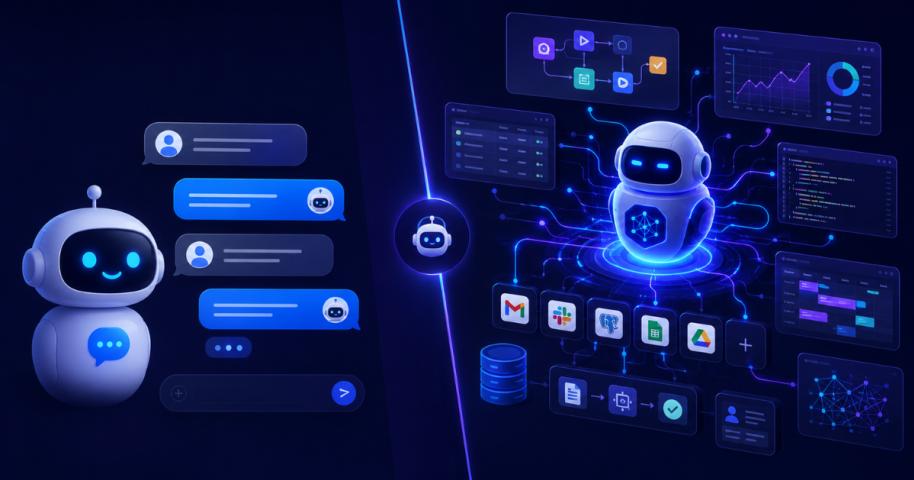
Platforms based on AI driven roleplay chat are changing how users communicate, envision the situation and interact with character simulations. With digital communication being increasingly personal and expressive, companies are using intelligent systems to develop conversational experiences that are natural and storytelling as well as high participation. A ReadyAI Roleplay Chatbot that provides a user with the opportunity to immerse themselves in fictional worlds where characters can think and adapt to emotions and change during the conversation. These neural engines combine natural language understanding systems, persona modeling systems and contextual reasoning systems to provide natural and persuasive dialogue.
The emergence of roleplay-based AI environments has prompted companies to spend vast sums of money on specific development strategies. The collaboration with an AI Chatbot Development Company will guarantee the platform with a strong architecture, a perfectly optimized logic of characters and multi-model processing capacity. The roleplay chat applications have the potential to give dynamically changing storylines and smart feedback that would engage the users of diverse genres and >
The future of Roleplay Experiences with AI.
Character-Based Dialogue Systems.
Dynamic roleplay chat rooms are based on extensive character modelling. Every AI character will have special speech patterns, emotional strata, and situation-related behaviors. The characters are imitating unique personalities, rather than generic responses, which makes the interactions so real and immersive. Such character-oriented conversations are necessary to make sure that all users have a personalized feel of the experience.
Contextual Intelligence of Role-Based Interactions.
Next-generation AI bots apply contextual inference to keep a conversation going. Contextual memory enables the system to remember the interactions of the user, comprehend narrative progression and act accordingly. This is an ability to convert predetermined answers into dynamic narratives. Combining memory storage and sentiment analysis, the chatbot is able to change its behavior without being inconsistent in its designated role.
Technical Background Roleplay Chat Platforms.
Multi-Model Artificial Intelligence and Scenario Adaptation.
Many roleplay chat systems can be based on multi-model architectures that combine text perception, emotion detection, and behavior forecasting. Such stacked models understand user intent beyond mere tips and prompts, allowing the chatbot to modify tonality and speed and structure the conversation. Scenario adaptation assists the AI to change roles, new settings or persist long-form story arcs without leaving the immersion.
Third Party API Integration of Improved Interactivity.
Third Party API Integration provides an additional experience by integrating voice interactions, translation tools, animation tools or sentiment-tracking tools. These outside elements intensify the level of storytelling and involvement. Through smooth integration, the developers are able to add new sophisticated forms of interactions, which adds to the options of the Readymade AI Roleplay Chatbot and adapt it to the needs of various markets or users.
Roleplay chat platforms strategic development approach.
Mobile App Life Cycle/System Architecture.
The life cycle of mobile app is critical in defining the functionality and the stability of the platform. Developers go through a systematic cycle, which includes planning, design, training of AI, testing and optimization and deployment. The architecture should accommodate real-time dialogue, real time inference and responsive character actions. Stability and responsiveness during the life cycle make the users more engaged and contribute to the dynamics of consistent storytelling.
Early Market Entry MVP App Development.
The MVP development of the app enables companies to launch a stable, initial form of the platform that bears the bare necessities. This strategy assists in confirming the concept of roleplay, assessing the performance of the characters and gathering user feedback. Using the example of user behavior and performance of the system, developers improve models, add choices of characters, and add new features of advanced storytelling. MVP plans mitigate risk but increase the speed of platform evolution.
Interaction Design Which Contributes to Roleplay Immersion.
Personalized Experience Under Adaptive Conversation Flow.
Adaptive conversation flow is used to make sure that the AI responds to the mood, instructions or scenario chosen by the user. The chatbot changes the tone and the words to suit the preferences of users, be they fantasy, romantic, adventurous, or dramatic. This customized conversation system makes it more immersive and makes each conversation individual.
Imagery and Personality Introduction.
Storytelling is reinforced with the use of visual elements, such as avatars, artwork, themes, and animations. These images together with the sophisticated AI engines form a multidimensional experience of interaction. The more the expressive design is compatible with the narrative tone, the more the users identify with the characters. The interface will add more realism to the role-based dialogues.
Scalability in the Long Run and Optimization.
Artificial Intelligence Refinement via Behavioural Hints.
Optimization of behavior models keeps the chatbot developing as the requirements of the users evolve. Interaction, preference, and story choices patterns are analyzed to serve the purposes of optimizing emotional accuracy and role consistency by the developers. Periodic updates increase the quality of response, which transforms the Readymade AI Roleplay Chatbot into a more expressive one.
Mobile App Maintenance Service to Continuous Improvement.
A mobile app maintenance service provides a smooth flow of the platform in its lifecycle. System reliability is ensured through regular updates, security strengthening, API upgrading and performance optimization. Constant maintenance also facilitates the implementation of new technologies and assists in maintaining a high degree of interactivity at a device and platform level.
Conclusion
The construction of active roleplay chat systems necessitates the extensive knowledge of AI-driven communication frameworks, interactive storytelling, and dialogue systems development based on personalities. As virtual environments gain more and more attention, companies are approaching an AI Chatbot Development Company to develop intelligent and expressive solutions based on the Readymade AI Roleplay Chatbot. These platforms can be transformed into very exciting and emotionally charged environments by exercising the scalable architectures, API Third Party Integration, MVP app development, and a regular maintenance service of mobile apps. High AI engines are unleashing the future generation of roleplay chat experiences, allowing users to engage with unlimited story worlds with free flowing, personalized and smart interactions.