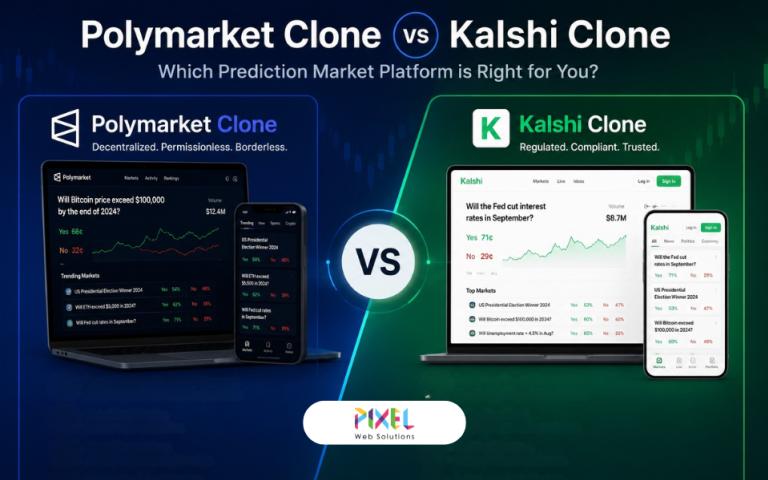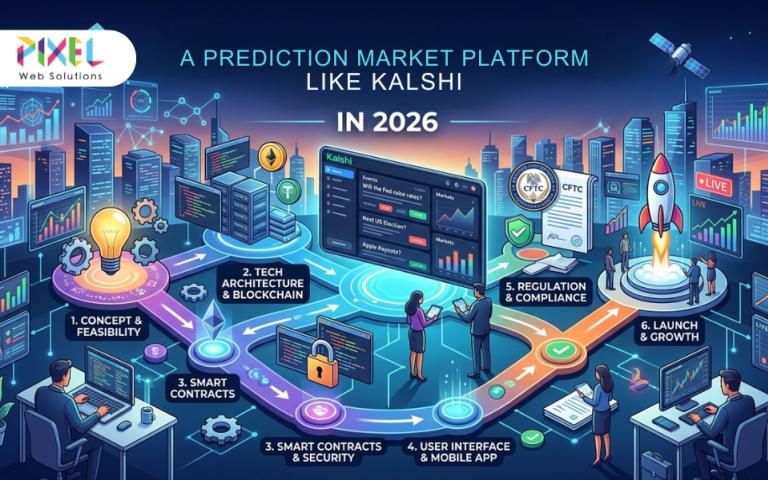

A Kalshi clone script is ready-made software that replicates the functionality of Kalshi's prediction market platform, allowing entrepreneurs to launch their own event trading marketplace. This review examines the advantages, disadvantages, and practical applications of using clone scripts for prediction market businesses. The main benefits include faster deployment, lower development expenses, and pre-tested features. The drawbacks involve customization limitations, potential security concerns, and dependency on third-party providers. Use cases range from niche prediction markets and regional platforms to corporate forecasting tools and specialized trading communities.
Understanding these factors helps business owners decide whether a clone script matches their goals, technical capabilities, and market strategy. This detailed analysis covers everything from technical architecture to business implications.
What Makes Kalshi Clone Scripts Different From Other Solutions
Kalshi clone scripts specifically replicate the event contract trading model where users buy and sell shares based on real-world outcomes. This differs from sports betting platforms, stock trading systems, or general gambling sites. The focus stays on binary and multi-outcome event predictions with transparent pricing mechanisms.
These scripts include market-making algorithms that adjust share prices based on supply and demand. As more users bet on one outcome, its price increases while alternative outcomes become cheaper. This self-balancing system creates fair market prices that reflect collective expectations.
The regulatory framework for prediction markets differs from casino gaming or sports wagering. Clone scripts typically include compliance features that help operators meet financial service regulations rather than gaming licenses. This distinction affects legal requirements, user protections, and operational procedures.
Settlement systems verify real-world outcomes through data feeds and manual confirmation processes. Unlike casino games with instant results, prediction markets must wait for events to occur and verify outcomes through trusted sources before distributing winnings.
Key Advantages of Using Kalshi Clone Scripts
Reduced Time From Concept to Launch
Building a prediction market from scratch requires planning database structures, coding trading engines, designing user interfaces, and testing every component. This process spans many months before the first user can place a trade.
Clone scripts compress this timeline dramatically. Developers install the base system in days, then spend weeks on customization rather than months on core development. This speed lets entrepreneurs enter the market before opportunities disappear.
Quick launches provide competitive advantages in emerging niches. Being the first platform dedicated to technology predictions, entertainment events, or local politics creates brand recognition that later entrants struggle to overcome.
Faster deployment means earlier revenue generation. Every month saved in development represents a month of potential income from trading fees, subscriptions, or premium features.
Lower Financial Investment Requirements
Custom development budgets include salaries for multiple specialists, project management overhead, infrastructure costs, and extensive testing periods. These expenses accumulate before generating any revenue.
Clone scripts require single purchases or subscription fees that represent a fraction of custom development costs. Saved capital can fund user acquisition campaigns, content creation, partnerships, or operational expenses instead.
Reduced financial risk makes prediction markets accessible to bootstrapped entrepreneurs who lack venture funding. Testing business concepts becomes possible without betting everything on one unproven idea.
Budget flexibility lets operators experiment with different market positions, feature sets, and revenue models. Failed experiments cost less, so entrepreneurs can try more approaches before finding what works.
Pre-Built Trading Infrastructure
Order matching engines handle the complex mathematics of connecting buyers and sellers at appropriate price points. These algorithms must execute instantly while maintaining accuracy across thousands of simultaneous transactions.
Price calculation systems determine fair value for event contracts based on trading activity. These formulas balance supply and demand automatically, creating liquid markets where users can trade freely.
Portfolio management tools let users track positions across multiple events, calculate potential profits, monitor exposure limits, and manage risk. Building these features independently requires sophisticated financial software expertise.
Real-time updates push price changes, trade executions, and market movements to users instantly. WebSocket connections and efficient data handling prevent lag that would frustrate active traders.
Established Security Protocols
User authentication systems protect accounts through password encryption, session management, and access controls. These fundamental security measures must work flawlessly to prevent unauthorized access.
Payment security follows industry standards for handling financial transactions. PCI compliance requirements, encryption standards, and fraud prevention measures come built into quality clone scripts.
Data protection mechanisms safeguard personal information, trading history, and financial records from breaches. Proper database security, encrypted connections, and secure storage practices prevent devastating leaks.
Anti-fraud detection monitors trading patterns for manipulation attempts, collusion, or abuse. Automated alerts flag suspicious activity before it damages market integrity or harms legitimate users.
Significant Disadvantages to Consider
Limited Differentiation From Competitors
Multiple operators using the same clone script create similar-looking platforms with identical features. This similarity makes standing out difficult without substantial customization investment.
Users notice when platforms feel generic or copied. Trust builds slower when sites lack unique personalities, distinctive features, or clear value propositions beyond being "another prediction market."
Generic platforms compete mainly on price, forcing operators into fee-cutting races that reduce profitability. Differentiation through features, community, or specialization allows premium pricing strategies.
Brand building becomes harder when the product closely resembles competitors. Marketing must work twice as hard to explain why users should choose one platform over functionally identical alternatives.
Dependency on Script Provider Support
Technical problems require provider assistance when operators lack in-house development expertise. Response times vary between providers, and critical issues might wait hours or days for resolution.
Updates and patches come on the provider's schedule, not the operator's timeline. Delayed security updates leave platforms vulnerable, and operators cannot force faster releases.
Provider business stability affects long-term platform viability. If the provider closes, stops supporting the product, or goes bankrupt, operators face difficult migration decisions or abandoned software.
Customization requests need provider cooperation if operators lack technical skills to modify code independently. This dependency limits control over product direction and feature development speed.
Code Quality Varies Between Providers
Some clone scripts use outdated programming languages, poor coding practices, or inefficient algorithms. These technical debts create maintenance headaches and limit future expansion possibilities.
Documentation quality ranges from excellent to nonexistent. Poor documentation makes customization difficult, slows troubleshooting, and increases dependency on provider support.
Security implementations differ significantly. Some providers prioritize security with regular audits and best practices, others ship vulnerable code that hackers easily exploit.
Performance optimization separates quality scripts from cheap alternatives. Poorly optimized databases, inefficient queries, and bloated code cause slow load times and crashes under traffic.
Potential Scalability Limitations
Architecture decisions in base scripts might not support high-traffic scenarios. Operators discover these limits only after user growth overwhelms the system, requiring expensive rebuilds.
Database structures optimized for small user bases become bottlenecks at scale. Restructuring databases with live user data risks downtime and data loss.
Third-party service limits affect platform capacity. If the script relies on external APIs with usage caps, hitting those limits breaks functionality until expensive upgrades are purchased.
Monolithic architectures resist scaling better than microservice designs. Converting from monolithic to distributed systems requires major refactoring that approaches custom development complexity.
Licensing Restrictions and Hidden Costs
License agreements might prohibit reselling, white-labeling, or multi-deployment uses. These restrictions limit business model options and revenue opportunities.
Update fees sometimes apply after initial purchase periods. Providers charge annual maintenance fees, per-update costs, or require subscription renewals to access new versions.
Customization support may incur hourly consulting fees beyond base purchase prices. Simple changes become expensive when every modification requires paid developer time.
Feature additions offered as paid upgrades fragment total costs across multiple purchases. The complete platform eventually costs much more than initial pricing suggested.
Best Use Cases for Kalshi Clone Scripts
Niche Market Prediction Platforms
Specialized platforms serving specific communities provide better value than general marketplaces. Technology professionals might prefer platforms focused exclusively on product launches, company acquisitions, and industry trends.
Cryptocurrency communities support dedicated platforms for blockchain events, token launches, protocol upgrades, and market milestones. Deep specialization attracts engaged users willing to trade frequently.
Entertainment prediction markets can focus on award shows, box office performance, streaming ratings, and celebrity news. Fan communities enjoy predicting outcomes in areas they follow closely.
Academic prediction markets help researchers forecast study replications, grant approvals, publication outcomes, and conference acceptances. These specialized markets serve needs mainstream platforms ignore.
Regional and Localized Platforms
Country-specific platforms offer events relevant to local users in native languages. Political elections, regional sports, local business outcomes, and cultural events engage audiences better than international topics.
Currency and payment localization removes friction for users who prefer local payment methods over international options. Supporting regional banking systems, mobile money, and local processors increases accessibility.
Regulatory compliance becomes simpler when operating in single jurisdictions. Understanding local laws, obtaining appropriate licenses, and following regional regulations proves more manageable than multi-country compliance.
Cultural customization lets platforms match local preferences for design, communication >
Corporate Forecasting and Decision Tools
Companies use internal prediction markets to gather employee forecasts about project timelines, sales targets, product success, and strategic initiatives. Aggregated employee predictions often outperform expert opinions.
Risk assessment markets help identify potential problems before they materialize. Employees closest to projects detect warning signs that executives miss from distant positions.
Resource allocation improves when markets reveal which projects employees believe will succeed. Budget decisions based on collective wisdom beat decisions from limited management perspective.
Change management benefits from markets that gauge employee sentiment about organizational changes, new policies, or strategic shifts. Leadership gains honest feedback that formal surveys miss.
Educational and Training Platforms
Schools and universities use prediction markets to teach economics, statistics, probability, and decision science. Students learn through practical experience rather than theoretical lectures.
Financial literacy programs use risk-free prediction markets to demonstrate trading concepts, portfolio management, risk assessment, and market dynamics without gambling real money.
Corporate training departments create simulation environments where employees practice forecasting, data analysis, and strategic thinking. These hands-on experiences build skills better than passive learning.
Research institutions study prediction market accuracy, user behavior, information aggregation, and crowd wisdom through controlled experimental platforms.
Community and Social Platforms
Interest-based communities add prediction features to existing forums, social networks, or content platforms. Integrated predictions increase engagement and time spent on sites.
Gamification strategies use prediction features as engagement tools with leaderboards, achievements, and social recognition. Competitive elements motivate participation beyond monetary incentives.
Content creators offer prediction markets about their own activities, upcoming projects, or industry developments. Direct audience engagement builds stronger creator-fan relationships.
Media organizations add reader prediction markets to articles about elections, sports, business, and current events. Interactive features increase reader engagement and return visits.
Technical Evaluation Criteria for Clone Scripts
Code Architecture and Structure
Modern frameworks like React, Vue, or Angular for frontends paired with Node.js, Python, or PHP backends indicate current technical standards. Outdated technology stacks signal maintenance challenges ahead.
Modular design separates concerns into independent components that can be updated or replaced individually. Monolithic designs where everything connects creates fragility and difficult modifications.
API-first architecture enables mobile apps, third-party integrations, and future expansion. Scripts without proper APIs limit growth and require major refactoring later.
Database choices affect performance and scalability. PostgreSQL, MySQL, or MongoDB implementations with proper indexing and optimization outperform poorly structured alternatives.
Security Implementation Standards
Encryption protocols protect data in transit and at rest. TLS certificates, encrypted database fields, and secure password hashing represent minimum security requirements.
Authentication mechanisms should include multi-factor options, session management, and brute-force protection. Weak authentication leads to account compromises and user loss.
Input validation and sanitization prevent injection attacks, cross-site scripting, and data corruption. Scripts without proper validation create security vulnerabilities.
Regular security audits and penetration testing by the provider demonstrate commitment to security. Scripts never tested by security professionals likely contain exploitable flaws.
Performance and Optimization
Page load speeds under 3 seconds maintain user engagement. Slow platforms frustrate users and reduce conversion rates significantly.
Database query optimization prevents bottlenecks as data volume grows. Proper indexing, efficient queries, and caching strategies maintain speed under load.
Asset optimization including image compression, code minification, and lazy loading reduces bandwidth usage and improves perceived performance.
CDN integration and caching strategies distribute content globally and reduce server load. These features become critical as traffic grows beyond single geographic regions.
Mobile Responsiveness and Compatibility
Mobile-first design ensures platforms work perfectly on smartphones and tablets. More than half of internet traffic comes from mobile devices, making mobile optimization mandatory.
Touch-friendly interfaces with appropriately sized buttons, readable text, and intuitive gestures create positive mobile experiences. Desktop-focused designs frustrate mobile users.
Progressive web app capabilities let mobile users install platforms on home screens and receive push notifications without requiring native apps.
Cross-browser compatibility across Chrome, Firefox, Safari, and Edge prevents user frustration from broken features or display issues.
Integration Options and Third-Party Connections
Payment Gateway Compatibility
Multiple payment options increase user convenience and reduce barriers to deposits. Supporting credit cards, bank transfers, PayPal, and cryptocurrency accommodates diverse user preferences.
Withdrawal processing automation reduces administrative burden and improves user satisfaction. Manual withdrawal approvals create delays that frustrate users and increase support requests.
Fee structure flexibility lets operators experiment with different pricing models. Percentage-based fees, flat fees, subscription models, or hybrid approaches each suit different strategies.
Multi-currency support enables international operations with automatic conversion and local currency displays. This feature expands addressable markets beyond single countries.
Data Feed and Settlement Services
Sports data APIs provide real-time scores, statistics, and outcomes for sports prediction markets. Reliable data feeds from providers like Sportradar enable accurate settlement.
Financial data integration pulls stock prices, economic indicators, commodity prices, and market data for financial prediction events. Bloomberg, Reuters, and other financial data providers supply this information.
Political and election data from trusted sources enables political prediction markets with accurate settlement. News organizations and government agencies provide verification data.
Weather and environmental data from meteorological services supports weather prediction markets with objective outcome verification.
Communication and Notification Systems
Email service providers handle account verifications, password resets, trading notifications, and marketing messages. SendGrid, Mailgun, and Amazon SES offer reliable delivery.
SMS notifications alert users about trade executions, market movements, and account activity. Twilio and similar services provide global SMS capabilities.
Push notifications keep mobile users engaged with real-time alerts about positions, outcomes, and platform news. Firebase Cloud Messaging enables cross-platform push notifications.
In-app messaging systems let users communicate with support teams, receive announcements, and get personalized recommendations without leaving the platform.
Customization Possibilities and Limitations
Design and Branding Modifications
Color schemes, logos, typography, and visual >
Layout adjustments let operators reorganize pages to prioritize different features. Custom landing pages, redesigned dashboards, and personalized user experiences improve usability.
White-labeling removes provider branding and replaces it with operator branding throughout the platform. Complete white-labeling creates the impression of custom-built software.
Theme systems in better clone scripts allow switching between different visual >
Feature Additions and Extensions
Custom event types let operators create prediction formats beyond standard binary outcomes. Multi-option events, ranged predictions, and conditional markets provide variety.
Social features like user profiles, following systems, activity feeds, and community discussions build engagement beyond pure trading. Community-driven platforms retain users better than isolated trading interfaces.
Gamification elements including achievements, badges, levels, and leaderboards motivate continued participation. Recognition and status rewards drive engagement without monetary incentives.
Automated market makers can be added to provide liquidity in thin markets. These bots ensure users can always trade even when human counterparties aren't available.
Business Logic and Workflow Changes
Custom fee structures accommodate different revenue models. Tiered pricing based on volume, maker-taker fee splits, or premium membership benefits all require workflow modifications.
Verification requirements can be adjusted based on regulatory needs or fraud prevention strategies. Different markets might require identity verification, address confirmation, or financial documentation.
Settlement processes might need customization for specific event types. Manual verification steps, dispute resolution workflows, or delayed settlement rules handle edge cases.
Risk management controls let operators limit position sizes, require margin, or restrict certain user actions. These controls protect platform stability and prevent manipulation.
Maintenance Requirements and Long-Term Considerations
Regular Update Management
Security patches must be applied promptly when providers release them. Delayed updates leave platforms vulnerable to known exploits that hackers actively target.
Feature updates add new capabilities and keep platforms competitive. Regular updates prevent platforms from feeling outdated compared to newer competitors.
Compatibility updates maintain functionality as third-party services, browsers, and operating systems change. Without updates, integrated services eventually break.
Bug fixes address issues discovered through user reports or monitoring. Accumulated unfixed bugs degrade user experience and drive customers away.
Backup and Disaster Recovery
Database backups protect against data loss from hardware failure, software bugs, or malicious attacks. Automated daily backups with offsite storage prevent catastrophic losses.
Disaster recovery plans outline procedures for restoring operations after major failures. Documented recovery processes minimize downtime and data loss.
Redundancy measures including multiple servers, load balancers, and failover systems prevent single points of failure. These investments protect against outages that lose users and revenue.
Testing recovery procedures ensures backups actually work and restoration happens within acceptable timeframes. Untested backups often fail when needed most.
Performance Monitoring and Optimization
Server monitoring tracks CPU usage, memory consumption, disk space, and network traffic. Alerts warn operators before resources run out and cause crashes.
Application performance monitoring identifies slow database queries, memory leaks, and inefficient code. These insights guide optimization efforts for maximum impact.
User experience monitoring through real user monitoring tools reveals how actual users experience the platform. Page load times, error rates, and interaction patterns guide improvements.
Analytics tracking shows which features users engage with, where they struggle, and what drives retention or churn. Data-driven decisions beat assumptions about user preferences.
Making the Right Decision for Your Business Goals
Kalshi clone scripts work best for entrepreneurs who need rapid market entry, have limited development budgets, and plan to serve niche audiences or specific regions. The pre-built foundation handles complex technical requirements that would otherwise require substantial development expertise.
The trade-offs involve less control, potential similarity to competitors, and dependency on provider support. These disadvantages matter less when operators plan significant customization, have technical teams for ongoing development, or target underserved markets where competition remains limited.
Evaluating specific clone scripts requires examining code quality, provider reputation, feature completeness, security implementation, and licensing terms. Not all scripts deliver equal value, and cheap options often create expensive problems later.
Success with clone scripts depends on execution beyond the software itself. Market positioning, user acquisition, community building, regulatory compliance, and continuous improvement determine outcomes more than the initial technology choice.
For business owners ready to commit to prediction markets, clone scripts remove technical barriers and let them focus on what matters most: serving users, building communities, and creating value in their chosen markets. Partner With Us to Launch Your Kalshi-Style Platform Successfully.