
Decentralized finance has evolved significantly since the early days of crypto swaps and liquidity pools. In 2026, decentralized exchanges (DEXs) are no longer experimental products—they are essential infrastructure within the Web3 ecosystem. As more businesses explore DeFi opportunities, one concept continues to surface: the Uniswap Clone Script.
Rather than building a decentralized exchange entirely from scratch, many teams are choosing structured, open-source-based frameworks that reduce complexity while maintaining flexibility. This article explains what a Uniswap Clone Script is, how it functions, and why it continues to be relevant in 2026—without hype or sales language.
What Is a Uniswap Clone Script?
A Uniswap Clone Script is a pre-built decentralized exchange framework inspired by Uniswap’s automated market maker (AMM) model. It includes the core smart contract logic required for token swaps, liquidity pools, and decentralized trading—while allowing developers to modify features based on specific use cases.
Importantly, it does not mean copying Uniswap line by line. Instead, it refers to using a similar architectural approach built on open-source principles, which developers can extend or adapt for new blockchain networks, governance models, or liquidity strategies.
In practice, this approach helps teams avoid rebuilding foundational DeFi mechanics that are already well understood and battle-tested.
How a Uniswap Clone Script Works
To understand its usefulness, it helps to look at how this system functions technically.
Core Functional Elements
Automated Market Maker (AMM):
Trades are executed using mathematical formulas rather than order books.Liquidity Pools:
Users provide token pairs to pools, enabling swaps and earning transaction fees.Smart Contracts:
All logic—pricing, swaps, and rewards—is handled by self-executing blockchain code.Wallet-Based Interaction:
Users connect non-custodial wallets, retaining control over their assets.
This architecture reduces reliance on intermediaries and increases transparency, which remains a central goal of decentralized finance.
Why Uniswap Clone Scripts Remain Relevant in 2026
1. DeFi Infrastructure Is No Longer Experimental
By 2026, decentralized exchanges are part of mainstream crypto activity. AMM-based models like Uniswap’s have demonstrated long-term viability, handling high trading volumes across multiple market cycles. Using a Uniswap Clone Script allows builders to rely on proven mechanics rather than untested ideas.
2. Development Efficiency Without Technical Shortcuts
Building a DEX from the ground up requires deep expertise in smart contracts, security audits, front-end integration, and ongoing maintenance. A Uniswap Clone Script reduces redundant engineering work while still allowing teams to implement custom logic, governance rules, or token economics.
3. Compatibility With Modern Blockchain Trends
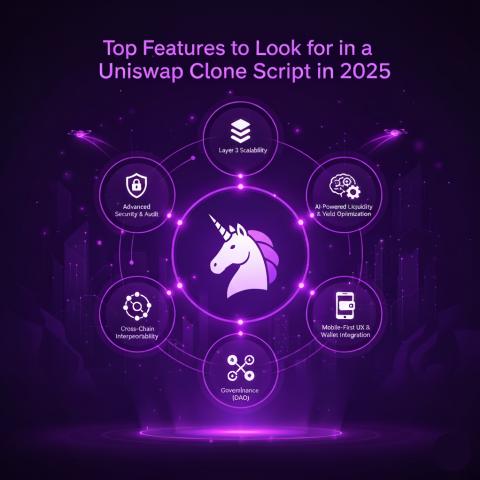
Today’s Uniswap Clone Software often supports:
EVM-compatible blockchains
Layer 2 scaling solutions
Reduced gas-fee environments
Modular smart contract upgrades
This adaptability matters as blockchain ecosystems continue to fragment and specialize.
4. Security Through Familiar Design Patterns
Many vulnerabilities in DeFi arise from experimental designs. Clone-based frameworks rely on patterns that have been audited, tested, and improved over time. While audits are still essential, starting from known structures lowers baseline risk.
Practical Use Cases in 2026
Uniswap Clone Scripts are now used in more focused and purpose-driven environments rather than generic exchanges.
Common examples include:
Token swap platforms for specific ecosystems
Liquidity hubs for gaming or NFT economies
Private or semi-permissioned DeFi platforms
DAO-governed trading protocols
Cross-chain liquidity applications
These use cases show how the model continues to evolve beyond simple token swaps.
Benefits for Builders and Product Teams
From a practical standpoint, a Uniswap Clone Script helps teams address several real-world challenges:
Shorter development timelines
Lower initial engineering costs
Easier protocol upgrades
Faster testing and iteration
Improved focus on user experience and liquidity design
This allows teams to concentrate on differentiation rather than foundational mechanics.
Limitations to Be Aware Of
While useful, clone-based development is not a shortcut to success.
Considerations include:
Smart contracts still require independent audits
Liquidity strategy is critical and non-trivial
UI/UX design strongly impacts adoption
Governance models must be thoughtfully designed
Understanding these limitations helps set realistic expectations.
Conclusion
In 2026, the value of a Uniswap Clone Script lies in its practicality. It offers a stable, flexible foundation for decentralized exchange development without forcing teams to reinvent proven DeFi mechanisms.
For builders focused on long-term sustainability, security, and adaptability, clone-based frameworks remain a logical starting point—not because they are easy, but because they are efficient and well-understood.
Understanding how and why they work is the first step toward making informed decisions in the evolving DeFi landscape.
FAQ
What is a Uniswap Clone Script?
A Uniswap Clone Script is a customizable decentralized exchange framework based on Uniswap’s AMM architecture, used to build DEX platforms efficiently.
Is a Uniswap Clone Script suitable for 2026?
Yes. Its underlying AMM model remains widely used and adaptable to modern blockchain networks and scaling solutions.
How is Uniswap Clone Software different from building a DEX from scratch?
It provides a pre-tested foundation, reducing development time and technical risk while allowing customization.
Can it support Layer 2 and multi-chain setups?
Most modern implementations are designed for multi-chain compatibility and Layer 2 integration.
Does using a clone limit innovation?
No. Innovation typically happens in governance, liquidity models, integrations, and user experience rather than core swap mechanics.