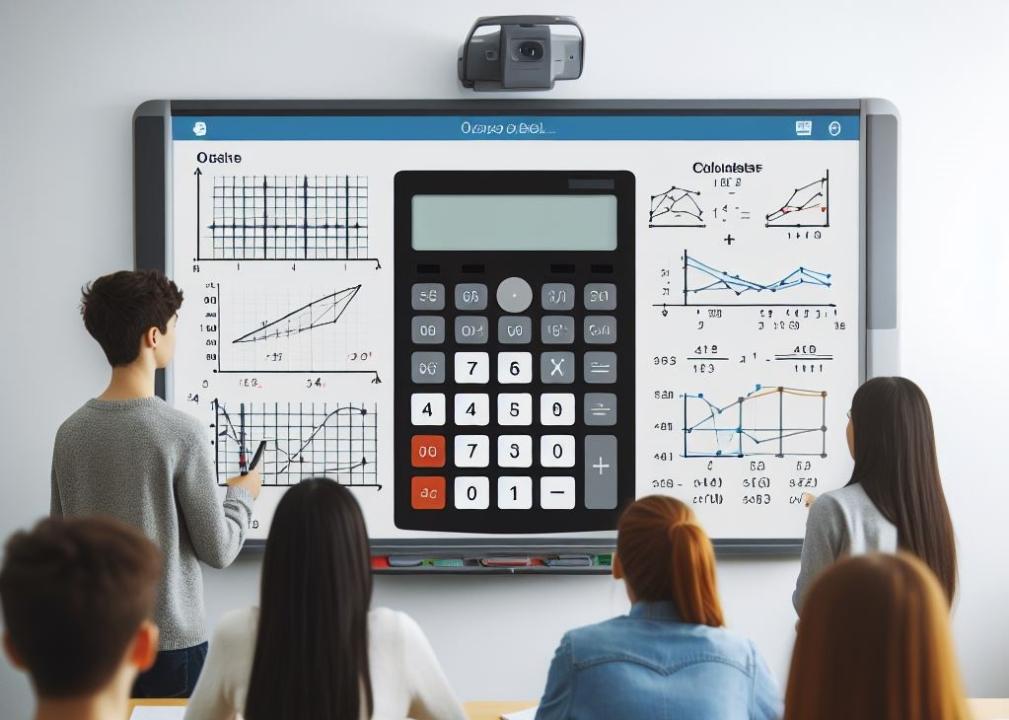
In today’s digital world, online tools have transformed how students and professionals handle everyday tasks. One of the most commonly used tools across industries and education is the online calculator. Whether performing academic equations, financial calculations, or technical measurements, these calculators provide convenience and accuracy that traditional tools often lack. Let’s explore the major benefits they offer and why more people are using them for both work and study purposes.
Convenience and Accessibility
The primary advantage of online calculators is accessibility. Because they run on websites and apps, users can access them anytime from phones, tablets, or computers. There’s no need to install any software or carry physical tools.
For example, someone working remotely doesn’t need to bring a scientific calculator or spreadsheet program. Instead, they can perform complex calculations instantly through an online platform. Students solving algebraic equations at home enjoy similar flexibility and do not have to rely on physical calculators from school.
Speed and Efficiency
Online calculators perform calculations instantly, saving valuable time. Whether solving multi-step math problems or converting measurements, users can obtain results in seconds.
Professionals benefit from fast calculations for budgeting, engineering designs, business proposals, and financial planning. Students benefit when completing homework under time constraints or solving lengthy equations during exam preparation.
Accuracy and Error Reduction
Manual calculations increase the risk of error. A single misplaced decimal or incorrect symbol can lead to inaccurate final results. Online calculators reduce such mistakes significantly by automatically performing formulas and eliminating manual input errors.
For instance, athletes and equipment technicians often use specialized calculators like a golf club length calculator to determine appropriate lengths based on height and swing measurements. These tools remove guesswork and provide precise results that physical charts can’t always offer.
Wide Variety of Calculators for Different Needs
One major advantage is the wide range of online tools available. Students and workers can find dedicated calculators for nearly every field, including:
scientific and trigonometric calculations
financial costing and loan interest
construction and material estimates
engineering conversions
algebraic and geometric calculations
physics equations
Many specialized calculators are designed for professional applications such as a shaft flex calculator used in sports equipment fitting. This level of specialization ensures accurate and reliable results for niche tasks.
Improved Productivity in Work Environments
In office, industrial, and freelance environments, productivity is crucial. Online calculators support efficiency by providing quick access to required results.
Employees handling data, pricing, invoices, or technical specifications can complete tasks more rapidly with a web-based calculator tool. Similarly, finance teams benefit from instant amortization schedules and tax estimations, reducing manual spreadsheet errors.
Because online calculator pages load quickly and do not require expensive software licenses, they support flexible working arrangements and help companies reduce operational costs.
Enhancing Learning and Academic Research
Online calculators support educational goals by assisting students in understanding mathematical concepts more clearly.
Teachers can use these tools during lectures to instantly demonstrate results. Students can practice different input values, allowing them to explore how formulas behave in real time. Instead of manually checking every result, they can focus on learning concepts rather than worrying about arithmetic accuracy.
This enhances confidence, especially for complex subjects such as calculus, physics, and statistics.
Self-Help Learning and Independent Study
Students studying independently at home often lack physical scientific calculators or textbooks. Online calculators fill that gap by providing tools accessible directly from browsers.
For example, learners practicing geometry equations can input values instantly and receive results without needing manual tools. The accessibility of an online calculator for free promotes independence and encourages more learning outside the classroom.
Multi-Device Support
Online calculators are responsive across devices. Whether accessed from:
mobile phones
tablets
laptops
desktops
they adjust automatically to screen size and resolution. For remote workers, travelers, and students studying away from home, this flexibility makes handling assignments and work obligations easier.
Customization and Advanced Functionality
Unlike basic handheld calculators, online tools often provide customization features, such as:
unit conversions
save and export options
input history
dropdown menus
adjustable formulas
Some tools offer interactive results tables and error warnings when values exceed recommended limits. Specialized calculators in sports science and engineering allow more detailed input values, such as height, grip size, or shaft stiffness in a golf club length calculator or when using a shaft flex calculator. These advanced options provide more accurate outcomes for specific technical applications.
Environmentally Friendly Alternative
Online calculators help reduce the need for disposable or battery-operated devices. Since the tools require no physical manufacturing or plastic components, they support eco-friendly alternatives. Schools, training centers, and corporate offices benefit from reducing electronic waste and the cost of replacing batteries and damaged calculators.
Conclusion
Online calculators have significantly changed how students and professionals perform calculations, offering convenience, speed, accessibility, and enhanced learning experiences. Whether used during travel, in the workplace, or at home, these tools save valuable time and reduce human error. As digital applications continue to improve, online calculation tools will remain essential resources for education and professional work.