
Artificial intelligence has moved far beyond automation and cost reduction. Today, predictive analytics powered by AI is redefining how high-growth companies forecast revenue, allocate resources, and scale sustainably. As markets become more volatile and customer behavior harder to predict, businesses that rely solely on historical data are increasingly exposed to risk.
Predictive analytics leverages machine learning models to identify patterns across massive datasets, allowing companies to anticipate future outcomes with greater accuracy. This shift is especially relevant for SaaS companies, e-commerce brands, fintech firms, and B2B service providers, where small forecasting errors can translate into significant financial losses or missed growth opportunities.
One of the main reasons predictive analytics commands a high level of executive attention is its direct impact on revenue optimization. By analyzing customer lifetime value, churn probability, pricing sensitivity, and demand fluctuations, AI-driven systems enable leaders to make decisions based on forward-looking insights rather than reactive reports. This capability is becoming a competitive moat rather than a nice-to-have feature.
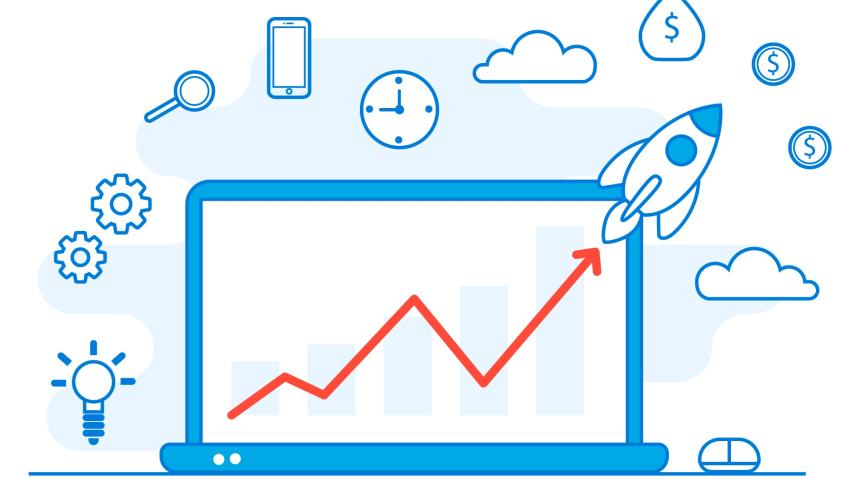
From an operational standpoint, predictive analytics also improves capital efficiency. Growth-stage companies often struggle to balance aggressive expansion with cash flow discipline. Accurate forecasts help align hiring plans, marketing spend, and inventory management with realistic growth scenarios, reducing burn rates while maintaining momentum.
Key business applications driving adoption include:
Revenue forecasting with real-time adjustment, customer acquisition cost optimizatio, churn prediction and retention modeling, dynamic pricing strategie and sales pipeline prioritization.
Another factor accelerating adoption is accessibility. Cloud-based AI platforms now allow mid-sized companies to deploy advanced predictive models without building in-house data science teams. This democratization of AI is shifting predictive analytics from an enterprise-only tool to a core component of modern growth strategy.
As economic uncertainty continues to shape global markets, predictive analytics is no longer just a technical investment. It is a strategic lever for sustainable business growth. Companies that integrate AI-driven forecasting into their decision-making processes are better positioned to scale efficiently, attract investors, and outperform competitors in increasingly data-driven industries.