Introduction
Wide Area Networks (WANs) are no longer just about connecting branch offices to a central data center. Modern applications, cloud services, and remote work demand networks that are more flexible, intelligent, and secure. This is where software-defined networking (SDN) and Cisco SD-WAN come into play. For anyone starting their journey in networking, enrolling in Cisco SDN Training is a great way to understand how networks can be managed and optimized using software-driven approaches.
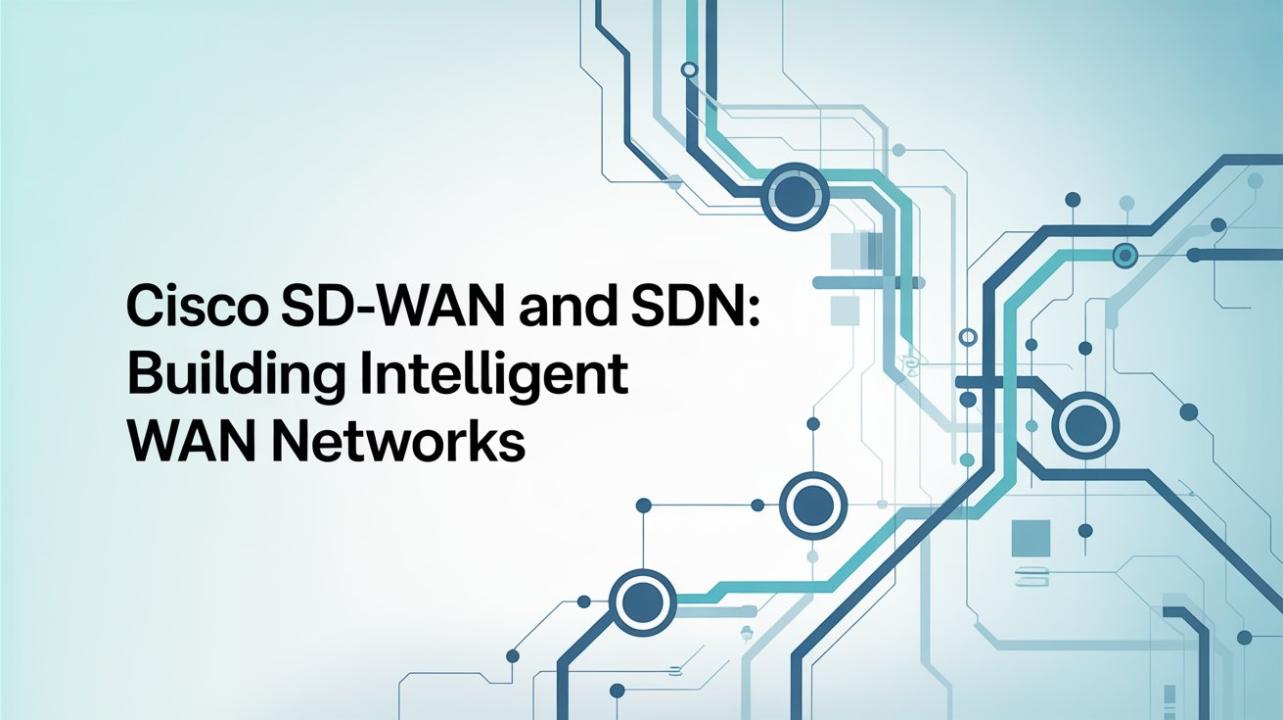
Cisco SD-WAN is one of the most important innovations in WAN technology, combining the benefits of SDN with intelligent routing and policy-driven management. Unlike traditional WANs that rely heavily on manual configuration and rigid hardware, Cisco SD-WAN allows centralized control, better traffic management, and seamless cloud integration. Understanding these concepts is essential for anyone looking to build modern, scalable networks.
What is SDN (Software-Defined Networking)?
Software-Defined Networking (SDN) is a modern approach to managing networks where control and data planes are separated. In traditional networks, each switch or router makes its own forwarding decisions. With SDN, a centralized controller manages the network, allowing administrators to define policies and let the system enforce them automatically.
The key benefits of SDN include:
Centralized management of the entire network
Automation of network configuration and provisioning
Flexibility to adjust policies based on application requirements
Improved network monitoring and troubleshooting
SDN forms the foundation for intelligent WAN networks. By separating control from hardware, SDN enables administrators to manage WANs dynamically and respond quickly to changes in traffic patterns or business needs. Many learners gain practical skills through structured SDN courses, which cover controllers, network automation, and policy-based routing.
Understanding Cisco SD-WAN
Cisco SD-WAN is an application of SDN specifically designed for wide area networks. It replaces traditional WAN architectures that rely on MPLS circuits and complex manual configurations with a software-driven overlay. This overlay allows organizations to connect branch offices, data centers, and cloud services more efficiently and securely.
Key components of Cisco SD-WAN include:
vEdge or cEdge Routers: Deployed at branch offices to connect sites
vSmart Controllers: Central controllers that define policies and manage traffic
vBond Orchestrator: Handles authentication and secure communication between network components
Cisco SD-WAN allows traffic to be routed based on business intent. For example, cloud application traffic can be sent over the internet while critical enterprise applications can use MPLS. This policy-driven approach improves performance, reduces costs, and ensures that applications get the resources they need.
Benefits of Cisco SD-WAN
Implementing Cisco SD-WAN brings several advantages over traditional WANs:
Centralized control: Network administrators can define policies from a single location
Dynamic path selection: Traffic automatically uses the best available path based on real-time conditions
Improved cloud integration: Directly connects branch sites to cloud applications like SaaS or IaaS
Enhanced security: Includes built-in encryption, segmentation, and firewall features
Simplified operations: Reduces manual configuration and troubleshooting
Because of these benefits, Cisco SD-WAN is a major component of modern enterprise networks and a focus area in SDN courses for networking professionals.
How SDN and SD-WAN Work Together
While SDN provides the principles and architecture for software-defined networks, SD-WAN is a practical implementation that applies these principles to wide area networking. In an SD-WAN environment:
The central controller defines routing and security policies
Branch devices automatically receive these policies and enforce them
Traffic is dynamically routed based on application type, network conditions, and business priorities
This combination of SDN and SD-WAN allows networks to be intelligent, automated, and resilient, reducing the complexity of traditional WAN operations while improving performance and security.
Learning Path and Career Benefits
For anyone pursuing a career in networking, understanding Cisco SD-WAN and SDN is highly valuable. Structured training programs such as Cisco SDN Training provide the knowledge required to design, implement, and manage intelligent WAN networks. Hands-on labs, simulations, and policy configuration exercises in these courses help learners gain practical skills.
Earning an SDN Certification validates your skills and demonstrates your expertise in modern networking technologies. Professionals who complete SDN courses often find opportunities in network engineering, cloud networking, and enterprise IT roles, making this knowledge both practical and career-enhancing.
Conclusion
Cisco SD-WAN and SDN are transforming how networks are built and managed. By separating control from hardware and implementing policy-driven overlays, organizations can create intelligent WAN networks that are flexible, secure, and scalable. Understanding these technologies is essential for network engineers and IT professionals looking to stay ahead in modern networking.
For learners, enrolling in structured programs such as Cisco SDN Training Online and a practical SDN course can provide hands-on experience with controllers, routing, and policy configuration. Completing an SDN Certification further validates your expertise and opens doors to advanced networking roles in enterprise and cloud environments. Gaining knowledge in Cisco SD-WAN and SDN equips professionals with the skills needed to design, manage, and optimize intelligent WAN networks efficiently.