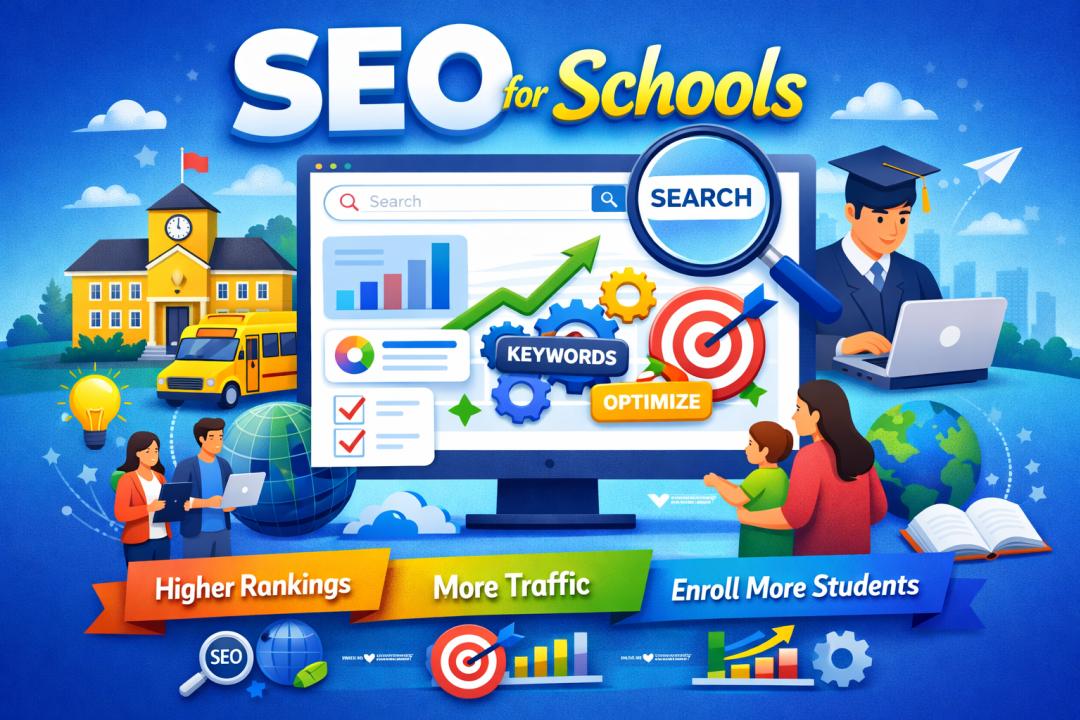
In the life of every parent, there comes a time when they need to search for the best schools for their children. For most parents, the simplest way to achieve the goal is to type “best school near me” into Google. Their decision depends on which school comes first.
If you run or manage a school and it isn’t showing on the first page of Google for your location-specific keywords, you’re missing the opportunity to connect with parents who are actively looking for the best schools in your area. That’s where Search Engine Optimization (SEO) comes in.
School SEO involves optimizing your school website and overall online presence to ensure your institution ranks on the first page of Google for relevant search terms. With effective SEO for schools, you can target the right keywords, attract parents and students, and increase inquiries by improving visibility across search engines.
Why SEO Matters for Schools
Whether you’re a public institution, a play school, or a private academy, the internet is the best way to find and connect with your audience. Most parents use search engines like Google to research schools, academic programs, fees, extracurriculars, and reviews before visiting the campus for admission or a tour.
Another exciting fact is that over 50% of all school website traffic comes from organic search. That refers to unpaid listings showing below advertisements in Google.
SEO is the only credible way to dominate organic listings and achieve higher search engine rankings.
If you’re not investing in SEO, you might be missing out on several high-potential leads that could be moving away to your competitors who are actively doing SEO.
How to do SEO for Schools
Though I recommend hiring an SEO professional for the best results, here’s a quick guide to a comprehensive SEO strategy for schools:
Step 1: Strategic Keyword Research
Every successful SEO plan begins with knowing the keywords or queries people are typing into Google when searching for a school in your area.
You can think of the possible terms parents might be using. For example, “the best school near me,” “the best elementary school in Austin,” etc.
Alternatively, you can use keyword research tools like Semrush or Google Keyword Planner to uncover your relevant keywords with search volume and competition.
Too complex? Well, there’s a simple way. Begin typing something like “private high school in Austin,” but don’t enter. You’ll see autocomplete suggestions based on popular user queries.
Also, if you scroll down to the bottom of the Google page, you’ll see a “related searches” section, which can be a great inspiration for your relevant keywords.
The next step is to include these keywords in your website content, meta tags, and off-page strategy.
Step 2: Optimize Your Content and Meta Tags
The content on your website and your meta tags are crucial elements that help Google identify and understand your content and show it for related searches.
By including keywords in your content, meta title, and description, you can tell search engine bots what your page or content is all about.
Your homepage title, for instance, should combine your school name with a primary keyword.
For example: Riverside Academy – Private College Prep High School in Austin, TX
Similarly, you should include keywords in your meta description and content, wherever possible. The key is to add keywords naturally to boost page relevance and not promote your services.
Add different variants of keywords, including long-tail keywords and exact queries, into headings (H1, H2, H3), paragraph text, image captions, alt text, and internal links.
Avoid keyword stuffing.
Step 3: Use Alt Text for Every Image
Alt text has a specific purpose—it helps search engines read and understand your images.
Bots cannot directly read images, so they read the alt text to understand what the image is about. For instance, a photo of your science lab should have a relevant and descriptive alt text like:
“Riverside Academy students conducting chemistry experiments in the science laboratory.”
This helps make your images accessible and improve their search rankings and visibility.
Step 4: Off-Page & Local SEO
Local SEO for schools ensures more visibility for your school in location-based search results. Here’s how to improve your local search presence:
- Google Business Profile: Create and optimize your Google Business listing. Ensure it has an accurate and up-to-date address, phone number, website, office hours, and photos.
- Local Directories: Get your school listed on local directories like Yelp, Niche, GreatSchools, and more.
- Local Link Building: Partner with relevant organizations, institutions, local newspapers, and education bloggers to earn quality backlinks and brand mentions.
- Reviews: Encourage happy parents to share feedback and positive reviews on Google and social media.
Create content to attract high-quality backlinks from relevant websites in the education niche to boost your authority and credibility.
Step 5: Create Content That Answers Parent Questions
Answering questions in your content boosts your chances of appearing in search results, especially in response to queries asked by parents about your schools, academics, and more.
Beyond traditional search engines, AI tools such as ChatGPT also prefer content that is written to answer specific queries.
Start a dedicated blog section on your school website to share helpful content, ideas, research, FAQ, and more.
Content ideas:
- “How to apply for admission in the school”
- “Top 5 Benefits of Elementary Education”
- “Preparing for High School Admission Tests”
Optimize content with keywords to boost its SEO reach and visibility. Create original, research-backed content to establish yourself as a trusted authority in the education space.
Step 6: Paid Advertising
While SEO builds long-term credibility, paid options like Google Ads can help you achieve immediate results, especially for competitive keywords.
Example: A preschool in Seattle aiming to rank organically for a popular keyword, “best preschool Seattle,” can struggle due to high competition. Running a Google Ads campaign alongside can help bring immediate inquiries and leads, while SEO works in the background to produce long-term growth.
Why Partner with an Experienced School SEO Company
While anyone can do basic promotion and advertising, it takes experience to design and implement a winning SEO strategy for schools. An agency with expertise in education SEO can help accelerate results by crafting a strategy that is tailored to your goals, parents’ search behavior, admission patterns, demand, and specific resources or platforms.
A professional school SEO agency such as SAG IPL can handle your comprehensive SEO needs, from optimizing the website to improving local SEO, building high-quality backlinks, and winning on social media.
Conclusion
In today’s competitive environment, your school must do more to stand out and be discoverable in search results.
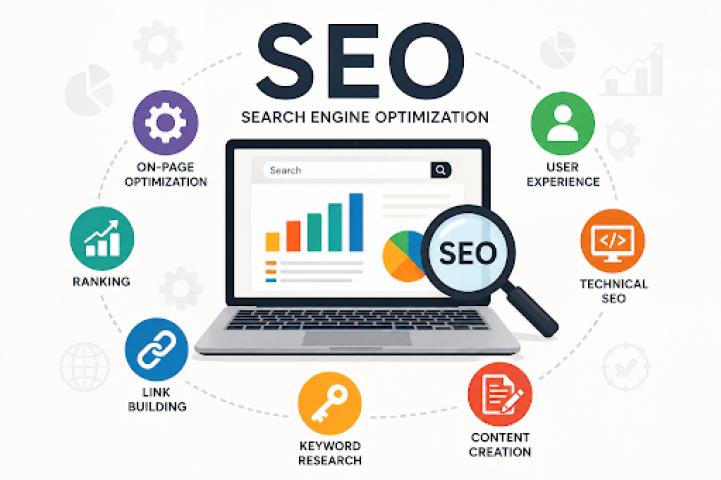
By implementing a full-service SEO strategy for schools that combines keyword research, on-page optimization, local SEO, content creation, and link building, you can achieve higher search rankings and visibility, making it easier for patients to find you.