Introduction: “Why Is Getting Good Internet So Hard Out Here?”
If you’ve ever joined a video call from a farmhouse, pushed code to GitHub from a remote town, or streamed a tutorial only to watch it buffer constantly, you know the frustration.
The big question many ask is simple: Why does internet access still seem broken in rural areas, and what actually works?
I’ve spent years talking to developers, remote workers, truckers, RV travelers, and small business owners. They all face the same issue: finding a rural internet provider that is reliable, fast enough, and doesn’t overpromise.
This isn’t a sales pitch; this is a reality check. Let’s discuss what options exist, what often fails, and which internet solutions truly work in rural areas.
The Rural Internet Myth vs Reality
There’s a common myth that rural internet is just slower city internet. That’s not true.
The real issue is infrastructure. Most traditional ISPs were designed for dense populations. Laying fiber across miles of farmland or mountains doesn’t make financial sense for them. That’s why so many people looking for an internet provider in rural areas hit the same wall: limited availability, outdated technology, or unreliable service.
The reality is that rural connectivity requires different solutions, expectations, and trade-offs.
Why Traditional Internet Providers Fall Short
DSL: Barely Hanging On
DSL still exists in many rural areas, but it’s often:
Extremely slow
Distance-dependent
Unreliable for modern workloads
If you’re doing more than checking email, DSL rarely cuts it today.
Cable & Fiber: Rare and Uneven
Cable and fiber internet offer excellent performance, but availability is the problem.
In many rural towns:
Fiber stops a few miles away
Cable infrastructure doesn’t exist
Expansion timelines are vague or never happen
This leaves many households without a realistic wired option from an internet provider in rural areas.
What Actually Works for Rural Internet Today
Let’s talk about the options that actually show results in the real world.
1. Fixed Wireless Internet (The Underrated Workhorse)
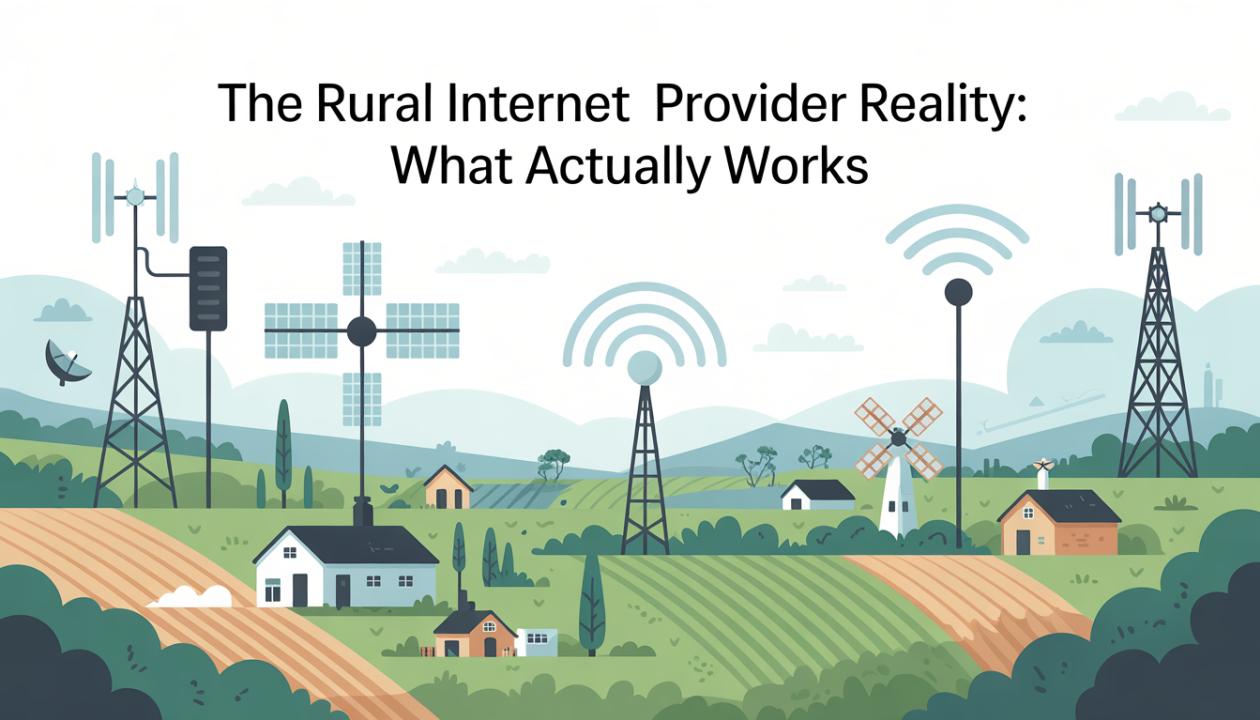
Fixed wireless uses radio signals from nearby towers to deliver internet to your home.
Why it works:
No need for underground cables
Faster deployment
More stable than older DSL
For many people, wireless internet in rural areas offers consistent speeds that support:
Remote work
Video calls
Streaming
Online gaming (with reasonable latency)
The catch? Line of sight matters. Trees, hills, and distance can affect performance.
2. Mobile LTE & 5G Internet (Surprisingly Reliable)
Mobile-based internet has become one of the most practical options for rural users. Modern LTE and expanding 5G networks now cover many areas that cable never reached. With the right modem and antenna setup, mobile internet can provide high-speed access for rural areas without waiting years for infrastructure upgrades.
Why developers and remote workers like it:
Fast setup
Portable
Scales with coverage improvements
The downside is data prioritization during peak hours, but for many, it’s still a major upgrade over legacy options.
3. Satellite Internet: Better, But Not Perfect
Satellite internet has improved dramatically in recent years.
Pros:
Works almost anywhere
No local infrastructure required
Cons:
Higher latency
Weather sensitivity
Not ideal for real-time collaboration or gaming
Satellite can be a lifesaver in extremely remote locations, but it’s not always the best daily driver for developers or heavy users.
Real-Life Use Cases: What People Actually Choose
Remote Developers
Most developers living outside cities lean toward:
Fixed wireless or LTE-based solutions
External antennas for stability
Redundancy (backup connections)
They don’t chase “maximum speed.” They chase consistency.
Small Rural Businesses
Shops, farms, and local offices often use:
Wireless internet paired with failover options
Cloud-friendly setups
Minimal downtime solutions
For them, uptime matters more than raw numbers.
Travelers & Digital Nomads
RVers and rural travelers rely heavily on:
Mobile-based setups
Flexible data plans
Hardware that adapts to changing signal conditions
This group pushed innovation in wireless internet in rural areas faster than most policymakers.
The Truth About “High-Speed” Claims
Here’s something few providers admit: “High-speed” means different things depending on location. In cities, it might mean gigabit fiber. In rural areas, reliable 50 to 100 Mbps can be life-changing.
When evaluating a rural internet provider, ask:
Is the speed consistent?
How’s latency during peak hours?
Is there real customer support?
Are speeds usable for work, not just browsing?
Infrastructure Is Improving—But Slowly
Government funding and private investment are helping to expand rural broadband, but progress is uneven. Some areas see fiber rollouts while others wait years without updates. That’s why practical, flexible solutions matter now, not someday.
The smartest users don’t wait for "perfect." They choose what works today and adapt as options evolve.
Choosing the Right Internet Provider for Rural Areas
Instead of asking “What’s the fastest?” ask:
What’s available right now?
What works with my terrain?
What supports my daily needs?
The best internet provider for rural areas isn’t the same for everyone; it depends on the situation. A nearby tower might outperform satellite. A mobile setup might be better than an old DSL. The key is to understand your environment and usage.
Conclusion: Rural Internet Isn’t Hopeless—It’s Just Different
The reality is clear: rural internet doesn’t fail because people don’t deserve good connectivity. It fails because traditional models weren’t designed for rural life.
But things are changing. With smarter wireless solutions, expanding mobile networks, and evolving technology, high-speed internet for rural areas is no longer a fantasy; it just isn’t one-size-fits-all.
If you approach rural internet with realistic expectations and the right tools, reliable connectivity is absolutely possible. You don’t need hype; you need what works.
Frequently Asked Questions (FAQs)
1. What is the best rural internet option right now?
It depends on location, but fixed wireless and LTE-based solutions often offer the best speed and reliability.
2. Is wireless internet reliable in rural areas?
Yes, when properly set up. Line of sight and signal strength greatly impact performance.
3. Can rural internet support remote work?
Absolutely. Many remote workers successfully use mobile or fixed wireless connections for their daily tasks.
4. Why is rural internet more expensive sometimes?
Lower population density and higher infrastructure costs often result in higher prices.
5. Will rural areas ever get fiber internet?
Some will, but many won’t anytime soon. Wireless and mobile technologies are filling the gap faster.