If you run a business website, you’ve probably heard “get listed in directories” as an SEO tip. The problem is that directory submission can feel messy fast: too many sites, unclear quality, inconsistent details, and no easy way to stay organized.
This article breaks down how directory listings actually help, how to choose the right directories, and a simple workflow to get real value out of submissions. Along the way, you’ll see how Directories.Best can make the process easier by acting as a hub for a network of niche directories.
Why directory listings still matter
Directory listings aren’t magic, but they can be genuinely useful when done right:
-
Discovery: People still browse category based directories to find services, tools, and companies.
-
Trust signals: Consistent business info across the web helps search engines and customers feel confident.
-
Citations and backlinks: Relevant directories can provide clean citations and occasional referral traffic.
-
Faster indexing: New sites sometimes get crawled sooner when they appear on established pages.
The key is avoiding low quality “everything goes” directories and focusing on relevance and consistency.
What makes a directory worth submitting to
Before you submit anywhere, use this quick checklist:
-
Relevance: Is it niche specific (industry, location, product type) or at least curated?
-
Quality and usability: Does it look maintained? Are listings readable, searchable, and categorized well?
-
Indexing: Can you find the directory pages in Google? If nothing is indexed, it may not help.
-
Spam level: If the directory is full of junk listings, it can be a waste of time.
-
Fields that matter: Good directories collect more than a URL, like services, category, location, and description.
You don’t need hundreds of submissions. You need the right submissions.
A simple workflow for effective submissions
Here’s a practical, repeatable process:
Step 1: Lock your “canonical” business details
Create one master version of your listing details and reuse it everywhere:
-
Business name (exact spelling)
-
Website URL
-
Short description (1–2 lines)
-
Full description (a paragraph or two)
-
Core services
-
Location (if applicable)
-
Contact email (optional)
-
Social profiles (optional)
Consistency is the whole game.
Step 2: Write descriptions that don’t look copied
Use one base description, then make 2–3 variations:
-
Variation A: benefits focused
-
Variation B: services focused
-
Variation C: audience focused
This keeps things natural while staying consistent.
Step 3: Pick directories by “fit,” not by volume
Aim for a balanced mix:
-
3–5 niche/industry directories
-
2–3 location based directories (if you serve a city/region)
-
2–3 general but curated directories
Step 4: Track what you submitted and where
Track these columns in a simple sheet:
-
Directory name
-
Submitted date
-
Listing URL
-
Status (pending/approved)
-
Notes (price, category chosen, login)
This prevents duplicate work and makes renewals easy.
Where Directories.Best fits in
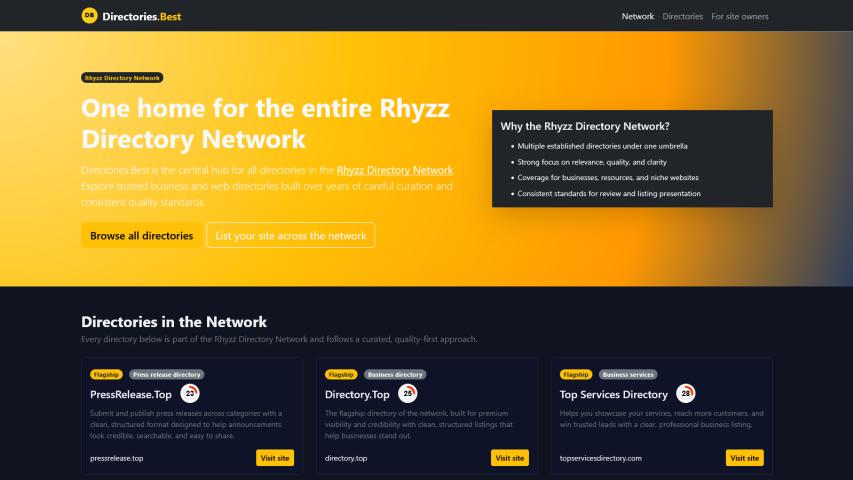
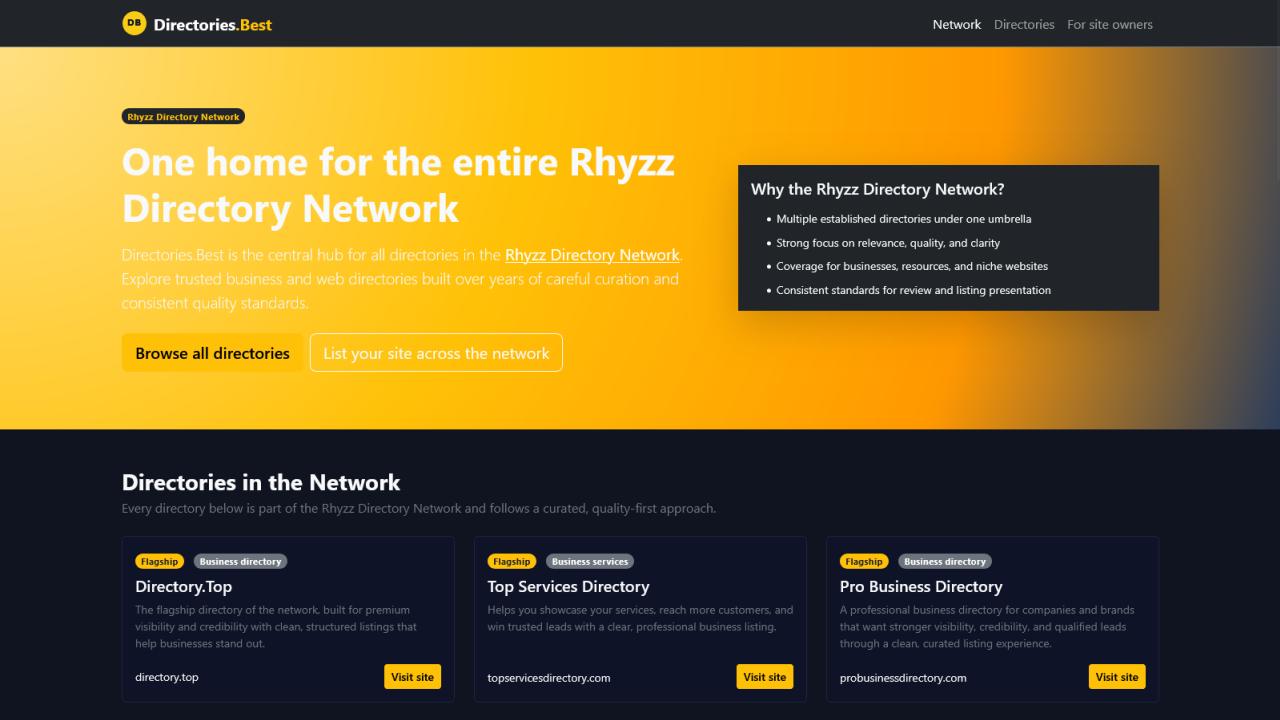
Directories.Best is built for people who want directory submissions to be organized and targeted instead of random and time consuming. It acts as a meta directory that connects you to a growing network of niche directories, so you can find the right places to list based on category and purpose.
Instead of hunting across dozens of unrelated sites, you can use Directories.Best as a starting point to:
-
discover relevant directories faster,
-
keep submissions focused on quality and niche fit,
-
and expand your visibility through structured listings.
If you’re a founder, a local business owner, or an agency managing multiple clients, that “hub” approach saves time and keeps your promotion efforts consistent.
Common mistakes to avoid
-
Submitting the same exact text everywhere
-
Choosing directories with no real categories or filtering
-
Ignoring your primary niche and spreading too wide
-
Forgetting to track approvals and listing URLs
-
Using inconsistent business names or descriptions
Final tip: quality beats quantity
A handful of strong, relevant listings can outperform dozens of weak ones. Build a clean listing profile, submit with a plan, and update your listings periodically as your services evolve.
If you want a simpler way to discover and navigate a curated directory network, start with Directories.Best and work outward from there.