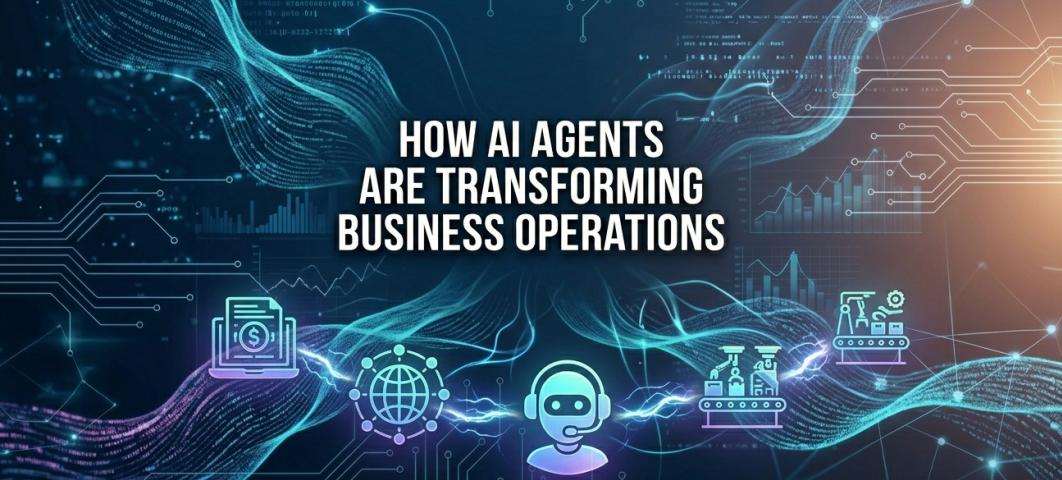
Enterprise adoption of AI agents has moved well beyond experimentation. Global organizations and strong startups now rely on AI-driven systems to handle customer interactions, internal workflows, decision support, and operational automation. In this environment, choosing the right AI Agent Development Company is no longer a technical decision alone. It is a long-term strategic commitment.
This guide explains the concrete factors that determine whether an organization offering AI Agent Development Services can support complex, multi-year enterprise initiatives without friction, rework, or escalating risk.
Why long-term AI agent projects fail at the enterprise level
Many AI initiatives struggle not because the models underperform, but because the delivery partner lacks enterprise readiness. Common failure points include:
- Architectures that cannot scale beyond initial volumes
- Poor integration with existing enterprise systems
- Limited governance around data and model behavior
- High developer churn leading to knowledge loss
- Rising costs with no measurable business return
A capable partner anticipates these challenges from day one and designs systems that can evolve with the organization.
1. Enterprise-grade architecture and scalability
Long-term AI agents must operate reliably under real-world conditions. This includes fluctuating traffic, multiple geographies, and diverse user behaviors.
A strong provider designs modular systems where conversation logic, language models, integrations, and analytics layers are loosely coupled. This allows enterprises to introduce new channels, features, or business rules without rewriting the entire system.
Key indicators to evaluate:
- Proven experience building Conversational AI Agents for high-volume environments
- Support for multi-language and multi-region deployments
- Clear performance benchmarks and load testing documentation
- Defined SLAs for uptime, latency, and throughput
Scalable architecture is not optional. It is the foundation that protects your investment as usage grows.
2. Data governance, privacy, and security controls
Enterprises operate under strict regulatory and contractual obligations. Any company delivering AI Agent Development Services must demonstrate mature data governance practices.
This includes:
- Encryption for data in transit and at rest
- Role-based access control across environments
- Configurable data retention and deletion policies
- Secure model hosting options, including private cloud or on-premise
For projects involving Generative AI Agents, governance becomes even more critical. Enterprises should require explainability mechanisms, audit trails, and documented handling of sensitive prompts and outputs.
3. Engineering discipline and production readiness
AI agents used in live environments are production systems, not research experiments. The right partner applies the same rigor found in enterprise software development.
Look for companies that demonstrate:
- Continuous integration and deployment pipelines for models and code
- MLOps workflows for versioning, monitoring, and rollback
- Real-time observability of conversations, failures, and latency
- Incident response playbooks with defined escalation paths
When enterprises Hire Skilled AI Agent Developers through a vendor, they should expect teams that have supported live systems under pressure, not just built prototypes.
4. Domain expertise and conversation design maturity
AI agents succeed when they reflect how real users think, speak, and behave. This requires more than language modeling. It demands domain understanding and strong conversation design.
An experienced partner:
- Brings prior exposure to your industry workflows
- Design conversations with clear intent boundaries and escalation logic
- Balances deterministic flows with generative responses safely
- Advises when not to use generative models
Companies offering Generative AI Consulting add value by helping enterprises decide where generation improves outcomes and where rules-based logic remains more reliable.
5. Integration with enterprise systems and workflows
Long-term AI agents must coexist with existing technology stacks. CRM platforms, ERP systems, ticketing tools, identity providers, and analytics platforms are all part of the ecosystem.
A reliable AI Agent Development Company will:
- Demonstrate experience integrating with enterprise platforms
- Provide documented APIs and reusable connectors
- Maintain versioned integration layers for long-term compatibility
- Offer clear ownership and maintenance terms
6. Talent stability and delivery continuity
Enterprise projects span months or years. Team continuity matters.
Evaluate:
- Average tenure of engineers and AI specialists
- Balance between permanent staff and contractors
- Knowledge transfer and documentation practices
- Availability of senior technical leadership throughout the engagement
A stable team reduces ramp-up time, minimizes errors, and protects institutional knowledge over the project lifecycle.
7. Responsible AI and operational risk management
As AI agents become more autonomous, enterprises must manage risk proactively.
The right partner implements:
- Bias detection and mitigation workflows
- Hallucination controls and confidence thresholds
- Human-in-the-loop escalation for critical decisions
- Clear user consent and transparency mechanisms
Regular audits and governance reviews should be built into the engagement model, not treated as afterthoughts.
8. Commercial alignment and long-term viability
Cost clarity is essential for multi-year initiatives. Enterprises should assess total cost of ownership, not just initial build expenses.
Key questions include:
- Who owns the trained models and conversation data?
- How are hosting and inference costs structured?
- Are pricing milestones linked to outcomes or usage?
- What happens if the partnership ends?
A company that plans for long-term collaboration will be transparent about these issues upfront.
A practical evaluation checklist
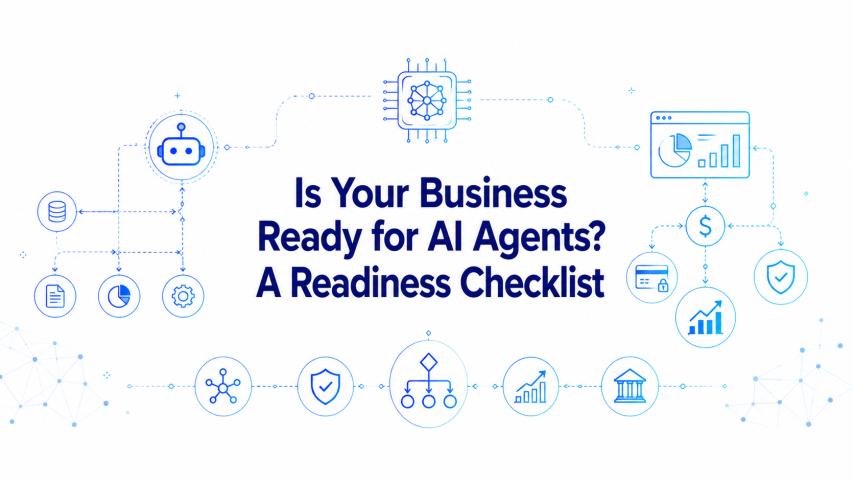
Use this checklist during vendor selection:
- Scalable architecture and performance evidence
- Enterprise-grade security and data governance
- Production-ready engineering and MLOps
- Industry-specific experience and references
- Stable, multidisciplinary delivery teams
- Responsible AI frameworks
- Clear pricing and IP ownership terms
Final thoughts
Long-term success with AI agents depends on choosing a partner that understands enterprise realities, not just AI capabilities. A qualified AI Agent Development Company combines technical depth, operational discipline, and commercial transparency to deliver systems that grow with the business.
Enterprises and well-funded startups should prioritize partners who treat AI agents as durable platforms rather than short-term experiments. Doing so ensures sustained ROI, lower operational risk, and a foundation that supports innovation over time.