Have you ever taken a cross-country RV trip, excited to work, stream, or check emails, only to find your internet connection is spotty or, worse, nonexistent? Many RV travelers face this common problem since they depend on digital connectivity.
This is where RV Satellite Internet comes in. However, figuring out how it works, which providers to choose, and what options are available can feel overwhelming. Whether you’re a full-time RVer or planning occasional trips, understanding satellite internet for RVs can save you stress, time, and money.
In this guide, we will cover everything you need to know about RV internet options. This way, you can choose the best solution for your journey. Consider it your road map to seamless internet for RV travelers.
What Is RV Satellite Internet?
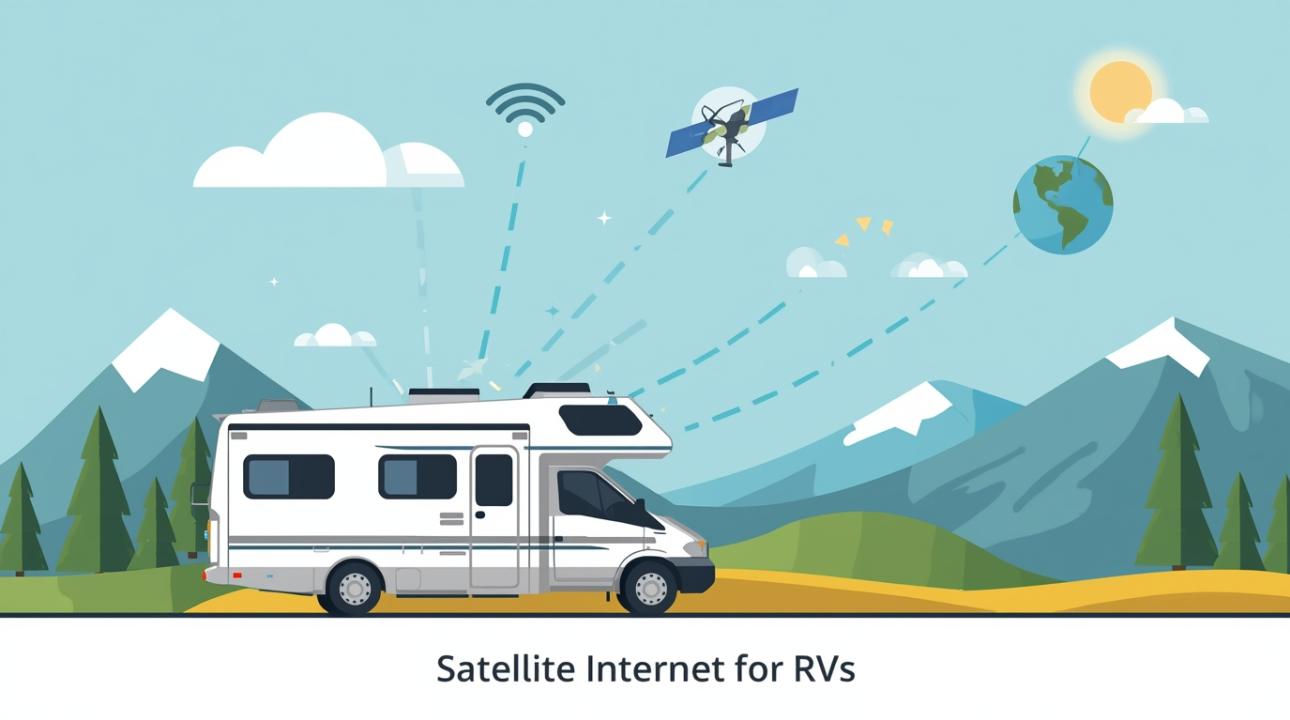
RV Satellite Internet is a way for your RV to connect to the internet through satellite signals. Unlike regular home internet that depends on cables or fiber, satellite internet works with satellites that orbit the Earth. This is great for remote areas where cell towers or Wi-Fi networks are not available.
In simple terms, you can park your RV almost anywhere, and satellite internet will provide access to emails, streaming, and work, even when you're far from civilization.
How Does Satellite Internet for RVs Work?
RV satellite internet requires a few key components:
Satellite Dish or Antenna: Mounted on your RV, it receives signals from satellites in orbit.
Modem/Router: Converts satellite signals into usable Wi-Fi inside your RV.
Service Plan: You subscribe to a satellite internet provider, just like you do with a mobile plan.
When you connect, your RV dish talks to a satellite that is hundreds of miles above the earth. The satellite then sends data to a ground station, which connects to the internet.
Even though the technology seems complicated, most modern RV satellite systems are made to be easy to use. Some even align the dish automatically.
Pros and Cons of RV Satellite Internet
Like any solution, RV satellite internet has its advantages and limitations.
Pros:
Works in remote areas without cell coverage
Reliable connection in national parks, deserts, or off-grid locations
Full-time access for work, streaming, and communications
Cons:
It can be more expensive than cellular options.
Slight latency (delay) can affect video calls and online gaming.
Weather conditions may interfere with the signal.
Understanding these pros and cons helps you decide if satellite internet is the right RV internet option for your travel >
Other RV Internet Options
While satellite internet is powerful, it’s not the only choice for RV travelers. Other RV internet options include:
Cellular Hotspots: Use mobile networks from providers like Verizon or AT&T. Great in cities and along highways, but limited in remote areas.
Public Wi-Fi: Found in campgrounds, cafes, or libraries. Free, but often unreliable or insecure.
Hybrid Systems: Combine satellite and cellular to get the best of both worlds. Services like UbiFi offer reliable high-speed internet for RV travelers by integrating multiple connectivity options, ensuring you stay online even in remote locations.
Choosing the right solution depends on your travel habits, internet needs, and budget.
Key Features to Look for in RV Satellite Internet
When evaluating satellite internet for RVs, focus on these features:
Coverage Area: Check if the provider has service in the regions you plan to visit.
Speed and Data Allowance: Download/upload speeds, as well as monthly data caps, are critical for streaming or remote work.
Equipment Type: Some dishes are auto-aligning, while others require manual setup.
Ease of Use: Look for plug-and-play systems with mobile apps for control and monitoring.
Providers are continually improving, making RV satellite systems more user-friendly and efficient than ever.
How to Set Up RV Satellite Internet
Setting up satellite internet in your RV is easier than it sounds:
Select a Provider: Choose a plan that suits your travel >
Install the Dish: Some RVs come pre-equipped; others require a roof-mounted dish.
Connect the Modem/Router: Plug it in and follow the provider's instructions.
Test the Connection: Ensure the signal is strong and Wi-Fi is active throughout the RV.
Manage Your Data: Monitor usage to avoid overage charges if your plan has a cap.
Many modern systems include automatic alignment so that you can focus on the road, not the setup.
Benefits of RV Satellite Internet for Travelers
Reliable internet opens up many possibilities for RV travelers:
Remote Work: Stay connected for emails, video calls, and cloud work.
Entertainment: Stream movies, shows, and music anywhere.
Navigation & Safety: Use online maps, GPS apps, and emergency services.
Social Connection: Video chat with friends and family from scenic locations.
It’s not just convenience, it’s peace of mind while exploring off-grid destinations.
Cost Considerations
RV satellite internet isn’t cheap, but it’s often worth the investment for serious travelers. Expect costs for:
Equipment: One-time cost for dishes and modems
Monthly Plans: Vary based on speed, data, and provider
Installation (if needed): Some setups may require professional installation
Hybrid systems combining cellular and satellite can reduce costs while providing maximum coverage.
Future Trends in RV Satellite Internet
The world of RV internet is evolving rapidly:
Smaller, more portable satellite dishes
Higher speeds with lower latency
Hybrid satellite-cellular networks for consistent connectivity
Integration with innovative RV systems
These trends make it easier for RV travelers to stay online without compromise.
Conclusion
For RV travelers, reliable internet is essential. RV Satellite Internet offers a dependable solution in areas with poor or no cellular coverage. By learning about the technology, costs, benefits, drawbacks, and setup process, you can choose the best RV internet options for your trips. Whether you are streaming, working remotely, or staying in touch with family and friends, satellite internet keeps your RV connected no matter where you go.
Frequently Asked Questions (FAQs)
1. What is RV satellite internet?
RV satellite internet is a connection method that uses satellites to provide internet access to RVs, allowing connectivity in remote areas.
2. How fast is satellite internet for RVs?
Speeds vary by provider, but most modern RV satellite systems provide sufficient bandwidth for streaming, browsing, and video calls.
3. Can I use RV satellite internet while moving?
Some systems require the RV to be stationary for optimal signal, but newer auto-aligning dishes may allow limited mobility use.
4. Are there cheaper alternatives to RV satellite internet?
Yes. Cellular hotspots and public Wi-Fi are more affordable but may not work reliably in remote areas.
5. How do I choose the best RV internet options?
Consider coverage, speed, data allowance, equipment type, ease of use, and your travel habits when selecting an RV internet solution.
6. Can I combine satellite and cellular internet for my RV?
Yes. Hybrid systems use both satellite and cellular networks to provide the most reliable connectivity across different locations.