Have you ever been on an important video call when your screen freezes? Or tried to upload files while customers wait, only to find that everything comes to a halt? At some point, nearly everyone wonders: Is my internet connection actually good enough for what I’m doing?
Whether you run a company, work from home, or manage a growing side business, picking the right internet service can either boost your productivity or hold you back. The choice isn’t just about speed; it’s also about reliability, support, security, and how much downtime you can handle.
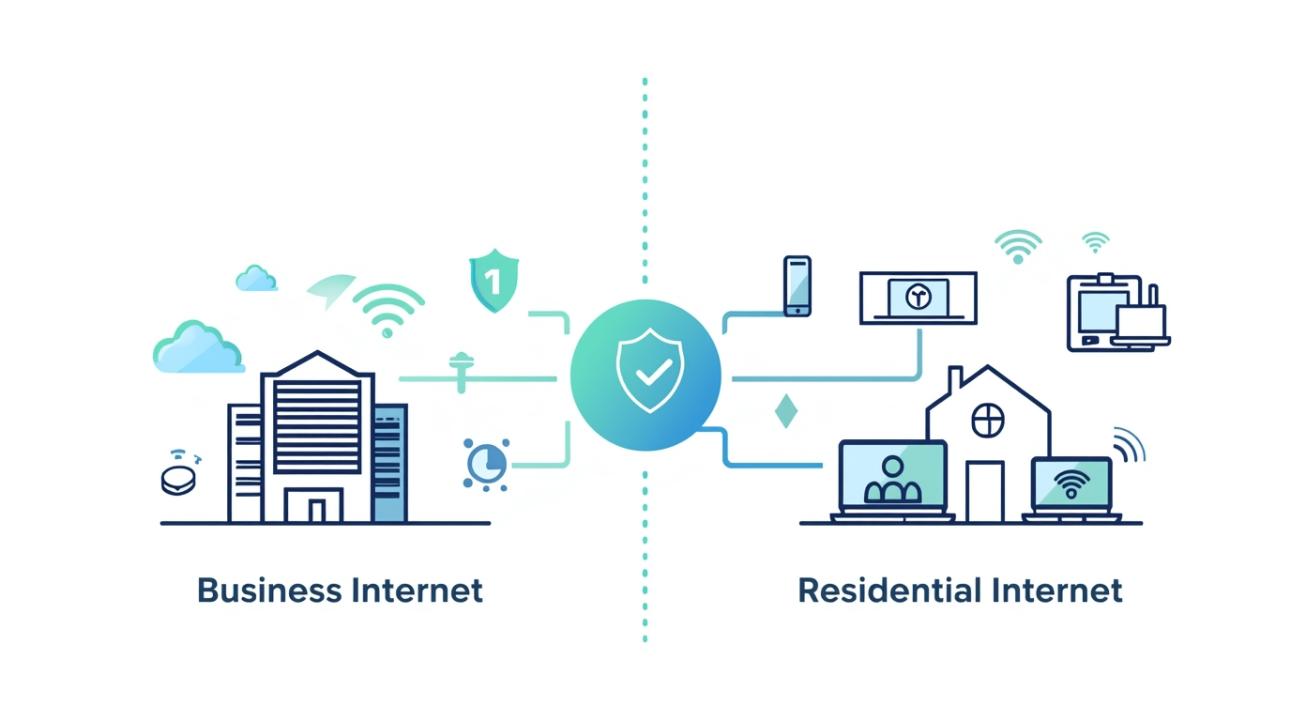
That’s why it’s important to understand the difference between business internet and residential internet. In this guide, we’ll explain everything in clear, simple terms so you can choose what fits your needs without getting lost in technical language.
What Is Residential Internet?
Residential internet is made for everyday home use. This includes streaming movies, browsing social media, gaming, online shopping, and basic remote work.
Most homes use residential internet because it’s:
Affordable
Easy to set up
Widely available
Sufficient for casual online activity
Residential plans typically prioritize download speed, which is good for watching videos or browsing. However, upload speeds are often lower. This works for most households, but it can become a problem if several people are working, streaming, or uploading content simultaneously
What Is Business Internet?
The business internet is built for performance, stability, and support. It’s designed to manage professional workloads where downtime means lost money.
Business-grade internet typically offers:
Higher and symmetrical speeds (upload and download speeds)
Better reliability
Priority customer support
Service Level Agreements (SLAs)
Enhanced security options
It’s ideal for offices, retail locations, call centers, cloud-based operations, and teams that rely on constant connectivity.
Key Differences Between Business and Residential Internet
Let’s break this down in a way that actually helps you decide.
1. Speed and Performance
Residential internet often promotes high download speeds, but the upload speeds are much lower. This can hinder video conferencing, file sharing, and cloud backups.
Business internet typically offers symmetrical speeds, which means uploads match downloads in speed. This is essential for professional use.
2. Reliability and Uptime
Residential connections lack guarantees. If there’s an outage, you might have to wait for hours or even days.
Business internet usually comes with uptime guarantees supported by service level agreements. Providers focus on restoring business connections quickly since downtime impacts operations.
3. Customer Support
Residential support is typically shared and slower, especially during peak times.
Business customers usually get:
Dedicated support lines
Faster response times
Technicians trained for complex setups
When your internet is tied to revenue, fast support matters.
4. Security Features
Residential internet offers basic protection, but that’s about it.
Business internet can include:
Advanced firewalls
DDoS protection
Secure static IP addresses
Network monitoring
This extra layer is critical if you handle customer data, payments, or sensitive information.
5. Cost and Contracts
Residential plans are cheaper and more flexible. They often come with no long-term contracts.
Business internet costs more, but you get better performance, support, and peace of mind. Many business plans require contracts, but they provide consistent service in return.
Who Should Choose Residential Internet?
Residential internet is a solid choice if:
You mainly browse, stream, or game
You work remotely but don’t rely on heavy uploads
You’re on a tight budget
Downtime isn’t a business risk
For freelancers or casual remote workers, residential internet may be enough.
Who Should Choose Business Internet?
Business internet makes sense if:
You run a business from home or an office
Multiple people rely on the connection daily
You use cloud services or VoIP phones
Internet downtime directly impacts income
You need better security and support
This is where comparing business and residential internet shifts from focusing on price to considering long-term value and reliability.
How the Internet Needs Change as You Grow
Many people start with residential internet and upgrade later, and that’s okay. But growth changes everything.
As your business expands, you may notice:
Slower speeds during peak hours
Lag during video calls
Upload bottlenecks
Security concerns
Increased customer expectations
These are signs that residential internet is no longer keeping up.
Home Office Users: A Special Case
Working from home blurs the line between residential and business use.
If your home office involves:
Client video meetings
Large file transfers
Online collaboration tools
Hosting servers or websites
…then business internet might be worth the investment, even in a residential setting.
Cost vs Value: What Are You Really Paying For?
It’s tempting to choose the cheapest plan, but the internet isn’t just an expense; it’s infrastructure.
Residential internet saves money upfront, but business internet:
Reduces downtime
Improves productivity
Enhances customer experience
Protects your data
Scales with growth
In many cases, the return on investment outweighs the higher monthly cost.
Questions to Ask Before Choosing
Before deciding, ask yourself:
How many people use the internet daily?
Do I rely on uploads as much as downloads?
Can I afford downtime?
Do I need priority support?
Is security a concern?
Your answers will point you in the right direction.
Conclusion
There’s no single answer when it comes to choosing internet. Residential internet works well for everyday use and light remote work. Business internet, on the other hand, is designed for reliability, performance, and professional needs.
If you only need internet for entertainment and casual browsing, residential internet is fine. But if your job depends on a stable connection, getting business internet can save you stress, time, and money in the long run.
The best choice is the one that supports your goals, today and as you grow.
Frequently Asked Questions (FAQs)
1. Is business internet faster than residential?
While it may not always reach the advertised speeds, business internet generally offers more consistent performance and faster upload speeds.
2. Can I run a business on residential internet?
Yes, for small or early-stage businesses, but limitations may appear as usage grows.
3. Why is business internet more expensive?
You’re paying for reliability, priority support, security features, and uptime guarantees.
4. Do I need business internet for a home office?
Not always, but it’s recommended if your work depends heavily on stable, high-quality connectivity.
5. What is a Service Level Agreement (SLA)?
An SLA is a guarantee from the provider covering uptime, performance, and response times.
6. Can I upgrade from residential to business later?
Yes. Many providers allow upgrades when your needs change, making it easy to scale.