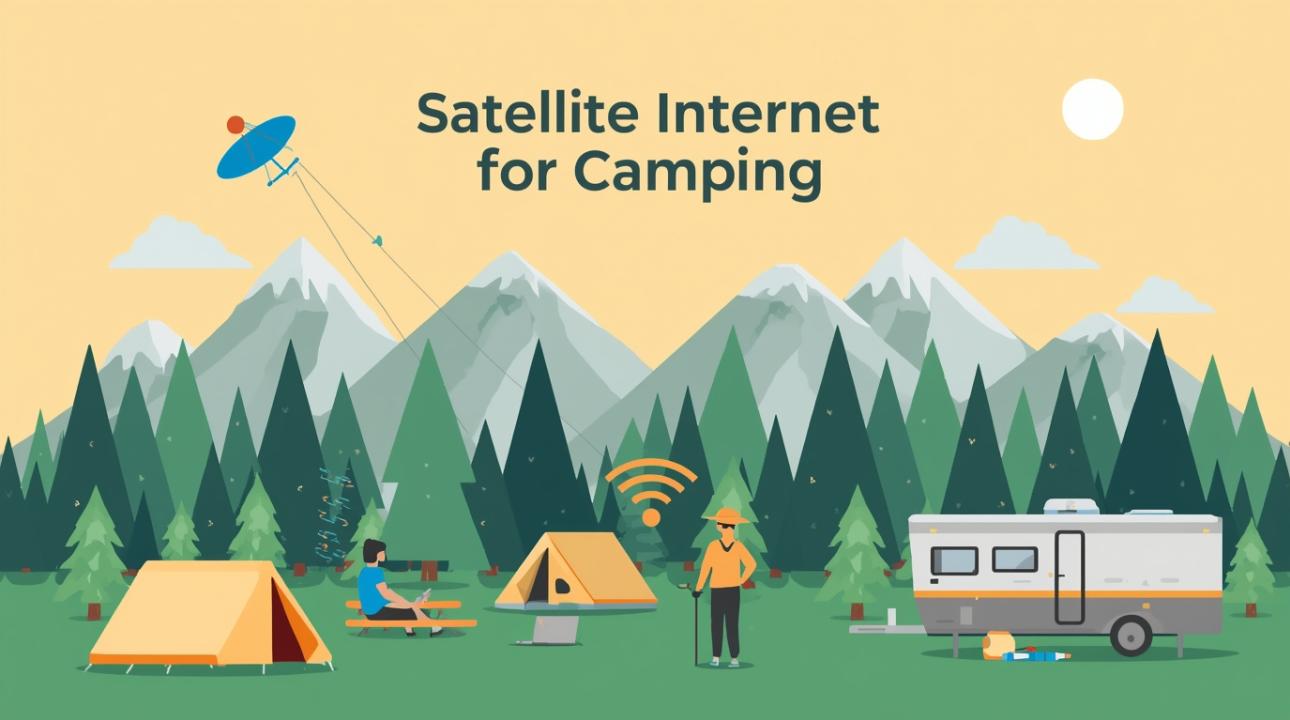
Staying Connected When the Road Takes You Off the Grid
You finally escape the city. There’s no traffic noise, no office emails, just open roads, pine trees, and star-filled skies. But then reality hits. Your GPS stops loading, your weather app won’t refresh, and that “quick work check-in” becomes impossible. Sound familiar?
For modern campers and RV travelers, staying connected isn’t about scrolling endlessly on social media. It’s about safety, navigation, remote work, emergency access, and peace of mind. This is where satellite internet comes in. If you’ve ever wondered how people manage to stream, work, or video call from the middle of nowhere, you’re in the right place.
Let’s break down how satellite internet works for camping and RV travel, who it’s best for, and what you should realistically expect before you invest.
What Is Satellite Internet and Why Does It Matter for Campers?
Satellite internet is a type of connection that sends data directly from satellites orbiting Earth. It does not depend on cell towers or physical cables. Unlike traditional internet options, it does not matter how far you are from cities or infrastructure.
For campers and RV travelers, this matters because:
Campgrounds often have unreliable or overcrowded Wi-Fi
Cellular coverage fades quickly in remote parks and forests
Emergencies don’t wait for signal bars to come back
With satellite connectivity, your internet source goes wherever you do, whether you’re in the desert, mountains, or far from the nearest town.
How Satellite Internet Works on the Road
At its core, the system is simple:
A satellite dish sends a signal to a satellite in orbit
The satellite relays that signal to a ground station
Data travels back to your dish and into your device
Modern systems use low-Earth orbit (LEO) satellites, which are much closer to Earth than older satellites. This setup leads to faster speeds, lower latency, and improved performance for real-time activities like video calls and online meetings.
For RVers, the equipment is often portable or mounted in the vehicle. It’s designed to be easily packed up and set up again as you change locations.
The Biggest Benefits for RV Travelers and Campers
1. Internet Access Where Cell Service Fails
National parks, boondocking sites, and off-grid areas often have weak signals. Satellite internet fills that gap reliably.
2. Remote Work Without Compromise
Digital nomads no longer have to pick between making a living and having adventures. With steady connectivity, working from your RV is practical, not risky.
3. Safety and Emergency Preparedness
Weather alerts, emergency communication, and navigation tools can be life-saving when traveling in isolated areas.
4. Entertainment During Downtime
Streaming, gaming, and video calls help balance outdoor exploration with downtime, especially on long trips or rainy days.
Real-World Limitations You Should Know
Satellite internet isn’t magic, and it’s important to understand the trade-offs.
Clear Sky Requirement: Trees, mountains, or heavy obstructions can reduce signal quality
Power Usage: Some setups draw more power than mobile hotspots
Cost: Equipment and monthly plans are typically more expensive than cellular options
Setup Time: While newer systems are simpler, deployment still takes planning
Knowing these factors upfront helps avoid frustration and unrealistic expectations.
Who Should Consider Satellite Internet?
Satellite connectivity isn’t for everyone, but it shines for specific travel >
Full-time RVers living and working on the road
Campers who frequently stay in remote or off-grid locations
Emergency-conscious travelers prioritizing safety
Content creators and professionals needing reliable uploads
If most of your trips are near urban areas, a cellular hotspot may suffice. But if freedom and flexibility are what you want, satellite internet becomes a strong option.
Choosing the Right Setup for Your Travel Style
Before buying, ask yourself a few practical questions:
Do you stay in one spot for days or move daily?
Do you often camp under heavy tree cover?
Do you mainly use the internet for work, safety, or entertainment?
How much power can your RV or setup handle?
Portable systems work well for campers who frequently set up and take down. Mounted systems suit full-time RV travelers looking for quick setup and minimal hassle.
The Future of Connectivity for Campers
Satellite technology is advancing quickly. Faster speeds, wider coverage, smaller equipment, and lower costs are changing how people travel
As infrastructure grows, more travelers will explore without losing their connection. This change is redefining what “off-grid” means; it’s no longer about being disconnected, but rather about being independent.
Around the midpoint of your travel planning, it’s important to note that Satellite internet for camping is becoming a practical tool rather than a luxury. This is especially true for those who want flexibility and security while on the road.
Conclusion: Is Satellite Internet Worth It for Camping and RV Travel?
If your idea of camping includes a complete digital detox, then satellite internet may not be needed. However, for travelers who mix adventure with work or safety, it can be beneficial.
It allows for freedom without feeling isolated, exploration without worry, and mobility without losing connection. The key is to understand your needs and pick a solution that supports your life>
When used with purpose, satellite internet can actually improve the camping experience.
Frequently Asked Questions (FAQs)
1. Does satellite internet work everywhere while camping?
Satellite internet functions in many open locations around the world, but its performance may decline in places with dense tree cover, cliffs, or deep valleys.
2. Is satellite internet fast enough for video calls?
Modern low-Earth orbit systems usually support video conferencing, streaming, and online collaboration with little lag.
3. How difficult is it to set up satellite internet at a campsite?
Most modern systems are designed for easy setup, often taking 5–10 minutes once you’re familiar with the process.
4. Can I use satellite internet while driving my RV?
Some advanced systems support in-motion use, but many require you to be parked for optimal performance.
5. How much power does satellite internet use in an RV?
Power usage varies by system, but most require a steady power source, making solar or battery planning important.
6. Is satellite internet better than cellular hotspots for RV travel?
Satellite internet is particularly effective in remote areas where cellular service is unavailable, while hotspots are more affordable and adequate near cities or highways.