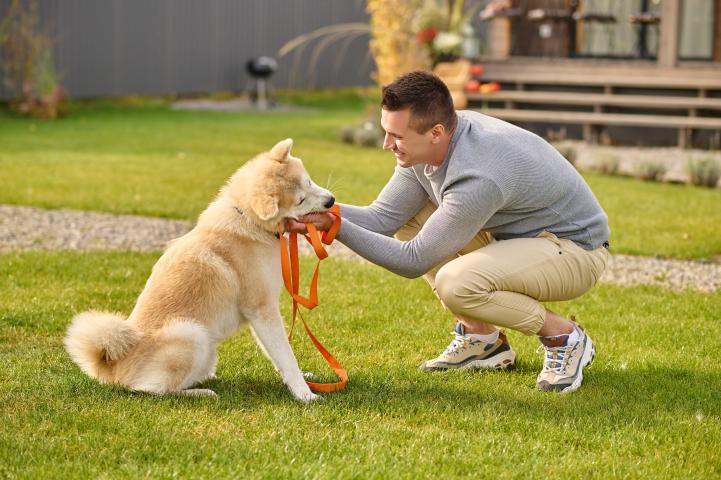
Dogs are loving companions as well as a source of happiness in a home, but when they develop behavior issues, then that happiness is easily changed into stress and frustration. The most common problems encountered by the dog owners include excessive barking, fear, aggression, anxiety of various types including separation, leash pulling and destructive habits.
The
positive aspect of this is that these problems cannot be regarded as an
invariable trait of character; this is just a behavior which can be reformed
with appropriate organization and counseling. The behavior challenges at Howies
Happy Dog Training and Development, LLC, Central Missouri, are met in a
professional and goal-oriented manner that restores the balance and respect.
Most of the frustrated owners start searching online for Dog BehavioralModification in Colimbia Missouri.
The
first step is to understand the cause of behavior problems to rectify them.
Dogs misbehave due to numerous reasons; they can be afraid, lack an
authoritative figure, they are not trained, may be anxious, or be bored. The
behavior modification training approach involves the identification of such
triggers and substituting the unwanted behavior with more reliable and
appropriate responses.
Aggression directed at People or Other Dogs
The
most severe canine behavior problem is aggression. It can come in the form of
growling, snapping, lunging or biting. Aggression is usually a result of fear,
territorial instinct, lack of socialization or inconsistent leadership.
The
Contribution of Modification Training:
Behavior
modification is directed at the root cause and is not merely the act of
suppressing the response. Dogs are trained in other behaviors by using
disciplined drills, demarcation and regulated exposure. Special courses devoted
to the issues of aggression provide the safety and help to develop
self-confidence and trust.
Excessive Barking
Barking
is normal communication, but too much of it would be disruptive. Dogs can bark
because they are bored, anxious, they are demonstrating their territory, or
they are disorganized.
The
contribution of modification training:
Training creates a situation whereby there are set rules to understand when it is okay to bark and when it is not. Excessive vocalization can be minimized by reaffirming the behavior of calmness and mental stimulation. Drills of obedience and regular involvement divert the energy in constructive directions.
Separation Anxiety
When
dogs are left alone, they can whine, chew furniture, scratch doors or even
escape. The matter is based on insecurity and emotional dependence.
The
contribution of modification training:
Gradual
desensitization methods train dogs to stay calm when they are out of the
company of their owners. Confidence is formed by means of obedience, leadership
and organized independent exercises, which lead to decreased anxiety in the
long term.
Destructive Behavior
The
complaints are chewing shoes, tearing cushions and digging inside. As much as
puppies have the tendency to try to use their mouths to explore, constant
destruction is usually a sign of unmet needs.
The
contribution of modification training:
The
behavior modification will determine the cause of the problem to be boredom,
surplus energy or absence of boundaries. Obedience routines, tracking exercises
and tasks that appeal to the mind are healthy outlets of energy, particularly
among working breeds.
Leash Pulling and Lack of Control
It
may be tiresome and even perilous to walk a dog that pulls all the time or does
not follow instructions. This tendency usually cultivates when dogs are not
trained in organized leash behavior.
The
contribution of modification training:
Ordered
leash training supports relaxed walking and obedience. Effective expectations
and rehearsals in diverse settings will make sure that obedience is carried out
during training sessions in the real world.
Responsiveness to People, Auditory or Other Animals
Reactive dogs can lunge, bark or panic towards triggers in the form of strangers,
noises, or other dogs. Fear or overstimulation can be a cause of reactivity.
The
contribution of modification training:
Constant
exposure coupled with regular leadership minimizes overreactions. Dogs are
taught to concentrate on their owner as opposed to acting unexpectedly. The
triggers decrease in intensity with time as the dog becomes confident and
clear.
The Importance of Professional Behavior Modification
Misbehaviors do not ever end by themselves, especially if they have been for an extended time frame . Indeed, their neglect tends to make patterns even stronger. Professional training offers a structured solution to the temperament and motive of the particular dog.
Howies
Happy Dog Training and Development, LLC provides in-depth programs, which are
inclusive of puppy training, competition training, such as AKC competition,
Schutzhund competition, tracking, problem-solving and specialty aggression
training. Dogs are tested separately, and the methodology that should be used
is used to obtain reliable results.
Behavior
modification can be taught best through private training since the individual
can learn the challenges of life within the dog environment. Training is not
generic group training but rather about the specific triggers and routines that
affect home-based behaviour.
When
looking at Dog behavioral modification Near me, dog owners are usually seeking
a temporary solution to the mess. Nevertheless, the real solution is regular
organization, management, and communication. Behavior change enhances
human/canine relationship, as it creates trust, respect and understanding.
The Long-term Perks of Behavior Modification
Effective
training in modification does not just get rid of undesired behaviors, it
changes the entire relationship between dog and owner. Dogs acquire confidence,
a feeling of stability, and direction. Owners are able to have control,
tranquility and a reliable companion.
Dogs
that are of working breeds and high-drive dogs especially enjoy advanced mental
development, like training in tracking and competition. Such activities are a
constructive way of channeling energy as well as increasing obedience and
discipline.
The
cases of aggression demand special skills and time. Trying to cope with such
problems on your own may increase the danger. The behavior modification is
allowed in a structured manner so as to be safe and re-modify the responses on
a gradual basis.
Conclusion
Typical
issues in canine behaviors, such as aggression, anxiety, reactivity, or
destructive behaviors are not irreversible. They are behaviors that are
learned, but they can be changed with the right guidance and consistency.
Professional expertise, routines and early intervention play a huge role in the
long-term success.
To
dog owners in Central Missouri who are interested in reliable outcomes,
customized programs offer the framework that is required to bring order to the
house. The people who are searching Canine Behavioral Modification near youonline need to seek a qualified practitioner who is aware of the concept of
aggression, working breeds, competition training and practical obedience. Even
the most problematic behaviors can be reformed to become engaged and trusted
partners, even when approached correctly.