Patient Specific Implants: The Future of Personalized Surgical Precision
Modern medicine is rapidly shifting toward personalization. From targeted cancer therapies to customized prosthetics, healthcare providers now focus on treatments tailored to individual patients. One of the most transformative innovations in this space is patient specific implants—custom-designed medical devices engineered to match a patient’s unique anatomy.
At Curewith3D, we harness advanced engineering and cutting-edge 3D printed medical implants technology to create highly precise, durable, and patient-centered solutions. As a trusted PSI implant manufacturer, we specialize in designing and producing implants that improve surgical accuracy, reduce complications, and enhance long-term outcomes.
In this comprehensive guide, we explore how 3D printing implants are revolutionizing healthcare, the benefits of personalized implants, their applications, and why Curewith3D stands at the forefront of this innovation.
What are Patient Specific Implants?
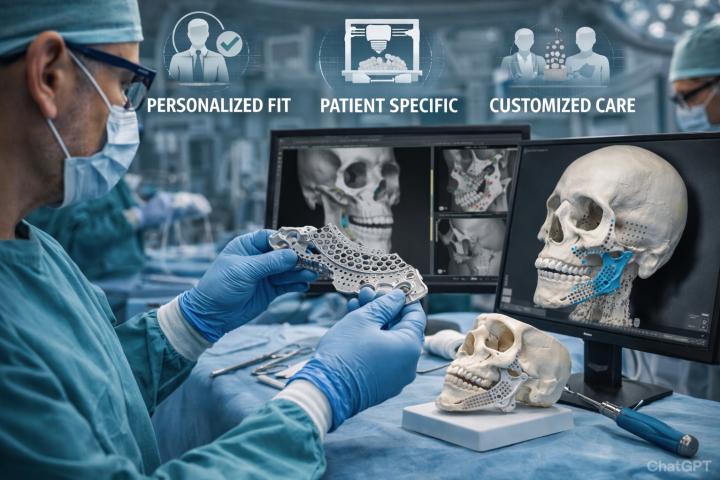
Patient-specific implants (PSIs) are custom-designed medical implants created to match the exact anatomical structure of an individual patient. Unlike traditional, off-the-shelf implants that come in standardized sizes, PSIs are engineered using patient imaging data such as:
- CT scans
- MRI scans
- 3D radiological imaging
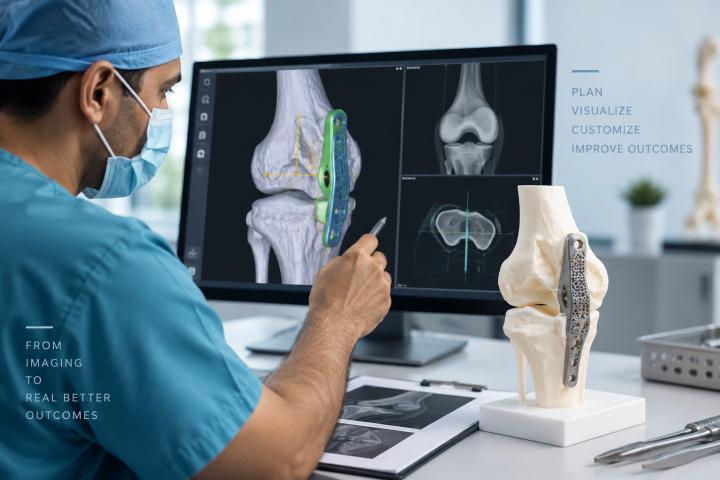
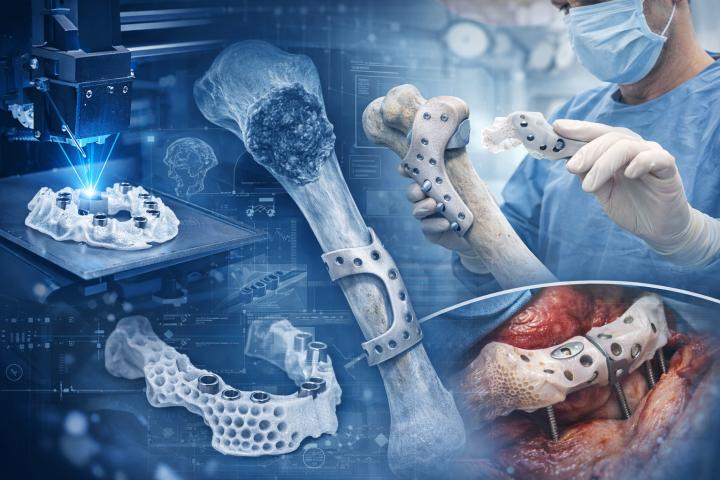
Using this data, engineers develop a digital 3D model of the affected anatomy. Surgeons and design teams collaborate to refine the implant’s structure, ensuring it perfectly aligns with the surgical plan. The final implant is manufactured using advanced 3D printing technology, typically with biocompatible materials such as titanium alloys or medical-grade polymers.
This level of personalization enhances surgical precision and provides superior functional and aesthetic results.
How 3D Printed Medical Implants Are Created
The process of producing 3D printed medical implants involves multiple precision-driven stages:
- Medical Imaging & Data Acquisition
High-resolution imaging captures detailed anatomical information. This data forms the foundation for designing the implant.
- Digital Modeling & Design
Engineers use specialized software to convert imaging data into a 3D model. The implant is designed to fit precisely within the patient’s anatomy. Surgeons review and approve the design before manufacturing begins.
- 3D Printing Implants
Advanced additive manufacturing technologies—such as Selective Laser Melting (SLM) or Electron Beam Melting (EBM)—build the implant layer by layer using medical-grade materials. This ensures:
- Exceptional precision
- Complex geometries
- Porous structures that promote bone integration
- Post-Processing & Quality Control
The implant undergoes finishing, sterilization, and rigorous quality checks to meet regulatory standards and clinical safety requirements.
At Curewith3D, every implant is manufactured under strict quality protocols, ensuring reliability and compliance with global healthcare standards.
Why Patient Specific Implants Are Transforming Surgery
- Superior Anatomical Fit
Standard implants require surgeons to modify either the implant or the patient’s bone during surgery. Patient-specific implants eliminate this compromise by fitting seamlessly into the patient’s anatomy.
- Reduced Surgical Time
Because PSIs are pre-designed for precision, surgeons spend less time adjusting implants during procedures. This can reduce:
- Operating room time
- Anesthesia exposure
- Risk of infection
- Improved Clinical Outcomes
Customized implants improve biomechanical alignment and load distribution. This leads to:
- Faster recovery
- Reduced revision surgeries
- Better long-term stability
- Enhanced Aesthetic Results
In craniofacial and reconstructive surgeries, personalized implants restore natural contours more accurately than standardized options.
Applications of 3D Printing Implants
The versatility of 3D printed medical implants allows their use across multiple medical specialties.
Orthopedic Surgery
- Complex fracture reconstruction
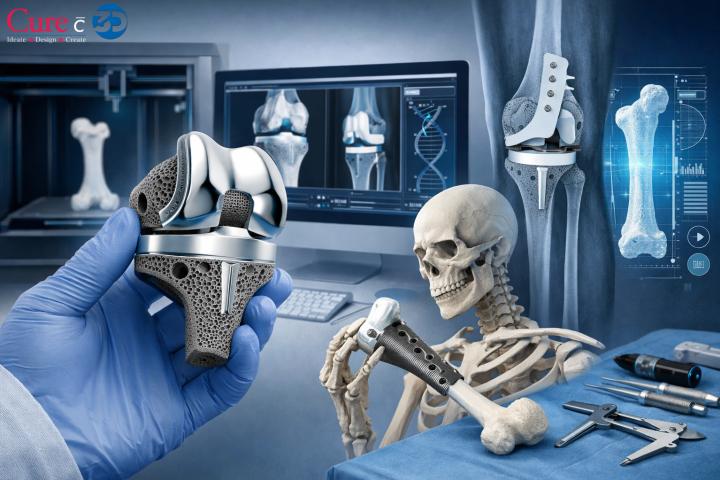
- Joint replacement components
- Pelvic and acetabular implants
- Spinal implants
Cranio-Maxillofacial Surgery
- Skull defect reconstruction
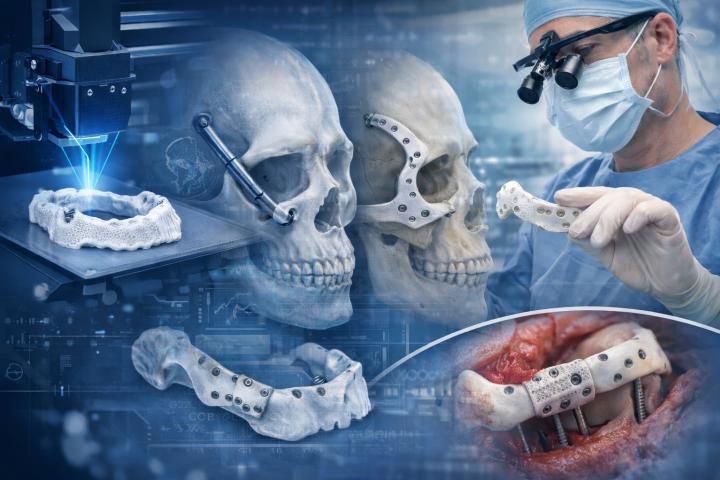
- Mandibular reconstruction
- Orbital floor repair
Oncology Reconstruction
After tumor removal, surgeons often face irregular bone defects. PSIs provide customized reconstruction tailored to each patient’s defect.
Dental & Maxillofacial Implants
Custom dental frameworks and jaw implants enhance both function and aesthetics.
Trauma Cases
In high-impact injuries where bone structure is severely compromised, 3D printing implants allow surgeons to restore anatomy with unmatched accuracy.
Materials Used in Patient-Specific Implants
The success of a PSI depends on both design precision and material integrity. Curewith3D utilizes advanced, biocompatible materials such as:
Titanium Alloys
- Lightweight yet strong
- Corrosion-resistant
- Promotes osseointegration
PEEK (Polyether Ether Ketone)
- Radiolucent (visible in imaging)
- Similar elasticity to bone
- Ideal for spinal applications
Medical-Grade Polymers
Used in non-load-bearing or temporary implant applications.
Each material undergoes stringent testing to ensure it meets international safety standards.
The Role of a PSI Implant Manufacturer
A reliable PSI implant manufacturer plays a crucial role in delivering safe and effective implants. Manufacturing custom implants requires:
- Advanced 3D modeling expertise
- Precision additive manufacturing systems
- Regulatory compliance knowledge
- Collaboration with surgeons
- Rigorous quality control
Curewith3D integrates engineering innovation with medical expertise. Our workflow emphasizes:
- Surgeon collaboration from concept to completion
- Detailed anatomical simulation
- Rapid prototyping
- Certified production standards
By bridging technology and clinical insight, we ensure every patient receives a precisely engineered solution.
Advantages Over Traditional Implants
Feature | Traditional Implants | Patient Specific Implants |
Fit | Standard sizes | Fully customized |
Surgical Time | Longer | Reduced |
Bone Modification | Often required | Minimal |
Aesthetic Precision | Limited | Highly accurate |
Long-term Outcome | Variable | Optimized |
The comparison clearly demonstrates why 3D printed medical implants are gaining global adoption.
Regulatory and Safety Considerations
The production of patient-specific implants requires strict adherence to medical regulations. As a responsible PSI implant manufacturer, Curewith3D ensures:
- Compliance with ISO standards
- Sterility validation
- Mechanical strength testing
- Biocompatibility certification
- Traceability of materials
Patient safety remains our top priority at every stage of manufacturing.
How 3D Printing Implants Improve Surgical Planning
One of the most powerful benefits of 3D printing implants is its integration with surgical planning.
Surgeons can:
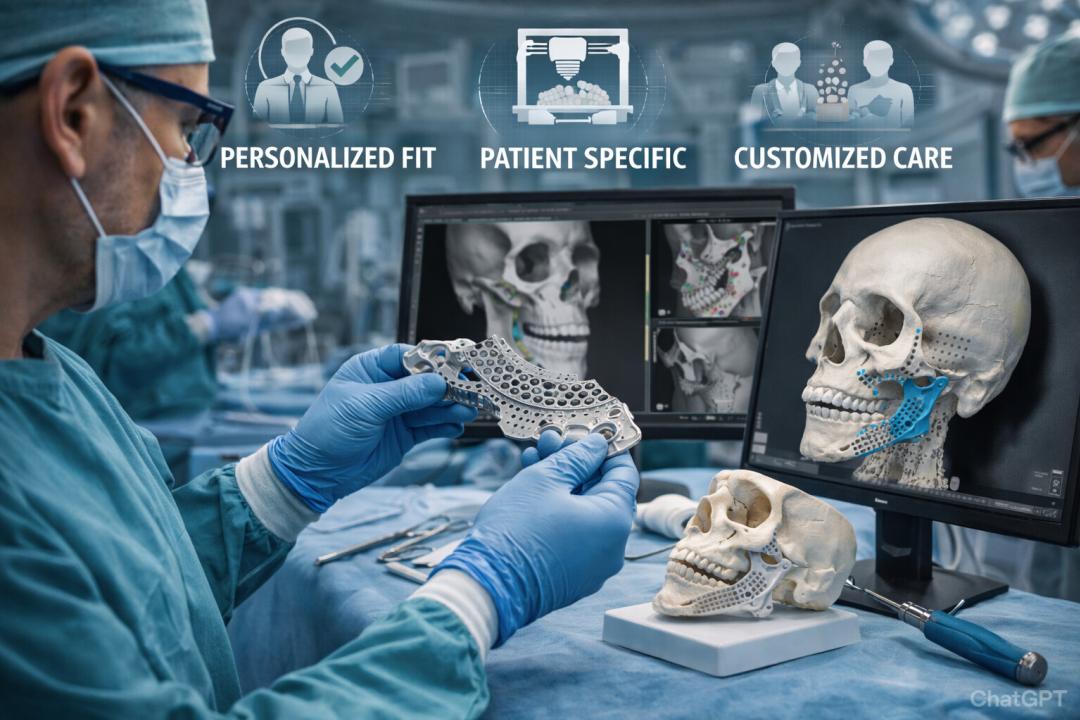
- Visualize the implant before surgery
- Conduct virtual simulations
- Plan incisions and fixation points
- Reduce intraoperative surprises
This proactive planning improves procedural confidence and outcomes.
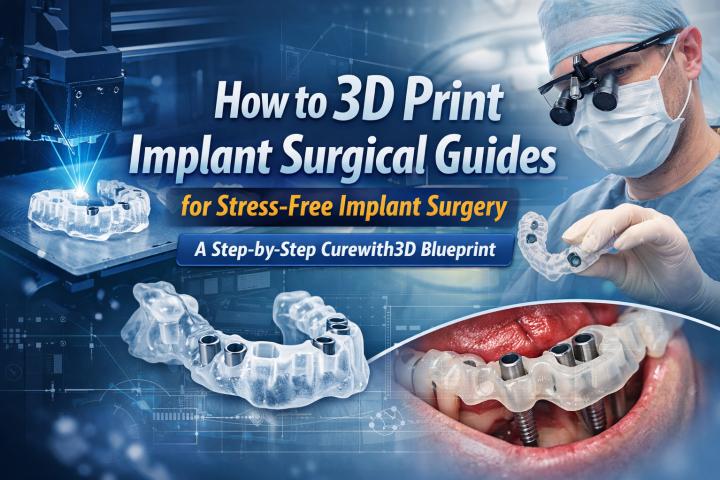
Additionally, patient-specific surgical guides can be produced alongside implants, further enhancing precision.
Cost Considerations: Are Patient-Specific Implants Expensive?
While personalized implants may appear more costly upfront compared to mass-produced alternatives, they often reduce:
- Operating room time
- Revision surgeries
- Hospital stays
- Complication-related expenses
When evaluating total treatment cost, PSIs frequently prove more economical in the long run.
The Future of 3D Printed Medical Implants
The evolution of 3D printed medical implants continues to accelerate. Emerging innovations include:
- Bioactive coatings that enhance bone growth
- Smart implants with embedded sensors
- Hybrid materials combining strength and flexibility
- AI-driven implant design optimization
As digital healthcare advances, patient-specific implants will likely become the gold standard in complex reconstructive procedures.
Curewith3D remains committed to continuous research and technological advancement to deliver next-generation implant solutions.
Why Choose Curewith3D as Your PSI Implant Manufacturer?
When selecting a PSI implant manufacturer, experience and technological capability matter. Curewith3D offers:
- Advanced Design Expertise: Our engineering team collaborates closely with surgeons to develop anatomically accurate models.
- State-of-the-Art 3D Printing: We utilize high-precision additive manufacturing systems to create reliable, durable implants.
- Customization Without Compromise: Every implant is designed from scratch to match the patient’s anatomy.
- Quality Assurance: Strict validation and testing protocols ensure safety and performance.
- Faster Turnaround: Our streamlined workflow reduces production time without compromising quality.
By combining medical insight with innovative engineering, Curewith3D delivers implant solutions that redefine precision.
Case Impact: Transforming Patient Outcomes
The true value of patient-specific implants lies in their impact:
- Restored mobility in complex orthopedic cases
- Improved facial symmetry in reconstructive surgeries
- Enhanced spinal alignment
- Reduced surgical complications
These outcomes reflect the power of personalization in modern medicine.
Conclusion
Healthcare is entering a new era of precision and personalization. Patient-specific implants represent a significant leap forward, offering superior fit, enhanced surgical outcomes, and improved patient satisfaction.
Through advanced 3D printing implants technology, Curewith3D delivers highly customized, safe, and durable 3D printed medical implants tailored to each patient’s needs. As a leading PSI implant manufacturer, we combine engineering excellence with clinical collaboration to shape the future of reconstructive and orthopedic surgery.
Personalized medicine is no longer a concept—it is a reality. And with Curewith3D, the future of implant innovation is already here.