
As businesses increasingly rely on digital platforms to connect with customers and streamline internal operations, browser-based tools have become a critical part of the modern workflow. While most organizations focus on websites, mobile apps, and cloud software, browser extensions are emerging as a powerful yet often overlooked solution. One such opportunity lies in Edge extension development, which allows businesses to enhance productivity, improve customer experience, and create seamless integrations within the Microsoft Edge ecosystem.
Microsoft Edge, built on the Chromium engine,
has grown significantly in adoption among enterprises and individual users.
With strong integration into Windows environments, Microsoft services, and
enterprise security systems, Edge has become a preferred browser for many
organizations. Developing extensions specifically for Edge enables businesses
to deliver tailored tools directly inside the browser, where employees and
customers already spend a large portion of their time.
This article explores why Edge extension development matters for businesses, how it benefits organizations across industries, and why companies should consider investing in browser extension solutions as part of their digital strategy.
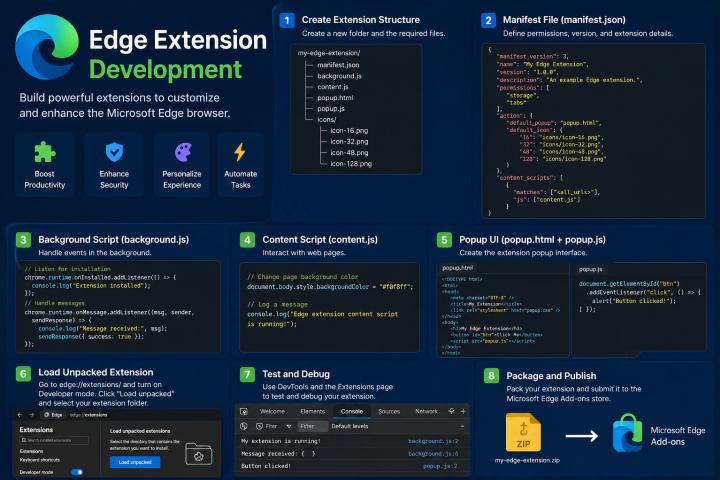
Understanding Edge Extension Development
Edge extension development involves building
browser add-ons that extend the functionality of the Microsoft Edge browser.
These extensions can interact with web pages, automate tasks, integrate with
business software, or provide additional features directly in the browsing
environment.
Extensions are typically built using standard
web technologies such as:
·
HTML
·
CSS
·
JavaScript
·
Web APIs
Because Microsoft Edge is based on Chromium,
developers can easily adapt Chrome extensions for Edge, making development
efficient and scalable.
For businesses, this means they can build tools that help users complete tasks faster, access information instantly, and integrate with existing systems without requiring separate applications.
The Growing Importance of Browser Extensions in Business
The modern workforce spends a significant
portion of their day inside a browser. Sales teams use CRM platforms, marketers
manage campaigns, customer support agents respond through web dashboards, and
developers use cloud-based tools.
Instead of constantly switching between
applications, browser extensions bring functionality directly into the browser.
This reduces friction, saves time, and improves productivity.
Edge extensions can serve many purposes,
including:
·
Workflow automation
·
Data extraction and analysis
·
CRM integration
·
Customer support tools
·
Productivity enhancements
·
Security monitoring
For companies seeking digital efficiency, browser extensions provide an innovative and practical solution.
Benefits of Edge Extension Development for Businesses
1. Improved Employee
Productivity
One of the biggest advantages of Edge extensions is the ability to streamline everyday tasks. Employees often switch
between multiple tools and systems, which can slow down workflows.
Edge extensions can automate repetitive
actions such as:
·
Filling forms automatically
·
Extracting information from web pages
·
Syncing data with internal systems
·
Triggering workflows with a single click
For example, a sales representative browsing
LinkedIn could use an Edge extension to automatically capture lead information
and send it to the company’s CRM system. This reduces manual data entry and
speeds up the sales process.
By minimizing repetitive tasks, businesses can significantly improve productivity and efficiency across teams.
2. Seamless
Integration with Business Software
Businesses rely on various software platforms
such as CRM systems, marketing automation tools, and project management
applications. Edge extensions can act as bridges that connect these platforms
with web-based environments.
Through APIs and web integrations, Edge
extensions can:
·
Connect CRM tools with websites
·
Send data to internal dashboards
·
Trigger automation workflows
·
Provide quick access to internal resources
For example, a marketing team could develop an
extension that pulls website analytics data directly into their dashboard
without opening multiple platforms.
This seamless integration improves workflow continuity and enhances operational efficiency.
3. Enhanced Customer Experience
Edge extensions can also improve the customer
experience by providing faster, more personalized services.
Customer support teams can use extensions that
display customer information instantly while interacting with them online. This
allows agents to respond more accurately and quickly.
E-commerce companies can build extensions
that:
·
Compare product prices
·
Offer exclusive discounts
·
Track orders
·
Provide personalized recommendations
These features improve user engagement and
strengthen customer relationships.
When customers receive faster support and better service, their trust in the brand increases.
4. Custom Tools for Specific Business Needs
Every business has unique operational
requirements. Off-the-shelf software may not always provide the flexibility
needed to meet these needs.
Edge extension development allows companies to
create custom tools designed
specifically for their workflows.
Examples include:
·
Data monitoring extensions for financial teams
·
Social media management tools for marketers
·
Code inspection tools for developers
·
Research assistants for analysts
Instead of adapting business processes to fit
existing tools, companies can build extensions that align perfectly with their
operations.
This customization improves efficiency and ensures that technology supports business goals.
5. Enterprise-Level Security
Security is a major concern for modern
businesses. Browser extensions can actually strengthen security when developed
with the right architecture and policies.
Edge extensions can:
·
Monitor suspicious activity
·
Enforce security policies
·
Block unsafe websites
·
Protect sensitive data
Because Microsoft Edge is deeply integrated
with enterprise security frameworks such as Microsoft Defender and Azure Active
Directory, businesses can maintain strict control over extension deployment and
permissions.
Organizations can distribute extensions
internally through enterprise deployment systems, ensuring that employees only
use trusted tools.
This helps maintain a secure digital environment.
6. Cost-Effective Digital Solutions
Developing standalone software applications
can be expensive and time-consuming. Browser extensions, however, are
relatively lightweight and faster to build.
Since Edge extensions rely on standard web
technologies, development costs are generally lower compared to building
full-scale applications.
Benefits include:
·
Faster development cycles
·
Lower infrastructure costs
·
Easier maintenance
·
Simple updates through browser stores
Businesses can quickly release new features,
gather feedback, and improve the extension over time.
This agile approach makes Edge extension development a cost-effective solution for many organizations.
7. Expanding Brand Visibility
Browser extensions also offer branding
opportunities. When users install a company's extension, the brand remains visible
within their browsing environment.
Extensions can include:
·
Company logos
·
Branded interfaces
·
Custom dashboards
·
Notifications and updates
This constant presence helps reinforce brand
recognition and engagement.
For businesses offering digital services, extensions can become a powerful channel for maintaining user interaction and delivering value.
8. Supporting Remote and Hybrid Work Environments
Remote and hybrid work models have become
common across industries. Employees now rely heavily on digital tools to
collaborate and complete tasks.
Edge extensions can help remote teams by:
·
Simplifying access to company tools
·
Automating routine processes
·
Enhancing communication workflows
·
Improving data accessibility
For example, a project management extension
could allow employees to create tasks or update project status directly from
their browser without opening separate applications.
These capabilities help remote teams stay productive and connected.
Industries That Benefit from Edge Extensions
Many industries can benefit from Edge
extension development.
E-Commerce
Retail companies can build extensions for:
·
Price comparison
·
Coupon distribution
·
Order tracking
·
Shopping assistance
Marketing and
Advertising
Marketing teams can use extensions for:
·
SEO analysis
·
Social media scheduling
·
Campaign monitoring
·
Competitor research
Finance
Financial institutions can develop extensions
for:
·
Market data monitoring
·
Risk analysis
·
Secure document handling
Customer Support
Support teams can use browser extensions for:
·
Customer information retrieval
·
Ticket management
·
Automated responses
Software Development
Developers can benefit from extensions that
assist with:
·
Code inspection
·
Debugging tools
·
Performance monitoring
These industry-specific solutions demonstrate how flexible and powerful browser extensions can be.
Key Features Businesses Should Include in Edge Extensions
When developing an Edge extension, businesses
should focus on features that deliver real value to users.
Important features include:
·
User-friendly interface
·
Fast performance
·
Secure permissions
·
Real-time data integration
·
Cross-platform compatibility
·
Regular updates and improvements
User experience is especially important. If
an extension is difficult to use or slows down the browser, users may uninstall
it quickly.
Careful design and testing ensure that the extension provides long-term value.
Best Practices for Edge Extension Development
To build a successful Edge extension,
businesses should follow best practices such as:
Focus on a Clear
Purpose
The extension should solve a specific
problem or improve a particular workflow.
Ensure Strong Security
Developers should follow security guidelines
to protect user data and maintain trust.
Optimize Performance
Extensions should run efficiently without
affecting browser performance.
Maintain
Compatibility
Since Edge uses Chromium, ensuring
compatibility with other Chromium-based browsers can expand the user base.
Provide Regular
Updates
User needs and technology evolve over time. Regular updates keep the extension relevant and functional.
Future of Edge Extension Development
The demand for browser-based productivity
tools is expected to grow significantly. As more software platforms move to
web-based environments, browser extensions will become even more valuable.
Microsoft continues to invest in the Edge
ecosystem, offering improved APIs, developer tools, and enterprise deployment
options.
In the future, Edge extensions may
incorporate advanced technologies such as:
·
Artificial intelligence
·
Machine learning
·
Advanced automation
·
Real-time collaboration tools
These innovations will allow businesses to build smarter and more powerful extensions that enhance both internal workflows and customer experiences.
Conclusion
Edge extension development offers businesses
a powerful way to enhance productivity, streamline workflows, and improve
digital experiences. By bringing custom functionality directly into the browser
environment, companies can reduce friction, automate tasks, and integrate
systems more efficiently.
With Microsoft Edge gaining strong adoption
in enterprise environments, the opportunity for businesses to build tailored
extensions is greater than ever. From improving employee efficiency to
enhancing customer engagement, Edge extensions provide practical solutions that
support modern digital operations.
Organizations that invest in browser extension development today will be better positioned to create smarter workflows, deliver superior digital experiences, and remain competitive in an increasingly technology-driven business landscape.