Introduction
What if you need internet access but don’t have a cable connection or a landline? Many people face this situation, especially those living in rural areas, traveling in RVs, working remotely, or trying to avoid traditional internet contracts. Waiting for cable installation or relying on outdated phone-line connections can be frustrating when you just want reliable internet access.
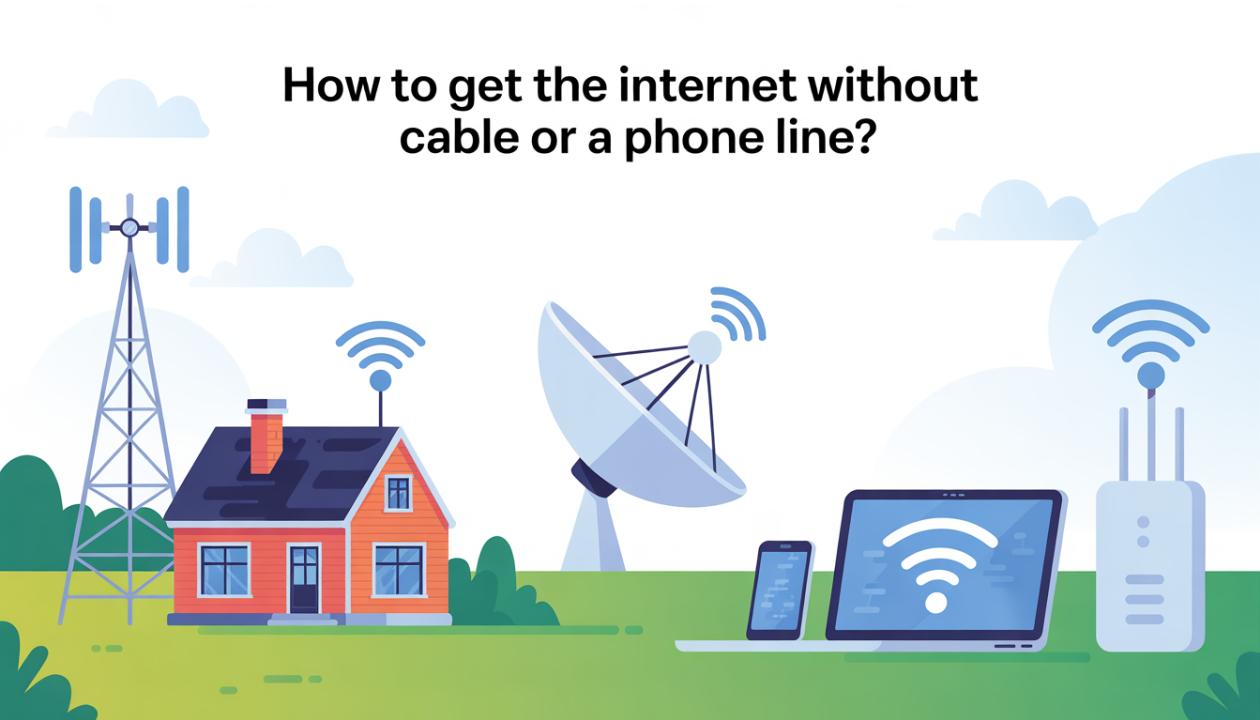
Modern technology has made it possible to connect to the internet without a cable or a phone line. Today, there are several alternative solutions that provide fast, flexible connectivity. Mobile hotspots, satellite internet, fixed wireless, and public Wi-Fi networks make it easier than ever to stay online wherever you are.
If you’re wondering how to access the internet without traditional infrastructure, this guide will show you the most practical options, how they work, and what to consider before choosing one.
Why People Look for Internet Without Cable or Phone Lines
Traditional broadband services typically depend on cable or DSL infrastructure. This setup is not always easy to access or convenient, especially for those who want the internet without cable or a phone line. Many people are now searching for alternatives for various reasons.
Limited availability in rural areas: Some locations lack cable providers or DSL coverage, leaving residents with few choices.
Avoiding installation delays: Setting up cable internet may require technician visits, equipment installation, and long waiting periods.
Flexibility for travelers or remote workers: People who work from different locations often need portable internet solutions.
Cost considerations: Some users want to avoid bundled packages that include services they do not need, such as cable TV or a landline phone.
Because of these factors, alternative internet options are becoming increasingly popular.
Mobile Hotspots: Internet from Your Cellular Network
One of the easiest ways to access the internet without a cable or phone line is through a mobile hotspot.
A mobile hotspot uses cellular network signals, like 4G or 5G, to provide internet access to nearby devices, including laptops, tablets, and smart TVs. Many smartphones have a hotspot feature that lets users share their mobile data connection.
Advantages of Mobile Hotspots
Easy to set up and use
Portable and ideal for travel
No installation required
Works almost anywhere with cellular coverage
Potential Limitations
Data usage limits on some plans
Speeds may vary depending on network congestion
Battery consumption on mobile devices
For people who need internet on the go or temporary access at home, mobile hotspots can be a practical solution.
Satellite Internet: Connectivity from Space
Satellite internet is another choice that does not need cable lines or phone systems. Instead of using ground-based networks, satellite systems send data between a satellite orbiting Earth and a dish at your location.
This technology allows internet access in places where traditional broadband services are unavailable.
Benefits of Satellite Internet
Coverage in remote and rural areas
No dependence on local cable infrastructure
Suitable for homes and businesses in isolated locations
Considerations
Installation of a satellite dish is required
Latency may be higher compared to fiber or cable
Weather conditions can occasionally affect performance
Despite these limitations, satellite internet remains an important connectivity option for many underserved areas.
Fixed Wireless Internet
Fixed wireless internet connects devices using radio signals from nearby towers. It doesn’t rely on cables or phone lines. A small receiver placed at a home or building picks up the wireless signal.
This technology is commonly used in areas where laying physical broadband cables is difficult or expensive.
Why Fixed Wireless Is Popular
Faster setup compared to cable installations
Reliable performance within coverage areas
Suitable for suburban and rural communities
However, fixed wireless needs a clear line of sight to the transmission towers. Its performance can vary based on distance and environmental conditions.
Public Wi-Fi Networks
Public Wi-Fi networks are another way to access the internet without traditional connections. These networks are available in places such as:
Cafes and coffee shops
Libraries
Airports
Hotels
Shopping centers
Public Wi-Fi can be helpful for quick internet access when traveling or working outside the home.
Safety Tips When Using Public Wi-Fi
While public Wi-Fi is convenient, it also comes with security risks. To stay safe online:
Avoid accessing sensitive accounts on unsecured networks
Use a virtual private network (VPN) when possible
Ensure websites use HTTPS encryption
Being cautious can help protect personal information when connecting to shared networks.
Portable Internet Devices
Portable internet devices are special gadgets that offer wireless internet access. They connect to cellular networks and send out a Wi-Fi signal that multiple devices can use.
Unlike smartphone hotspots, portable routers focus on sharing the internet continuously and can support more devices at the same time.
Advantages of Portable Devices
Stronger and more stable connections
Supports multiple users simultaneously
Longer battery life than smartphones
These devices are commonly used by travelers, remote workers, and digital nomads.
Community and Shared Internet Networks
In some places, communities share internet access through local networks. These networks provide connectivity to nearby homes using wireless technology.
Community-based internet solutions are particularly useful in areas where commercial broadband services are scarce.
These networks typically rely on:
Shared routers
Wireless relays
Local infrastructure managed by the community
Although not available everywhere, they demonstrate how innovative approaches can bring connectivity to underserved areas.
Factors to Consider When Choosing an Internet Alternative
When selecting an internet option without cable or a phone line, it’s important to evaluate several factors.
Speed Requirements
Different activities require different speeds. For example:
Web browsing and email need minimal bandwidth
Video streaming requires higher speeds
Remote work and video calls demand stable connections
Data Limits
Some internet services include data caps, which may affect heavy users who stream or download frequently.
Coverage Availability
Not all technologies work in every location. Checking coverage maps and signal strength can help determine which options are practical. Internet technology is evolving quickly.
Equipment Needs
Certain internet solutions require additional hardware such as routers, antennas, or satellite dishes.
Considering these factors can help users select the best option for their situation.
The Future of Cable-Free Internet
New developments in wireless networks and satellite systems are expanding connectivity options around the world.
Several trends are shaping the future of internet access:
5G expansion: Next-generation cellular networks are delivering faster wireless speeds and lower latency.
Low-orbit satellite networks: New satellite technologies are reducing delays and improving global coverage.
Wireless broadband infrastructure: Governments and companies are investing in wireless solutions to bridge the digital divide.
These advancements mean that relying on traditional cable or phone lines may become less necessary in the coming years.
Conclusion
Getting internet without a cable connection or phone line is easier than ever. Improvements in wireless technology, satellite communication, and portable networking devices have created many alternatives for staying connected.
People can access the internet through mobile hotspots, satellite internet, fixed wireless networks, or public Wi-Fi, even in areas where traditional broadband service is not available.
By understanding the strengths and weaknesses of each option, users can choose the solution that best meets their needs, location, and usage habits. As technology advances, cable-free internet access will likely become even more available and dependable.
Frequently Asked Questions (FAQs)
1. Can I get the internet at home without cable or a phone line?
Yes, you can use alternatives such as mobile hotspots, satellite internet, fixed wireless connections, or portable routers to access the internet without traditional cable or phone lines.
2. What is the easiest way to get the internet without cable?
Using a smartphone hotspot or a portable Wi-Fi device connected to a cellular network is often the quickest and easiest solution.
3. Is satellite internet good for remote areas?
Yes, satellite internet is designed to provide connectivity in rural and remote areas where cable or DSL infrastructure may not exist.
4. Can public Wi-Fi replace home internet?
Public Wi-Fi can be useful for temporary access, but it may not provide the speed, reliability, or security needed for daily home internet use.
5. What is fixed wireless internet?
Fixed wireless internet uses radio signals from nearby towers to deliver internet access to homes and businesses without using cables.
6. Is wireless internet faster than cable internet?
Wireless internet speeds depend on network conditions and the technology used. In some cases, modern wireless systems like 5G can deliver speeds comparable to those of traditional cable broadband.