Getting into a stranger's car used to be something our parents strictly warned us against. Today, it is a daily, unthinking routine for millions of people worldwide. The rise of ride-hailing has completely transformed urban transportation, making it easier, faster, and more predictable to get from point A to point B. However, this massive shift in human behavior brings up a critical, undeniable issue: physical and emotional safety. Convenience should never come at the cost of personal security. For any ride-hailing business to truly succeed in today's market, it must prioritize the well-being of every single person using the platform.
Building a successful ride-hailing platform is about much more than just connecting a rider with a driver on a map. It is about creating a secure, trusted digital ecosystem where everyone feels comfortable and protected. If you are an entrepreneur looking to launch or upgrade a transit platform, your choice of technology partner is critical. Hiring a highly skilled Taxi app Development Company is usually the first major step in ensuring your platform is built with a solid, secure architecture. They lay the digital groundwork, but it is entirely up to your business strategy to demand features that actively protect your users. Without these protective measures, even the most beautifully designed app interface will fail to win public trust.
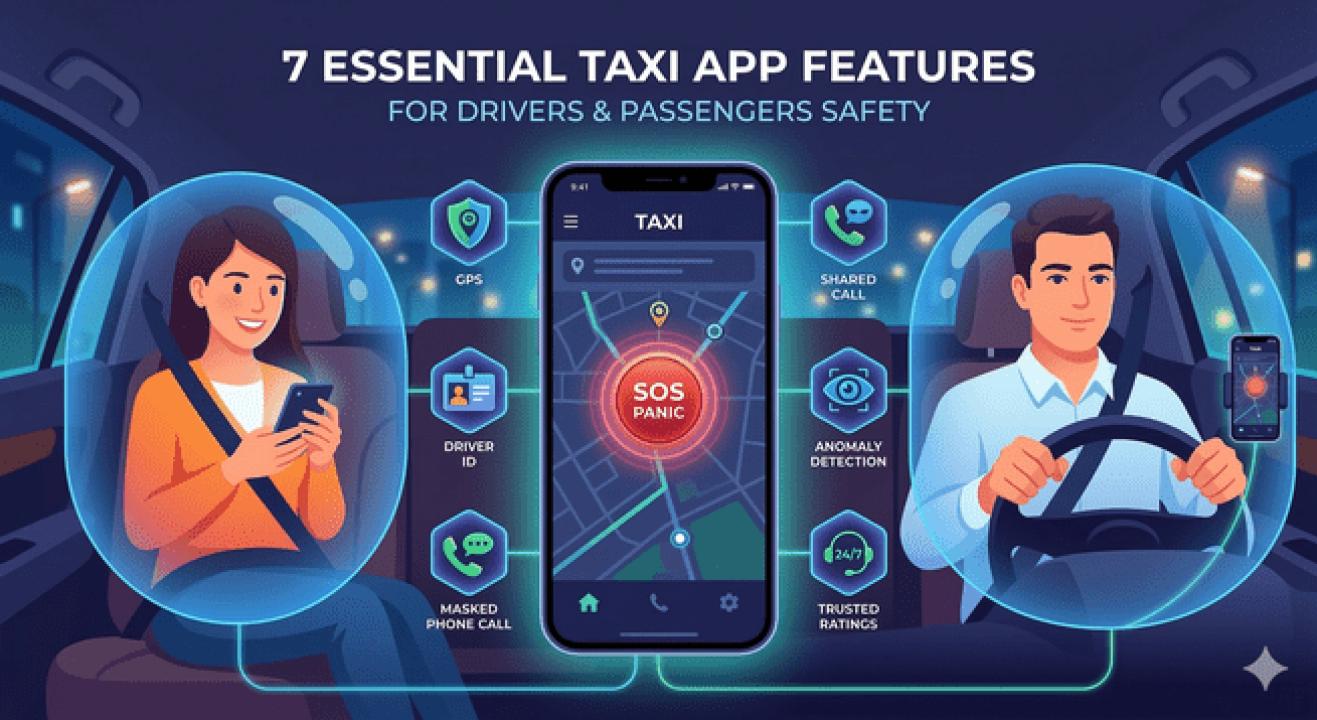
To help you build a platform that people actually want to use, let's explore the seven non-negotiable safety features your app needs right now.
1. Real-Time GPS Tracking and Route Sharing
The days of getting into a cab and hoping the driver knows the right way are long gone. Real-time GPS tracking is the absolute bare minimum for any modern transportation app. But true safety comes from what users can do with that tracking data.
Why it Matters for Passengers
Riders need to see their exact location moving along a predetermined route on their screen. More importantly, the app must include a seamless "Share My Trip" feature. This allows a passenger to send a live tracking link to a friend or family member. If someone is taking a ride home late at night, their loved ones can watch their progress in real-time and know exactly when they have safely reached their front door.
Why it Matters for Drivers
Drivers also benefit heavily from real-time tracking. It provides a digital paper trail of their exact movements. If a passenger ever makes a false claim about the route taken or the time spent in the car, the GPS data serves as an objective, undeniable record of the truth.
2. The In-App SOS and Emergency Panic Button
Even with the best precautions, emergencies can happen. When a situation turns dangerous, a user might not have the time or ability to open their phone keypad and dial the police.
Instant Connection to Authorities
An SOS or panic button must be prominently displayed on the main screen during an active ride. With a single tap, this button should do three things instantly:
- Call local emergency services (like 911).
- Send an automated alert to the app's dedicated safety team.
- Send an emergency text message with live GPS coordinates to the user's pre-selected emergency contacts.
The Silent Alarm Option
For added safety, especially for drivers dealing with aggressive passengers, a "silent alarm" feature is highly recommended. This alerts the company's safety team to intervene or dispatch help without alerting the aggressive individual inside the vehicle.
3. Number Masking for Complete Privacy
Communication between a driver and a rider is often necessary. A driver might need help finding a tricky apartment entrance, or a rider might need to tell the driver they are running two minutes late. However, forcing them to exchange personal phone numbers is a massive privacy risk.
The Dangers of Exposed Data
When personal numbers are exposed, it opens the door for post-ride harassment, stalking, or unwanted marketing. Number masking solves this problem entirely through Voice over Internet Protocol (VoIP) technology.
How Masking Works
When a rider calls the driver through the app, the system routes the call through a proxy server. The driver sees a generic, randomized phone number on their screen, and vice versa. Once the ride is officially completed, the connection is permanently severed. Neither party ever knows the other's real phone number, ensuring total privacy before, during, and after the trip.
4. Advanced Identity Verification
Trust begins before the car even arrives. Both parties need absolute certainty that the person they are meeting is exactly who the app says they are.
Protecting the Passenger
When a car pulls up, the app must provide the rider with the driver's first name, a clear profile photo, the car's make and model, and the license plate number. But modern apps take this a step further. Many now require drivers to take a random, real-time selfie before they can accept rides for the day. Facial recognition AI instantly compares this selfie to the ID on file, ensuring the approved driver hasn't secretly handed their phone to an unapproved friend.
Protecting the Driver
Drivers face risks too. They are letting strangers into their personal vehicles. Apps must require basic identity verification for passengers, such as a valid credit card, a confirmed phone number, and perhaps a verified social media link. Knowing that a passenger is a verified individual heavily deters bad behavior.
5. AI-Powered Ride Anomaly Detection
Technology should be proactive, not just reactive. Your app should not just wait for someone to press an SOS button; it should actively look for signs of trouble.
The Virtual Guardian
Using artificial intelligence and machine learning algorithms, the app can constantly monitor the progress of a ride. If the AI detects a strange "anomaly"—such as the car stopping for an unusually long time in a random location, or drastically deviating from the suggested GPS route—it triggers an automatic safety protocol.
Automated Check-Ins
When an anomaly is detected, the app immediately sends a push notification to both the driver and the rider asking, "Is everything OK?" If neither party responds within a minute, the app's safety team is automatically alerted to investigate, potentially calling the car or dispatching authorities.
6. The Two-Way Rating and Review System
Good behavior is often driven by accountability. The simplest, most effective way to maintain a safe community is to let the community police itself through a transparent rating system.
- Mandatory Ratings: After every trip, both the driver and the rider must rate each other on a scale of 1 to 5 stars.
- Detailed Feedback: If a rating is low, the app should prompt the user to select a reason (e.g., "unsafe driving," "rude behavior," "vehicle cleanliness").
- Automatic Disconnection: If a rider and driver rate each other poorly, the app's algorithm should ensure they are never matched together again.
- Platform Bans: Consistently low ratings should trigger an automatic review by human staff, leading to the suspension or permanent banning of dangerous drivers or abusive passengers.
7. 24/7 Live Customer Support
No matter how advanced your automated features and AI bots are, there are times when a user desperately needs to speak to a real human being.
Empathy in Crisis
If a passenger leaves a highly sensitive item (like a passport) in a car, or if a driver experiences a deeply unsettling interaction, an automated chatbot is not going to cut it. Your app must feature a direct line to a 24/7, highly trained safety support team. These agents must be empowered to act quickly, whether that means freezing an account, contacting local police, or simply providing empathetic support during a stressful moment.
Mini Case Scenario: The Power of Anomaly Detection
To understand how these features work in the real world, consider the story of Sarah, a college student taking a ride across town late at night. Halfway through the journey, her driver accidentally took a wrong exit that led to a deserted, unfamiliar industrial area.
Sarah panicked and froze, unsure of what to do. However, the app's Ride Anomaly Detection system instantly noticed that the vehicle had strayed far from the optimal route. Within seconds, Sarah's phone buzzed with an automated message: "We noticed your route changed. Do you need help?" Simultaneously, the driver's phone alerted him that he was off-route. Realizing his mistake, he quickly turned the car around. Sarah tapped the "I'm OK, just a wrong turn" button on her screen. The tension immediately dissolved. Because the technology was proactively watching over the ride, a potentially terrifying situation was managed calmly and instantly, proving to Sarah that the platform had her back.
Conclusion: Safety is Your Greatest Asset
In the fast-paced world of ride-hailing, safety is not just an optional upgrade or a marketing buzzword; it is the entire foundation of your brand's reputation. If passengers do not feel secure, they will simply delete your app and use a competitor. Similarly, if drivers feel exposed to unnecessary risk, your supply chain of vehicles will dry up overnight. Building a secure digital ecosystem requires careful planning, deep empathy for the user, and flawless technical execution. When you are ready to bring your vision to life, partnering with an experienced Mobile App Development Company is absolutely essential to get the architecture right. A skilled technical team will ensure that complex tools like AI anomaly monitoring, VoIP masking, and real-time GPS tracking work perfectly without crashing the app or draining the user's phone battery. Ultimately, when you prioritize safety above all else, you do not just protect people; you build a loyal, lasting user base that will champion your brand for years to come.
Frequently Asked Questions
1. Why is number masking so important in a taxi app?
Ans: Number masking protects the privacy of both the driver and the passenger. It allows them to call or text each other through the app without ever revealing their actual phone numbers, preventing post-ride harassment or unwanted contact.
2. How does ride anomaly detection actually work?
Ans: Anomaly detection uses algorithms to monitor a ride's progress. If the car stops for an unusually long time or drives far off the designated GPS route, the system automatically checks in with the rider and driver to ensure everything is okay.
3. Can a passenger request a specific driver they feel safe with?
Ans: Most standard ride-hailing apps do not allow this, as it disrupts the efficiency of the closest-driver dispatch system. However, robust rating systems ensure that you are only matched with drivers who have a proven track record of safe behavior.
4. What happens if I press the SOS button by mistake?
Ans: Apps typically have a brief cancellation window (like 3 to 5 seconds) allowing you to cancel the alert if pressed accidentally. If the alert goes through, a safety agent will usually call you immediately to confirm if there is an actual emergency before contacting authorities.
5. How do taxi apps ensure a driver's vehicle is safe?
Ans: Beyond driver background checks, reputable apps require vehicle inspections before a driver is approved. They also rely heavily on the two-way rating system; if passengers consistently report a car as unsafe or dirty, the platform will suspend the driver until the issue is resolved.