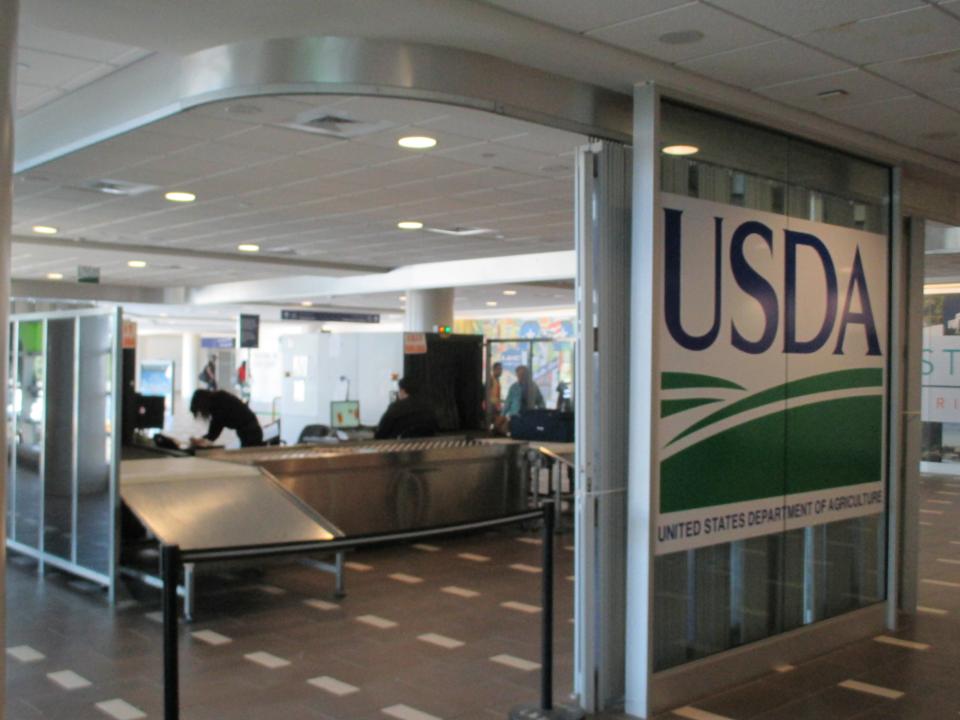
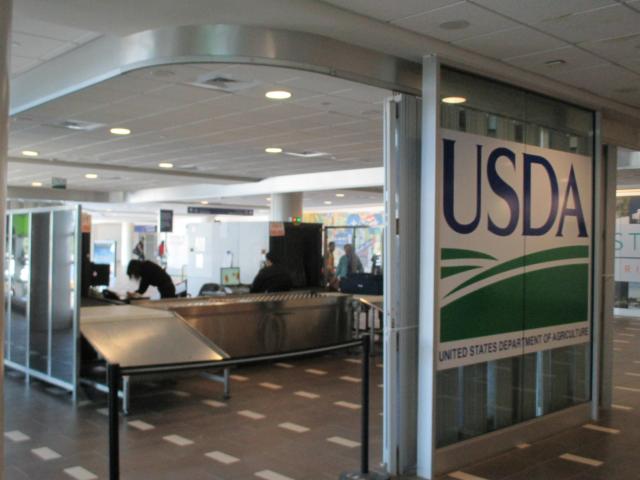
The USDA inspection at Puerto Rico airport stops thousands of travelers cold every week — not because it's complicated, but because nobody told them it comes before everything else. Skip the correct sequence and you're looking at a missed flight, a $1,000 fine, or both.
What is the USDA inspection at Puerto Rico airport?
The USDA inspection at Puerto Rico airport is a mandatory agricultural biosecurity screening that every passenger must complete before checking bags for a flight to the U.S. mainland. Federal inspectors x-ray your luggage and physically examine any food, plants, or agricultural items to prevent invasive pests and disease from reaching the continental United States. The process takes about 5 minutes when the line is short.
Puerto Rico sits in the Caribbean, which means it shares disease and pest exposure pathways with neighboring islands that the continental U.S. does not. The inspection is run by USDA's Animal and Plant Health Inspection Service (APHIS) and applies to all passengers regardless of citizenship.
The checkpoint exists because the stakes are real. African swine fever was detected in the Dominican Republic, and USDA increased its efforts to prevent the disease from reaching Puerto Rico and the continental United States — it spreads easily through pork products and would devastate America's swine industry if it arrived. One bag of lechón making it through is not a hypothetical risk. It is the exact scenario the program is built to stop.
Pro Tip: The USDA inspection is not optional for carry-on bags either. Even if you have no checked luggage, put your bag through the x-ray. Inspectors in the terminal and at TSA work alongside dogs trained to flag agricultural items. Going through voluntarily takes 5 minutes. Getting flagged after takes longer.
Where is the USDA checkpoint at SJU?
The heavy-duty x-ray machines are positioned on the second-level public concourse, squarely inside the automatic sliding entrance doors of Terminals A, B, and C at Luis Muñoz Marín International Airport. You will find them before you reach any airline check-in counter.
The location is not subtle. The moment you walk through the departures doors, you hear the low hum of the scanner belt ahead and see the steel rollers before you see a single airline counter. Confused travelers frequently stop abruptly near the entrance — factor that minor congestion into your timeline, especially during peak morning departures when the line wraps back toward the entrance doors.
Terminal breakdown:
- Terminal A (JetBlue, Air Canada, Avelo): USDA station is along the far-left wall relative to the main entrance
- Terminal B (American, Delta, United, and most other carriers): USDA screening stations line the front of the departures hall in a row of screening islands
- Terminal C: Additional USDA screening available; connected airside to Terminal B
The USDA baggage inspection at Luis Muñoz Marín International Airport sits landside in the departures check-in hall, positioned between the public entrance doors and the airline ticket counter rows — the shortest path is to hit USDA first and then walk straight into the counter zone.
Pro Tip: Tell your rideshare driver which terminal your airline uses before you leave. Arriving at Terminal A when your carrier checks in at Terminal B means dragging luggage across the full departures level, and SJU's curbside drop-off zones are not always forgiving on space.
What is the correct order at the airport?
Most missed flights at SJU trace back to one mistake: walking past the USDA scanners and heading straight to the airline counter. The order is non-negotiable.
The correct sequence:
- Enter the departures level of the correct terminal
- Put all bags — checked and carry-on — through the USDA x-ray
- Collect your bags and receive the clearance sticker from the agricultural specialist
- Walk to the airline ticketing counter and check your bags
- Proceed to TSA
The single most expensive mistake travelers make is walking past the agriculture scanner and heading straight to the airline check-in. The USDA checkpoint always comes first. Airline counter agents will turn you around if your bags don't carry the clearance sticker. Some travelers discover this after standing in a 20-minute check-in line.
The sticker itself is brightly colored and applied directly to the exterior of your bag by a federal agricultural specialist. It is your proof of clearance. TSA agents and airline staff look for it.
One logistical note: the sticker's adhesive is notoriously weak. On my last trip through SJU, two stickers peeled off completely before I reached the counter. Hold onto them manually if you're moving quickly through a crowd.
What food and items are prohibited from Puerto Rico?
Most fresh produce and all pork are off the table. APHIS prohibits or restricts the movement of many agricultural products from Puerto Rico and the U.S. Virgin Islands into the U.S. mainland, including most fresh fruits and vegetables and certain plants such as flowers — because these items could harbor a dangerous stowaway, an invasive pest or disease.
Items that will be confiscated
- All fresh citrus fruits (oranges, limes, lemons, grapefruits) — prohibited without exception
- All fresh fruits not on the APHIS approved list
- All fresh vegetables not on the approved list
- Pork and pork products, including homemade foods cooked in lard
- Fresh pasteles and alcapurrias (frozen versions have been confiscated too, per traveler reports)
- Rice and beans dishes that contain pork
- Live plants in soil
- Palm frond crafts
- Cactus plants and cotton
Items that can travel with you (after inspection)
- Commercially canned and thoroughly cooked foods are generally permitted
- Certain fresh vegetables after inspection: breadfruit, yams, taro, herbs like mint and marjoram, garlic, onion, chives
- Commercially packaged foods not requiring refrigeration
- Wood items and crafts (no soil, no live plant material)
- Rum and other commercially bottled alcohol
- Coffee, commercially packaged
All permissible agricultural products are subject to inspection. Even if an item is on the allowed list, the inspector examines it for visible pest activity before clearing it. A piece of breadfruit with insect damage does not pass.
Pro Tip: The safest souvenir food choices are commercially sealed rum, hot sauces, coffee, and dried spice blends. These clear inspection without discussion. The lechón from the Guavate highway, as good as it is, does not make it to the mainland.
The pork rule and African swine fever
Pork and pork products other than those commercially permitted — including homemade foods containing pork or cooked in lard — are prohibited. This is the restriction that catches the most travelers off guard. Food cooked in lard, a standard in Puerto Rican cuisine, counts as a pork product under the rule.
The disease spreads easily through live pigs, pork and pork products, and on equipment and clothing, and would devastate America's swine, pork industry, and food supply if it reached the United States. The inspectors are not being unreasonable. The potential economic damage runs into the billions.
What happens if you fail to declare a prohibited item?
If you have prohibited agricultural products in your bags or on your person when you go through port inspections, USDA inspectors will confiscate them — and they will not be returned. If you fail to declare these items, you can be subject to delays and civil penalties ranging from $100 to $1,000 per violation.
Ignorance is not accepted as a defense. The inspector does not care that you forgot the roadside mango was in your backpack. One undeclared piece of fruit is a minimum $100 fine and a conversation with federal agents that will cost you more time than the fruit was worth.
Declaring an item you're not sure about is always the right move. Walk up to the inspector and say "I have this — can it travel?" The answer takes 30 seconds and costs nothing. Failing to declare and getting caught costs considerably more.
Pro Tip: Empty out any food items from your carry-on before leaving your hotel. Breakfast leftovers, snacks grabbed at the resort, the fruit from the hotel room bowl — any of these can trigger a problem at the scanner. Eat it, leave it at the hotel, or throw it away before you enter the airport.
How do you get through the USDA inspection without missing your flight?
Allow 2.5 hours before your flight departure. The USDA inspection itself runs about 5 minutes when lines are short, but SJU is a busy airport and the checkpoint line, the check-in queue, and TSA screening can stack.
Outbound agriculture inspection is available from 8 a.m. to 9:30 p.m. local time, 7 days a week at San Juan International Airport. If your flight departs after 9:30 p.m., call the USDA call center at 787-919-0580 before you travel to confirm coverage for late departures.
Practical steps that save time:
- Arrive at the correct terminal for your airline (Terminal A for JetBlue; Terminal B or C for American, Delta, United, and most others)
- Have all bags off your cart and accessible before you reach the belt — the line moves faster when people are ready
- Declare anything you're uncertain about immediately at the scanner; asking takes seconds, getting flagged takes much longer
- Do not carry fresh food in your personal item bag thinking it won't get screened — the x-ray and sniffer dogs cover everything
The USDA inspection line moves fastest before 9 a.m. Tour buses and large groups typically arrive later in the morning, which slows the checkpoint noticeably by 10 a.m. Tuesday and Wednesday mornings are consistently lighter than Friday and Sunday, which are peak travel days at SJU.
Dogs are regularly deployed on the departures floor. If a dog sits near your bag, a specialist will inspect it manually. Staying calm and cooperating takes 3 minutes. Arguing adds nothing.
Before you pack that mango
TL;DR: The USDA inspection at Puerto Rico airport is mandatory, comes before airline check-in, and takes about 5 minutes when you arrive prepared. Leave fresh produce and pork at home, declare anything you're uncertain about, and arrive 2.5 hours before your flight. Failing to declare a prohibited item risks a fine up to $1,000 per violation — and the item gets confiscated anyway.
For the full list of allowed and prohibited items, the official source is the APHIS page at aphis.usda.gov/traveling-with-ag-products/puerto-rico-usvi. Call the USDA Puerto Rico and U.S. Virgin Islands Call Center at 787-919-0580 with specific questions before you travel.
Have you ever had something confiscated at the USDA checkpoint — or found a souvenir food that made it through without a problem? Drop it in the comments.
Source: https://onmetravel.com