For railway service providers and operators, cleanliness is not a choice but a core operational KPI. A 2024 survey of train passengers revealed that almost 70% of traveler complaints were related to poor management and hygiene, specifically in washrooms.
Egypt's rail network, the oldest in the Middle East, spans over 5,000 km and is one of the primary modes of transport for both residents and international travelers visiting the country. Maintaining spotless trains is crucial for uninterrupted operability and passengers’ safety and satisfaction. Professional train-cleaning experts handle day-to-day maintenance, ensuring rail operators can focus on other core duties.
However, choosing the right cleaning team is essential and involves looking beyond a basic crew with mops. A technical project like train cleaning and maintenance requires a trained team capable of observing strict safety protocols, flexible scheduling, trustworthiness, and rapid turnaround times.
Here’s everything you should look for in a train cleaning expert in Egypt:
1. Compliance with Rail-Specific Safety Standards
Railway premises and assets are sensitive environments. A train cleaning services provider must have a deep understanding of the Egyptian regulations for railway safety and compliance.
- Trackside Safety: Staff must be trained and equipped to maintain safety, especially when working in proximity to electrified rail assets (overhead lines).
- Chemical Volatility: They must have access to and use pH-neutral, non-corrosive agents that ensure efficient cleaning while avoiding damage or incidents related to fire, smoke, and toxicity.
- Certification: Choose companies with ISO 9001 (Quality) and ISO 45001 (Occupational Health and Safety) certifications to ensure stricter compliance.
2. Integrated Pest Management (IPM)
Pests and insects in coaches are a common problem for railways and a significant deterrent for passengers. A cleaning company that can also perform routine pest control is a win-win deal for train operators.
Cleaning companies such as BusyBees Egypt implement a quarterly pest control routine, in which all coaches, stations and railway assets are treated to eradicate various common pests and infestations. This includes thermal treatment for bedbugs and rodent trapping and prevention tactics. They provide a detailed report after every service and follow a pest control schedule to prevent the risk of infestation.
3. Continuous Cleaning Over One-And-Done Systems
The traditional train cleaning model, where all major hubs, stations and coaches were deep cleaned once every day or week, is no longer practical in today’s high-traffic, high-risk environments. Modern rail operators favor a continuous cleaning model, where a dedicated staff manages frequent cleaning of high-traffic areas such as toilets, garbage bins and cabin interiors throughout the journey.
When hiring cleaning experts for your train or station, choose the right cleaning frequency based on demand and average daily traffic. High-performance cleaning of high-traffic areas can be scheduled every 60 to 90 minutes, or more, depending on the traffic. This ensures that the entire train receives the same level of attention and maintains passengers’ safety.
4. Train Cleaning Experience and Resources
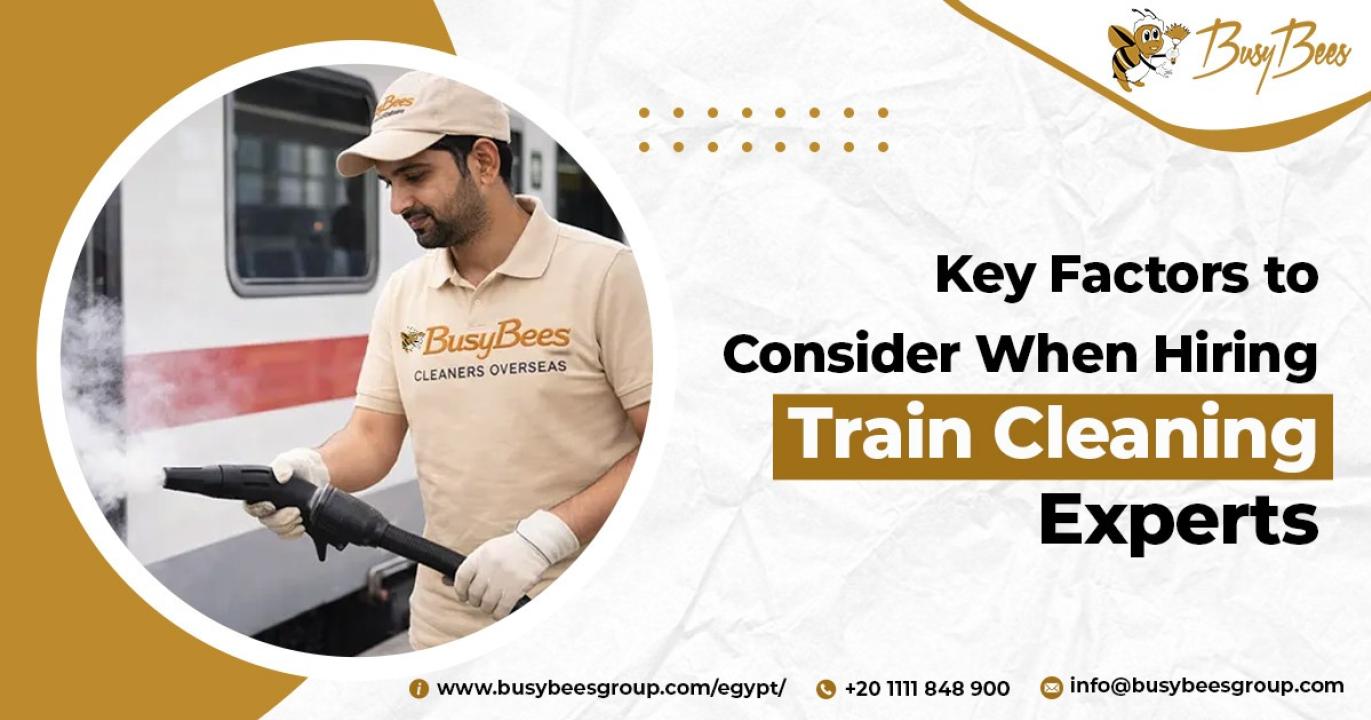
Hiring a regular janitor for cleaning a train doesn’t make sense. A train cleaning provider must have relevant knowledge and experience in the sector. They must have the resources, including trained staff and high-tech equipment, for ongoing maintenance of vast premises or assets like trains and stations.
In short, choosing a big, reputable cleaning company with resources to handle such a large project is essential. Review the company’s track record, experience, previous projects and clients to see if they’re the right fit for you.
5. Train Exterior Maintenance
Routine cleaning of the train’s exterior is just as important, if not more. It’s the first touchpoint for passenger trust. Maintaining a spotless exterior helps build credibility and restores passengers' faith in the railway system. However, exterior cleaning is more than just a high-pressure wash. It involves sustainable management of water and chemicals to prevent waste and health risks. A professional train exterior cleaning service involves:
Graffiti Removal: using specialized equipment and non-abrasive chemicals to remove graffiti without damaging the paint or metal.
Water Reclamation: Capturing and treating used water to remove heavy metals from it before releasing it into the ecosystem.
Aerodynamic Efficiency: Removing iron film (brake dust) using specialized techniques to prevent permanent pitting and maintain the train’s performance.
6. Sustainability and Safety
Modern cleaning companies focus on more than just aesthetic cleanliness. While visual appeal is important, environmental safety must be the primary goal.
A professional train cleaning company in Egypt prioritizes Indoor Air Quality (IAQ) and hygiene maintenance by using HEPA-filtered vacuums and regularly cleaning HVAC filters to remove allergens and maintain fresh indoor air.
Sustainability is also a critical factor to consider. In 2026, vendors are expected to use eco-friendly biodegradable supplies and advanced cleaning methods or equipment that reduce water consumption. Ask your cleaning company for a monthly report on their carbon footprint or sustainable progress.
7. Workforce Reliability and Retention
Train cleaning is strenuous work that requires high-level dedication and the ability to work within tight timelines, such as cleaning between 15-minute stops. Inconsistency or lack of awareness in a cleaning crew leads to security risks and poor results.
Ask about the vendor’s cleaning team and methods. Do they adhere to fair work practices? Provide overtime compensation? Technical training for modern equipment and high-risk jobs? A tech-enabled, trained and insured workforce delivers more than just cleaning. They offer the assurance of a safe and comfortable journey for every passenger across every coach in your train.
Conclusion: Hiring The Right Train Cleaner
Before signing a contract, ask the following technical questions. Hire only if you’re completely satisfied with the answers.
- Do you use eco-friendly, non-corrosive chemicals for rail cleaning?
- Are your cleaners police-verified, trained and insured?
- Do you provide reporting after every service?
- How do I track the progress or scheduling?
- Are your cleaners trained to handle large facilities or assets?
- Do you offer integrated pest management and control?
By focusing on these critical factors and considering their own specific preferences, rail operators can partner with a reliable train cleaning vendor, ensuring that the train's interior, exterior and bathrooms are as refined as its engine.