The Resilience Revolution: A Visionary Blueprint for the Rugged Electronics Market (2026–2033)
Introduction: Beyond the Shell
In the early days of industrial technology, "rugged" was a physical descriptor—a heavy-duty casing, a thick screen, and a weight that suggested durability. Today, as we navigate the complexities of 2026, ruggedness has evolved into a digital necessity. The Global Rugged Electronics Market is no longer a niche sector serving only the defense industry; it is the foundational layer of the global digital transformation.
This report moves beyond surface-level statistics to explore a clear vision: a world where hardware is invisible because it is infallible. We are transitioning from the "Protection Era" to the "Intelligence Era," where rugged devices are expected to not only survive extreme environments but to process complex AI algorithms locally, ensuring that data never stops flowing, even in the most hostile conditions on Earth.
1. Market Vision: The "Zero-Downtime" Mandate
The vision for the next decade is centered on the concept of Continuous Field Intelligence. Historically, field operations were hampered by technology failures—overheating tablets in the desert, cracked screens in warehouses, or moisture-logged sensors on offshore rigs.
The New Standard
The new vision dictates that a device’s failure is a systemic failure. As industries move toward automated logistics, remote surgery, and AI-driven mineral exploration, the "Rugged" designation must now encompass:
Thermal Agility: The ability to maintain peak CPU performance at 60∘C without thermal throttling.
Ubiquitous Connectivity: Seamless switching between 5G, 6G-ready protocols, and LEO (Low Earth Orbit) satellite arrays.
Self-Healing Software: Firmware that can detect physical stress and reroute processing power to maintain critical functions.
2. Strategic Market Dynamics: The Three Engines of Growth
The surge in the rugged electronics market is driven by three distinct, high-velocity engines that are reshaping global commerce.
Engine 1: The Industrial Edge AI
As cloud latency becomes a bottleneck for real-time operations, processing is moving to the "Edge." Rugged devices are now being equipped with dedicated NPUs (Neural Processing Units). In mining or deep-sea oil extraction, these devices analyze seismic data or structural integrity in real-time, making decisions in milliseconds without waiting for a signal to reach a distant data center.
Engine 2: The Green Energy Transition
The global shift toward renewables requires infrastructure in remote, harsh environments. Wind farms in the North Sea and solar arrays in the Mojave Desert require ruggedized monitoring systems that can withstand salt-spray corrosion and extreme UV radiation for decades, not just years.
Engine 3: Modernizing the "First Responder" Stack
Public safety is seeing a massive upgrade. The vision here is "The Augmented Officer." Rugged wearables, integrated with AR (Augmented Reality) and biometric sensors, provide first responders with a "heads-up" display of hazards, floor plans, and vital signs, all housed in a chassis that can survive a building collapse or high-pressure water exposure.
3. Future Business Roles: The Rise of the "Resilience Architect"
One of the most significant shifts in the rugged electronics landscape is the evolution of professional roles within the enterprise. The traditional "IT Procurement Manager" is being replaced by a more strategic figure: the Resilience Architect.
The Resilience Architect's Mandate
The Resilience Architect does not look at the sticker price of a device. Instead, they manage the Business Continuity Lifecycle. Their role involves:
Predictive Failure Modeling: Using data to predict when a device in a specific environment (e.g., a high-vibration cockpit) is likely to fail and replacing it pre-emptively.
Ecological Integration: Ensuring that rugged hardware aligns with the company’s ESG (Environmental, Social, and Governance) goals by choosing modular hardware that can be repaired rather than discarded.
Human-Centric Design: Working with field teams to ensure that "rugged" doesn't mean "unusable." A device that requires a worker to remove their safety gloves to use a touchscreen is a failure of design, regardless of its durability rating.
4. Proper Decision-Making: The "Failure-Cost" Framework
To thrive in this market, leadership must move away from "Low-Bid" procurement. The following table provides a strategic framework for making proper decisions in rugged technology investments.
Decision Matrix: Consumer vs. Rugged vs. Ultra-Rugged
The Proper Decision: If the cost of a device failing for one hour exceeds 50% of the device's purchase price, an investment in Fully Rugged or Ultra-Rugged hardware is not an expense—it is a mandatory insurance policy for your operations.
5. Sector-Specific Strategies: A High-Resolution View
A. Defense and Aerospace: The Stealth Factor
In 2026, the vision for defense electronics is "Invisible Durability." This involves reducing the electromagnetic signature of rugged devices so they cannot be tracked by electronic warfare units.
B. Industrial and Manufacturing: The Robotic Synergy
As factories become darker (fully automated), the electronics managing them must be "Rugged by Default."
C. Healthcare: The "Emergency Anywhere" Model
Rugged tablets are moving into the "Ambulance-to-ER" pipeline. These devices must be chemically resistant to harsh disinfectants while maintaining high-resolution displays for remote diagnostics.
6. The "New Version" of Technology: Engineering the Future
The rugged electronics of the future are defined by four technological pillars:
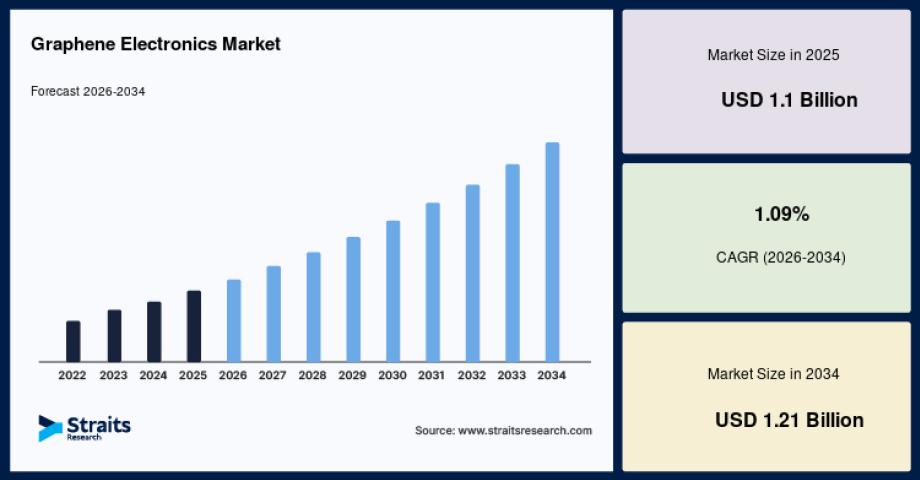
Advanced Material Science: We are seeing a move away from simple magnesium alloys to Graphene-reinforced polymers. These materials offer the strength of steel at a fraction of the weight, solving the "fatigue factor" for field workers who must carry these devices for 12-hour shifts.
Modular Longevity: The "New Version" of ruggedness is modular. If a port breaks or a battery degrades, the user can swap the component in the field without special tools. This extends the device's life from 5 years to potentially 10.
Intelligent Power Management: AI-driven battery optimization that learns the user's habits. If the device knows a worker is 5 miles from the nearest charging station and the battery is at 15%, it will automatically dim the screen, throttle non-essential background tasks, and prioritize the GPS and communication radio.
Display Innovation: Sunlight-readable displays are reaching 2,500 nits of brightness while consuming 30% less power than previous generations, using advanced reflective-LCD technology.
7. Global Regional Analysis: Navigating Growth
North America: The R&D Powerhouse
The focus remains on "High-Complexity" ruggedization. The U.S. and Canada are leading in the integration of rugged hardware with private 5G networks, creating "Smart Hardened Hubs" for port authorities and border security.
Europe: The Circular Economy Leader
European businesses are making decisions based on "Right to Repair" legislation. Manufacturers who provide 10-year spare part guarantees are winning the market over those who offer cheaper, non-serviceable units.
Asia-Pacific: The Scale Accelerator
The APAC region is where the highest volume of rugged adoption is occurring. China, India, and Southeast Asia are ruggedizing their entire logistics and agricultural sectors. The "Future Direction" here is the creation of affordable, "Mid-Tier" rugged devices that provide 80% of the protection of premium brands at 50% of the cost.
8. Overcoming Market Restraints: The "Weight of Perception"
The biggest hurdle for the rugged electronics market is not the technology—it is the perception of cost. Many organizations still view "Rugged" as a luxury.
The Strategic Rebuttal: The "New Vision" for business involves a transition to Hardware-as-a-Service (HaaS). By moving the cost of rugged electronics from a capital expenditure (CapEx) to an operating expenditure (OpEx), companies can deploy the latest hardened technology without a massive upfront hit to the balance sheet. This "Decision" allows for a predictable monthly cost that includes accidental damage protection, software updates, and 24/7 field support.
9. Future Trends: The 2030 Horizon
The Bio-Rugged Interface
We are beginning to see the integration of rugged electronics with human biology—exoskeletons and wearable rugged monitors that help industrial workers lift heavier loads while monitoring their heart rate and hydration levels in extreme heat.
Space-Grade Commercialization
As the "New Space" economy grows, rugged electronics are being tested for low-Earth orbit and lunar environments. The lessons learned in vacuum-sealing and radiation-shielding for space will soon trickle down to terrestrial applications in nuclear power and high-altitude research.
10. Conclusion: The Roadmap to Resilient Leadership
The Global Rugged Electronics Market is at a crossroads. Organizations that continue to buy consumer-grade devices for professional field environments are essentially planning for failure.
The Clear Vision for the Future: Success in the next decade requires a three-pronged approach:
Adopt a Resilience Mindset: Shift from "How much does it cost?" to "How much does it save in downtime?"
Empower the Resilience Architect: Give your tech leaders the authority to build a hardened ecosystem that integrates hardware, software, and connectivity.
Choose Directional Partners: Align with manufacturers who prioritize modularity, AI-readiness, and long-term support over quick, high-volume sales.
By embracing the "New Version" of rugged electronics—one that is intelligent, modular, and mission-focused—businesses will not just survive the harsh realities of the modern world; they will use that resilience as a competitive advantage to outpace, outwork, and outlast their competition.
Strategic Summary: The rugged electronics market is projected to reach unprecedented heights as it becomes the "Physical Layer" of the AI revolution. Decisions made today regarding device durability and edge-computing capability will determine the market leaders of 2033. This is not just about a tougher tablet; it is about the future of work itself.