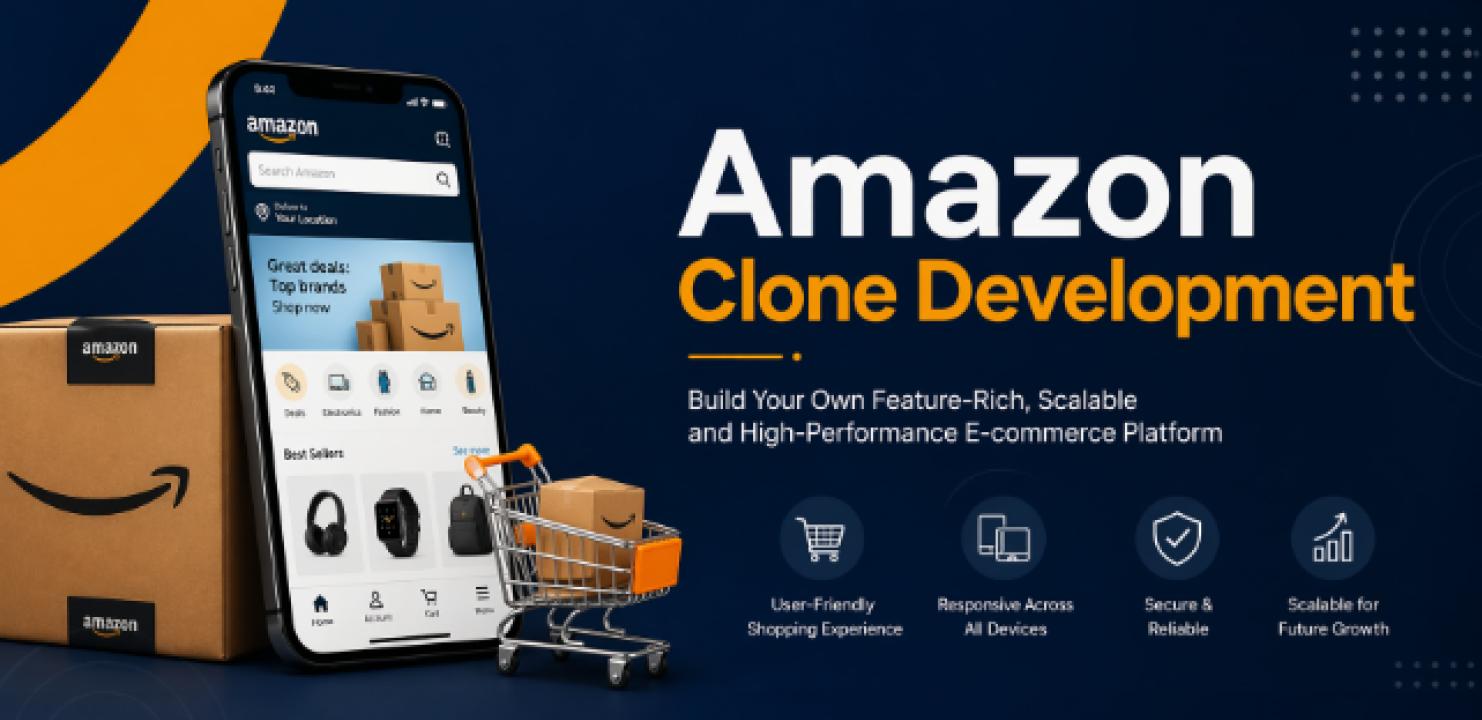
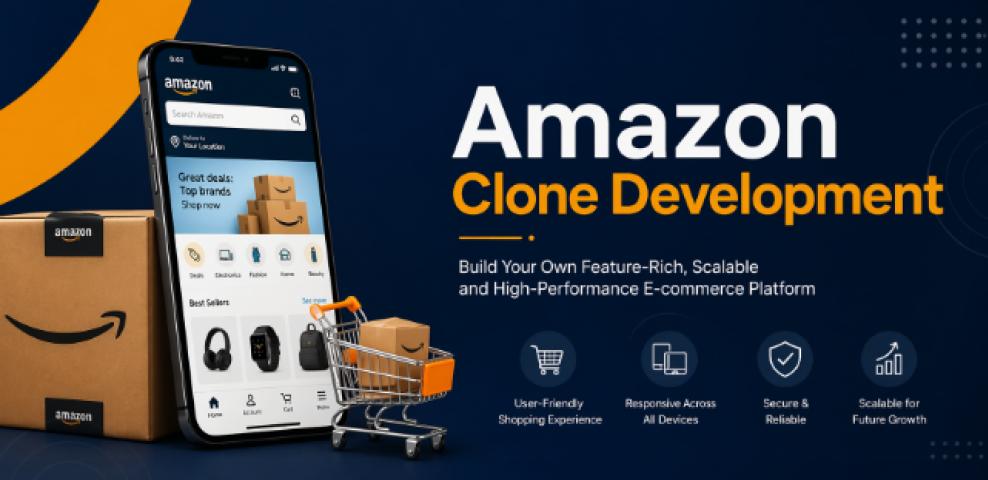
If you're looking to build an e-commerce platform that can rival the likes of Amazon, you’re not alone. Many businesses today are choosing to launch Amazon clone apps to tap into the massive potential of online marketplaces. But here's the challenge: to succeed, you need more than just a replica of Amazon’s design. You need the right e-commerce solution, powerful technologies, and a scalable platform that meets the specific needs of your business.
Whether you're launching a new online marketplace or expanding an existing one, an Amazon-like app can give you a significant competitive edge. The key lies in customizing the right features, selecting the best technologies, and working with a trusted on-demand app development company to bring your vision to life.
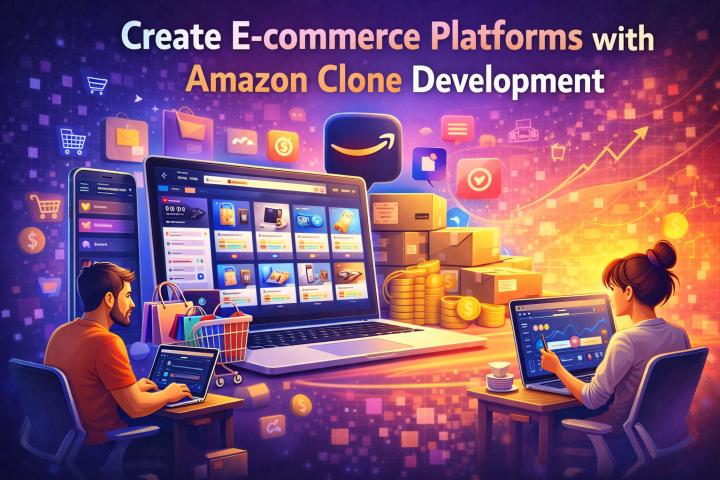
In this blog, we’ll break down what it takes to develop an Amazon clone that’s tailored to your business goals. From essential features to the best technologies for a seamless user experience, we’ll guide you on how to choose the right platform to ensure your success in the e-commerce world.
Let’s get started!
What is an Amazon Clone and Why Should You Consider It?
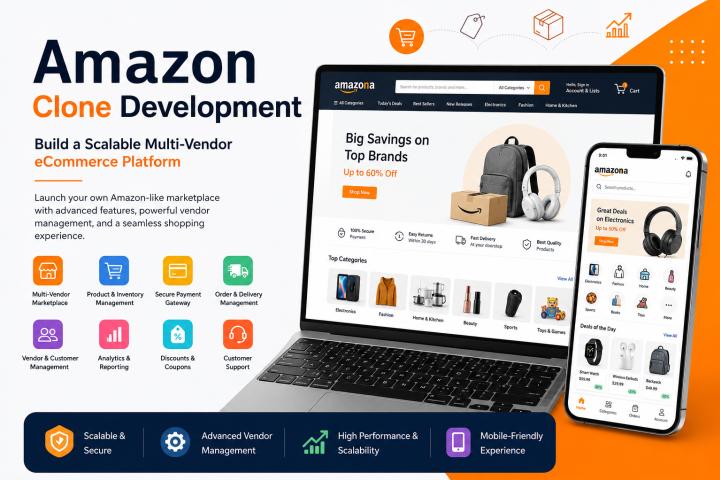
An Amazon clone is a business model that replicates the functionality and features of Amazon’s marketplace, allowing you to create a similar e-commerce platform. While it’s tempting to think of it as simply copying Amazon, the real value lies in adapting its proven success to your unique business needs.
By choosing to build an Amazon clone app, you leverage an already successful e-commerce model with the flexibility to customize features that align with your target market, branding, and business objectives. With the right e-commerce script, you can build a platform that offers the same functionalities as Amazon, such as product catalogs, reviews, payment gateways, and order tracking, but with your own unique spin.
The advantage? You get a head start without having to reinvent the wheel. You’re building on a model that works, with the option to enhance and scale it according to your specific vision.
Key Features Your Amazon Clone Must Have
To ensure your Amazon-like app delivers a competitive experience, you need to integrate several essential features. Below are some must-haves to include in your e-commerce solution.
1. User Account Management
A seamless account management system is crucial for any e-commerce platform. Users need to be able to sign up, manage their profiles, track orders, and save preferences easily. This feature should support account registration, login, password recovery, and two-factor authentication for added security.
2. Product Management
A comprehensive product management system allows businesses to efficiently manage product listings, including uploading images, setting descriptions, categorizing products, and handling inventory. This is critical for maintaining an organized catalog that customers can easily browse.
3. Search Functionality with Filters
One of the standout features of Amazon’s platform is its search and filtering system. Users should be able to search for products by name, category, price range, and more. Incorporating powerful search algorithms with filtering options helps customers find what they’re looking for quickly, driving higher conversion rates.
4. Secure Payment Gateways
The success of your Amazon clone app depends on providing a secure and seamless payment experience. Integrating multiple payment gateways, such as PayPal, credit cards, and digital wallets, ensures that your platform caters to a global audience. Additionally, it’s crucial to use secure payment processing to protect sensitive customer information.
5. Order and Shipment Tracking
An essential feature for any e-commerce solution is a real-time order tracking system. Customers expect to know where their orders are at all times. A robust system that supports order status updates, shipping notifications, and live tracking keeps users informed and reduces customer anxiety.
6. Ratings and Reviews
Customer-generated content like reviews and ratings plays a significant role in building trust. Your Amazon clone should include a review system where buyers can rate products, leave comments, and share their experiences. This builds credibility and drives sales by influencing other customers’ purchasing decisions.
7. Admin Dashboard
The admin dashboard is the control center for managing your marketplace. It should allow business owners to monitor sales, inventory levels, customer activity, and overall performance. A robust admin dashboard gives you the insights needed to make data-driven decisions and optimize your platform.
Choosing the Right Technology Stack for Your Amazon Clone
When developing an Amazon clone, the choice of technologies will determine the platform’s scalability, performance, and user experience. Here’s a breakdown of the ideal technology stack for building a high-performance Amazon-like app.
1. Frontend Development
The frontend is the face of your platform, so it’s crucial that it’s intuitive, responsive, and easy to navigate. The following technologies are ideal for building a user-friendly front end:
- React.js: Known for its flexibility, performance, and large community, React.js allows for the building of dynamic and responsive user interfaces. Its component-based architecture helps you create scalable and maintainable code.
- Angular: Angular is another powerful JavaScript framework for developing complex and interactive web applications. Its two-way data binding ensures a smooth and consistent user experience.
- Vue.js: Vue.js is a lightweight and progressive JavaScript framework that is perfect for building modern e-commerce websites. It’s highly flexible and allows easy integration with other tools.
2. Backend Development
The backend handles data processing, transactions, and integrations. You need a scalable, secure, and efficient backend for your Amazon clone app:
- Node.js: Ideal for handling high volumes of traffic, Node.js is a fast and scalable choice for backend development. It’s particularly useful for handling asynchronous operations and real-time data.
- Ruby on Rails: Known for rapid development, Ruby on Rails is great for building scalable e-commerce platforms with clean and concise code.
- Django: Django offers a strong security foundation and rapid development cycle, making it an excellent choice for building scalable and secure Amazon clone apps.
3. Database Solutions
Your platform will need to handle large datasets, from product details to user accounts. Choose a database solution that provides scalability and performance:
- MySQL/PostgreSQL: Both of these relational databases are reliable and support high performance for e-commerce apps. They’re perfect for handling structured data like user information, product listings, and transactions.
- MongoDB: If your app requires flexibility in handling unstructured data, MongoDB is a great choice. Its NoSQL architecture is designed for large-scale applications with constantly changing data.
4. Cloud Hosting & Storage
Cloud platforms are essential for hosting and scaling your Amazon clone effectively:
- Amazon Web Services (AWS): Given its history of supporting Amazon, AWS is a perfect fit for hosting e-commerce platforms. It offers scalability, security, and a wide range of tools, including S3 for storage, EC2 for computing, and RDS for managed database services.
- Google Cloud: Google Cloud offers reliable hosting with excellent performance and security. It’s a great choice for businesses looking to scale with ease.
- Microsoft Azure: With its strong security features and global data centers, Azure is another reliable cloud platform for hosting your e-commerce solution.
Customizing Your Amazon Clone for Business Growth
While an Amazon clone provides a solid foundation, customization is key to standing out in the crowded e-commerce market. Here’s how you can tailor your Amazon-like app to meet your business needs:
1. Mobile App Development
As more consumers turn to mobile devices for shopping, having a mobile app for your Amazon clone is essential. You can choose between developing a native app for iOS and Android or using cross-platform frameworks like React Native or Flutter to build a single app for both platforms.
2. Third-Party Integrations
Integrate with third-party tools and services to enhance your platform’s functionality. This could include CRM systems, inventory management software, email marketing tools, and even integration with social media platforms for product promotion and customer engagement.
3. Scalability
Make sure your infrastructure can scale as your platform grows. Cloud hosting solutions like AWS, Google Cloud, or Azure offer auto-scaling features that allow your app to handle increased traffic without performance issues.
Partnering with the Right On-Demand App Development Company
Choosing the right on-demand app development company is a critical step in the development process. The right team will bring your Amazon clone to life, ensuring that your platform is scalable, secure, and tailored to your business needs. Look for a development company with:
- Experience in building e-commerce apps and marketplaces
- Technical expertise in the latest technologies
- A proven track record of successful projects
- Customization capabilities to align with your business goals
Conclusion
Developing an Amazon clone is one of the most efficient ways to enter the e-commerce space while leveraging a proven business model. However, the success of your Amazon-like app depends on a combination of the right features, technology stack, and customization to meet your specific business needs.
By selecting the right e-commerce solution and partnering with a reliable on-demand app development company, you can build a platform that not only competes with giants like Amazon but also serves your customers with ease, efficiency, and security.