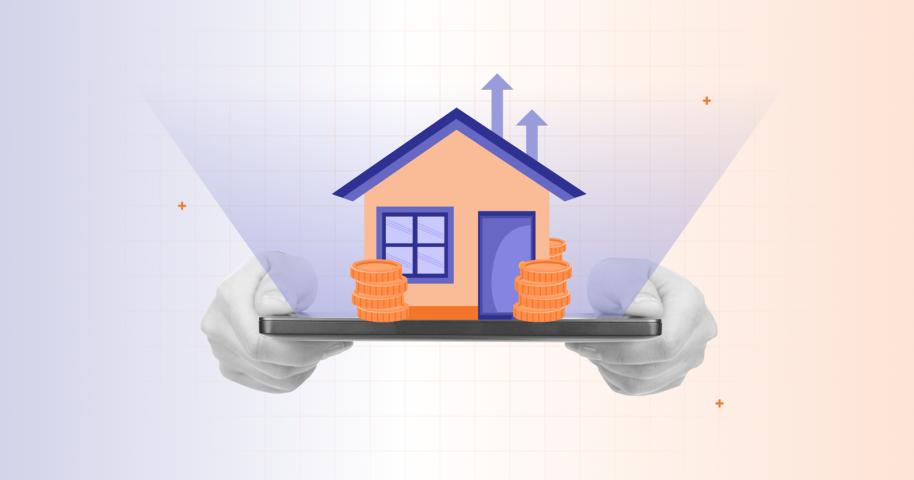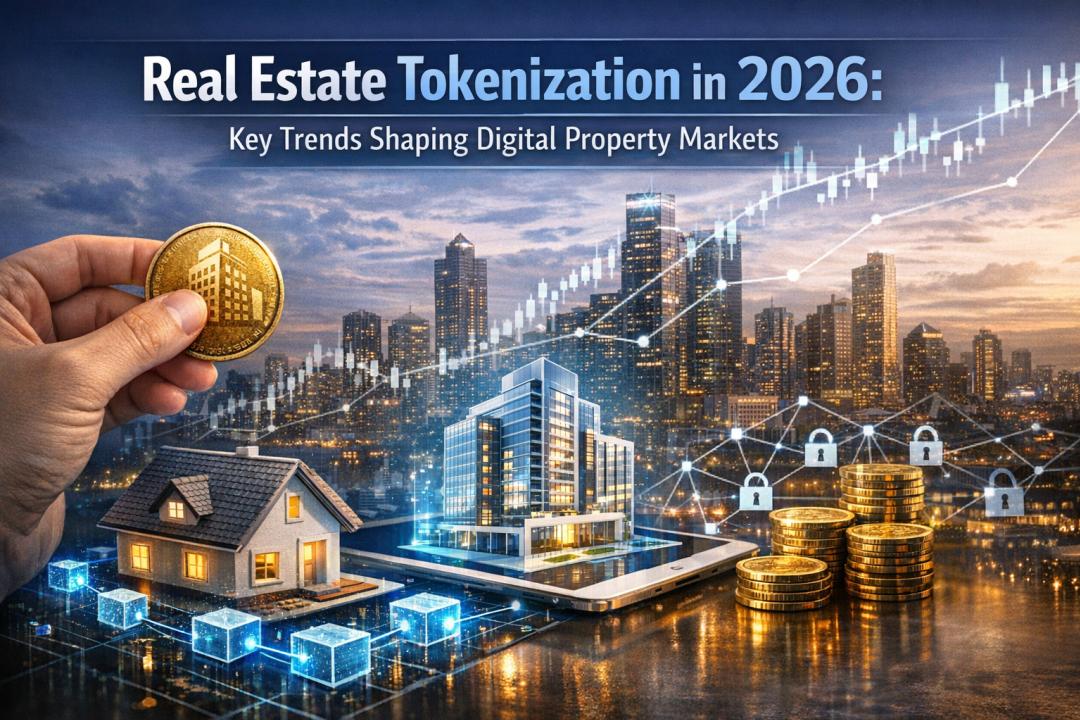
Real estate tokenization in 2026 is no longer positioned as a disruptive experiment—it has matured into a structured financial layer within global property markets. By converting real-world real estate assets into blockchain-based digital tokens, the industry is enabling fractional ownership, enhancing liquidity, and redefining capital formation mechanisms. This transformation is not just technological; it represents a fundamental shift in how property assets are accessed, managed, and traded across jurisdictions.
At a structural level, tokenization introduces programmability into traditionally rigid real estate systems. Ownership rights, income distribution, and governance models are encoded into smart contracts, reducing reliance on intermediaries. As a result, transaction cycles are shortened, operational inefficiencies are minimized, and transparency is significantly improved.
Institutional Adoption and Market Maturity
The acceleration of real estate tokenization in 2026 is largely driven by institutional validation. Asset managers, sovereign funds, and private equity firms are integrating tokenized assets into diversified portfolios. This institutional participation is reinforcing market confidence and enabling large-scale deployments.
Tokenized real estate instruments now incorporate advanced financial engineering. Features such as automated yield distribution, embedded compliance layers, and real-time cap table management are becoming standard. These capabilities allow investors to track asset performance with greater precision while ensuring regulatory adherence across multiple jurisdictions.
Furthermore, secondary markets for tokenized assets are gaining traction. Unlike traditional real estate transactions, which are often illiquid and time-consuming, tokenized assets can be traded more efficiently. This increased liquidity is attracting a broader investor base, including those seeking short-term exposure to property-backed instruments.
Core Drivers Accelerating Tokenization Growth
Several technological and infrastructural advancements are fueling the expansion of real estate tokenization:
-
Smart Contract Standardization
The evolution of standardized smart contract frameworks is enabling consistent deployment of tokenized assets, reducing legal ambiguity and operational risk. -
Layer-2 and Scalable Blockchain Infrastructure
Scalability solutions are addressing transaction bottlenecks, ensuring faster settlement times and lower transaction costs for high-volume asset trading. -
Integration of Decentralized Identity Systems
Decentralized identity protocols are streamlining KYC and AML processes, allowing compliant participation without compromising user privacy. -
Interoperable Token Standards for Real-World Assets
Cross-chain compatibility is enhancing asset portability, enabling seamless interaction between different blockchain ecosystems.
These drivers collectively enhance the efficiency and scalability of tokenized property markets, making them increasingly viable for mainstream adoption.
Regulatory Frameworks and Compliance Evolution
Regulation remains a critical factor shaping real estate tokenization in 2026. Governments and financial authorities are progressively establishing frameworks that define the legal status of tokenized assets. Jurisdictions with clear regulatory guidelines are emerging as hubs for tokenization platforms, attracting both capital and innovation.
Compliance is being embedded directly into token architectures through programmable rules. These include restrictions on investor eligibility, automated tax reporting, and jurisdiction-specific transfer limitations. Such mechanisms reduce the burden on intermediaries while ensuring adherence to evolving legal standards.
Additionally, collaboration between regulators and blockchain consortia is fostering the development of globally harmonized standards. This alignment is crucial for enabling cross-border investments and reducing fragmentation within tokenized markets.
Emerging Use Cases Transforming Property Investment
The application of real estate tokenization is expanding beyond simple fractional ownership models. New use cases are reshaping how property assets are structured and monetized:
-
Tokenized Real Estate Funds
Investment funds are issuing tokenized shares, allowing for dynamic portfolio allocation and real-time valuation updates. -
Revenue-Generating Asset Tokens
Properties with rental income streams are being tokenized to provide investors with predictable yield distributions. -
Development Project Tokenization
Real estate development projects are leveraging tokenization to raise capital from a global investor pool, reducing dependence on traditional financing channels. -
Hybrid Ownership Models
Combining traditional ownership with tokenized layers is enabling flexible investment structures tailored to diverse risk profiles.
These innovations demonstrate the versatility of tokenization in addressing both capital access and asset management challenges.
Challenges and Structural Limitations
Despite its growth, real estate tokenization in 2026 faces several constraints. Regulatory fragmentation across jurisdictions continues to create operational complexity. Additionally, the integration of legal frameworks with blockchain systems requires careful alignment to ensure enforceability of tokenized ownership rights.
Market education also remains a barrier. While institutional players are increasingly involved, retail investors often lack a comprehensive understanding of tokenized assets and associated risks. Security concerns, including smart contract vulnerabilities and custodial risks, further highlight the need for robust infrastructure.
Liquidity, although improved, is still evolving. Secondary markets are not yet as deep or stable as traditional financial markets, which can impact price discovery and trading efficiency.
Strategic Outlook for 2026 and Beyond
Looking ahead, real estate tokenization in 2026 is positioned to become a foundational component of digital asset ecosystems. The convergence of blockchain technology, regulatory clarity, and institutional capital is creating a resilient framework for long-term growth.
As platforms offering real estate tokenization development continue to evolve, the focus will shift toward interoperability, compliance automation, and enhanced user experience. The integration of artificial intelligence for asset valuation and predictive analytics is also expected to further refine investment decision-making.
Ultimately, the trajectory of tokenized property markets will depend on the ability to balance innovation with regulatory alignment. If successfully achieved, real estate tokenization could redefine global property investment by making it more accessible, liquid, and efficient.