Why Everyone Is Talking About Multi-Vendor Platforms?
Have you ever wondered how platforms like Amazon or Flipkart manage thousands of sellers and millions of products while still providing a smooth shopping experience?
If you want to start an online business or grow an existing one, you may face a tough choice:
Should you create a single-store eCommerce website or aim for something bigger and more adaptable?
That’s where a multi-vendor ecommerce platform comes in.
In 2026, the eCommerce scene is not just about selling products; it’s about creating ecosystems. Whether you are a startup founder, retailer, or entrepreneur, knowing how a multi-vendor marketplace works can open up huge growth opportunities.
Let’s break it all down in a simple, practical way.
What is a Multi-Vendor E-commerce Platform?
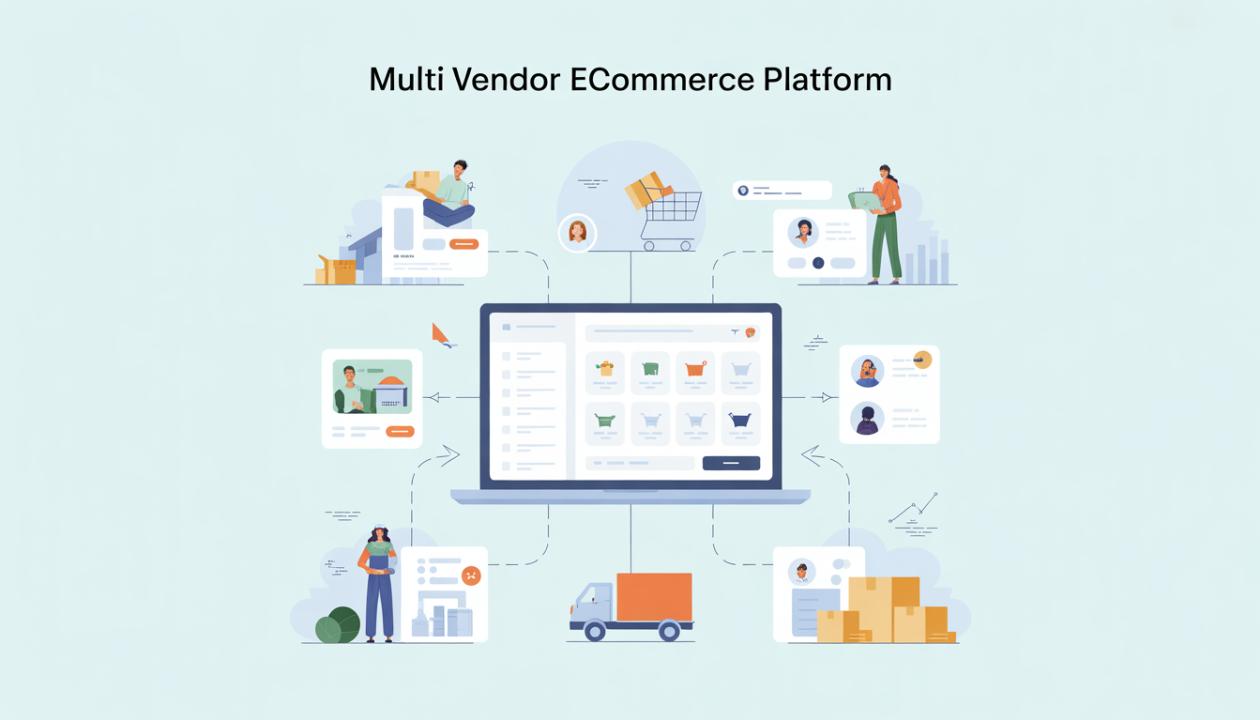
A multi-vendor e-commerce platform is an online marketplace where multiple independent sellers can register, list their products, and sell directly to customers, all on one website or application. Think of it as a digital shopping mall:
Think of it as a digital shopping mall:
The platform owner provides and manages the infrastructure, technology, and overall system.
Each vendor runs like a separate store, handling their own products, pricing, and inventory.
Customers can browse products from different sellers and make purchases—all in one place
This setup creates a convenient ecosystem where buyers enjoy variety, and sellers gain access to a larger customer base without the need to build their own e-commerce website. A B2B eCommerce development company can assist businesses in quickly building and scaling such platforms with the right features and infrastructure.
Key Examples:
Amazon
Flipkart
Etsy
How Does a Multi-Vendor Marketplace Work?
A multi-vendor marketplace connects multiple sellers with customers on one platform, making buying and selling easy. Here’s how the process usually works:
1. Admin (Platform Owner)
The admin manages the entire platform by setting rules, approving vendors, handling commissions, and ensuring smooth operations. They serve as the backbone of the marketplace.
2. Vendors / Sellers
Vendors register on the platform, create their stores, upload products, set pricing, manage inventory, and handle order fulfillment. Each seller operates independently within the marketplace.
3. Customers
Customers can browse a wide range of products from different sellers, compare prices, read reviews, and place orders, all on one platform.
4. Order Flow
The transaction process follows a simple path: Customer places an order → Vendor receives notification → Product is shipped → Payment is processed → Platform deducts commission.
Why Multi-Vendor Platforms Are Dominating in 2026
The shift toward marketplace business models is speeding up quickly, and for good reason. Multi-vendor platforms provide a smarter and more scalable way to build and grow an online business. Here’s why they are dominating in 2026:
1. Low Inventory Risk
You don’t need to buy or store products yourself. Vendors handle their own inventory, which lowers your upfront investment and operational risk.
2. Unlimited Product Variety
More vendors mean more products. This variety draws a wider audience and keeps customers coming back for more options all in one spot.
3. Faster Scalability
Instead of expanding your inventory, you grow by bringing in new vendors. This lets you scale your platform faster and more efficiently.
4. Multiple Revenue Streams
Multi-vendor marketplaces open the door to diverse income sources, such as:
Commission on every sale
Vendor subscription or listing fees
Advertising and featured product charges
5. Powerful Network Effect
As more vendors sign up, your platform attracts more customers. When customer traffic increases, even more vendors want to join, creating a self-reinforcing growth cycle.
Key Features of a Successful Multi-Vendor E-commerce Platform
To develop a competitive marketplace in 2026, your platform needs more than just product listings.
1. Vendor Management System
A solid vendor system makes onboarding and management easier. It should have:
Easy seller registration and approval process
Dedicated dashboards for tracking sales, orders, and inventory
Performance analytics for vendors
2. Product & Catalog Management
Efficient product management that ensures a smooth shopping experience. Key features include:
Bulk product uploads
Category-based organization
Smart filters and advanced search options
3. Secure Payment Integration
Trust is critical in ecommerce. A reliable platform should offer:
Multiple payment options (cards, UPI, wallets, etc.)
Automated commission splitting between vendors and platform owners
Secure and encrypted transactions
4. Order & Shipping Management
A seamless fulfillment system improves customer satisfaction. It should provide:
Real-time order tracking
Integration with multiple shipping partners
Automated order status updates
5. Review & Rating System
Customer feedback plays a big role in buying decisions. A built-in review system helps:
Build trust and transparency.
Improve product credibility
Guide new customers in decision-making.
6. Mobile Optimization
With most users shopping on smartphones, a mobile-first design is crucial. A responsive, fast, and user-friendly mobile experience directly affects conversions and user retention.
Types of Multi-Vendor Marketplaces
Not all marketplaces are the same. Here are the main types:
1. Product-Based Marketplaces
These platforms focus on selling physical goods like electronics, clothing, accessories, and household items. Multiple vendors list their products, giving customers a wide range of choices in one place.
2. Service-Based Platforms
Instead of physical products, these marketplaces connect customers with service providers. Examples include freelancers, tutors, home repair services, and consultants, where users hire services directly through the platform.
3. Digital Product Marketplaces
These platforms specialize in selling digital goods like software, eBooks, templates, courses, and other downloadable content. Delivery is instant and fully automated, making them highly scalable.
4. Niche Marketplaces
Niche platforms focus on a specific category or audience. Examples include handmade crafts, organic products, vintage goods, and eco-friendly items. By targeting a specific segment, they build a stronger brand identity and foster customer loyalty.
| Feature | Multi Vendor Platform | Single Vendor Store |
| Inventory | Managed by vendors | Managed by owner |
| Scalability | High | Limited |
| Revenue Model | Commission-based | Direct sales |
| Product Range | Wide | Limited |
| Complexity | High | Moderate |
How to Build a Multi-Vendor E-commerce Platform (Step-by-Step)
Step 1: Choose Your Niche
Start with a focused niche instead of trying to serve everyone. A clear niche helps you attract the right vendors and customers faster, reduces competition, and makes your marketing more effective.
Step 2: Select the Right Technology
Your platform’s success depends heavily on the technology you choose. Common options include:
SaaS platforms (quick setup, low technical effort)
Custom development (fully flexible but higher cost)
Open-source solutions (balanced control and affordability)
Choose based on your budget, scalability needs, and long-term goals.
Step 3: Design User Experience (UX)
A smooth and intuitive user experience is critical for conversions. Focus on:
Simple and clean navigation
Fast and secure checkout process
Modern, clutter-free UI design
A better UX directly improves customer retention and sales.
Step 4: Develop Vendor Onboarding Process
Make it easy for sellers to join your platform. A simple onboarding system should include:
Quick registration
Easy product upload process
Clear seller dashboard and guidelines
The easier it is for vendors, the faster your marketplace grows.
Step 5: Set Commission Structure
Define how your platform will generate revenue. Common models include:
Percentage per sale (most popular)
Monthly subscription fees for vendors
Listing or feature-based charges
Choose a model that balances profitability and vendor satisfaction.
Step 6: Launch & Market Your Platform
Once your platform is ready, focus on visibility and user acquisition through:
SEO (Search Engine Optimization)
Social media marketing
Influencer collaborations and paid ads
A strong launch strategy ensures your platform gains traction quickly.
Common Challenges (And How to Solve Them)
1. Vendor Quality Control
One of the biggest challenges is making sure that all vendors keep product and service quality consistent.
Solution:
Implement strong verification systems for seller onboarding and use rating and review systems so customers can give feedback. Regular monitoring and performance-based rankings also help maintain quality standards.
2. Logistics Management
Managing deliveries from many vendors can get complicated. This is especially true when dealing with different locations and shipping expectations.
Solution:
Partner with reliable logistics and shipping providers or integrate third-party delivery APIs. A centralized tracking system can also improve transparency and customer satisfaction.
3. Customer Trust Issues
New marketplaces often have a hard time gaining customer trust, particularly when multiple unknown sellers are involved.
Solution:
Build trust through verified reviews, clear return and refund policies, and secure payment options. Offering buyer protection programs can further increase confidence in the platform.
4. Platform Scalability
As the number of vendors and customers increases, keeping up performance and speed becomes challenging.
Solution:
Use a cloud-based system that can adjust resources based on traffic. This keeps your platform fast, stable, and reliable even during busy times.
Trends Shaping Multi-Vendor E-commerce in 2026
1. AI-Powered Personalization
Artificial intelligence is changing how customers shop by providing smarter, more accurate product recommendations based on browsing history, preferences, and behavior. This helps vendors increase sales and improve user experience.
2. Voice Commerce
With the rise of smart assistants like Alexa and Google Assistant, voice-based shopping is becoming more common. Customers can now search for products, compare prices, and place orders with simple voice commands.
3. Hyperlocal Marketplaces
Ecommerce is becoming more local, connecting nearby sellers with nearby buyers. This cuts down delivery time, supports local businesses, and boosts customer satisfaction with faster fulfillment.
4. Social Commerce Integration
Social media platforms are not just for engagement anymore—they are turning into powerful sales channels. Businesses can sell directly through platforms like Instagram, Facebook, and TikTok, making the buying process seamless.
5. Sustainable Marketplaces
Consumers are increasingly opting for eco-friendly choices. As a result, marketplaces that focus on sustainable, ethical, and environmentally friendly products are gaining strong popularity in 2026.
Who Should Build a Multi-Vendor Platform?
This model is ideal for:
Startups wanting to scale quickly
Entrepreneurs building niche marketplaces
Retailers expanding beyond inventory limits
Businesses offering b2b ecommerce development services
Benefits for Vendors and Customers
For Vendors
Access to a large customer base
Lower marketing costs
Easy store setup
For Customers
More choices
Competitive pricing
Better shopping experience
Conclusion
If you want to create a successful online business in 2026, a multi-vendor ecommerce platform is a smart choice.
It lets you grow without having to handle inventory, access various revenue streams, and foster a thriving marketplace for both sellers and buyers.
The key is to begin with a clear focus, prioritize user experience, and keep up with market trends.
FAQs
1. What is a multi-vendor ecommerce platform?
It’s an online marketplace where different sellers can list and sell their products on one website.
2. How do multi-vendor platforms make money?
They generate income from commissions, subscriptions, and advertising fees charged to vendors.
3. Which is the best multi-vendor e-commerce platform in 2026?
It depends on what you need; options include SaaS solutions, open-source platforms, and custom-built systems.
4. Is a multi-vendor marketplace profitable?
Yes, if done right, it provides scalable revenue and lowers inventory risk.
5. How long does it take to build a multi-vendor e-commerce platform?
It can take a few weeks if you're using SaaS, or several months for custom development.