
The way companies build software has changed dramatically. A few years ago, hiring an in-house development team felt like the only reliable path to building a scalable digital product. Today, the calculus looks entirely different. Rising operational costs, a fiercely competitive talent market, and the pressure to ship faster have pushed business leaders to rethink how they source technical expertise.
For founders, CTOs, and enterprise decision-makers, the question is no longer whether to partner with an external development team — it's how to choose the right one and structure that relationship for long-term success.
The Real Cost of Getting Software Development Wrong
Before exploring what a strong development partnership looks like, it's worth understanding what's at stake when it goes wrong.
Failed or delayed software projects cost organizations far more than just money. They erode customer trust, delay market entry, and — in fast-moving industries — can hand a decisive advantage to competitors. According to industry research, over 60% of software projects face scope creep, budget overruns, or timeline failures. The root cause is rarely a lack of technical skill. More often, it's poor communication, misaligned expectations, or a vendor that prioritizes output volume over product quality.
This is why choosing the right technology partner is one of the most consequential decisions a business leader will make.
What Modern Software Development Actually Requires
The days of handing over a requirements document and waiting six months for a product are over. Modern software delivery is iterative, collaborative, and deeply integrated with business strategy.
Here's what high-performing development engagements look like in 2026:
Agile delivery cycles that allow for rapid feedback and course correction
Cross-functional teams combining developers, UX designers, QA engineers, and product strategists
DevOps integration for continuous deployment and faster time-to-market
Security-first architecture built into every layer of the stack, not bolted on afterward
Transparent communication through regular standups, sprint reviews, and documented progress
Businesses that demand these practices from their vendors don't just ship better products — they build institutional knowledge and reduce technical debt over time.
Why Location and Ecosystem Still Matter
The global talent pool is undeniably vast, and remote-first development teams have proven they can deliver. But geography still matters in ways that are often underestimated.
Proximity to a technology hub means access to a denser ecosystem of specialized talent, faster in-person collaboration when needed, and vendors who understand the regulatory and business environment you operate in. India's National Capital Region — particularly Noida — has emerged as one of the most significant IT corridors in Asia. The concentration of engineering talent, tier-one infrastructure, and competitive pricing has made it a destination of choice for both domestic enterprises and global companies looking to build or scale their tech capabilities.
For companies evaluating technology partners in this region, working with the best software development services in Noida means accessing teams that combine technical depth with genuine product thinking — a combination that's harder to find than most decision-makers expect.
How to Evaluate a Software Development Partner
Not all vendors who claim to offer end-to-end development capabilities actually deliver on that promise. Here's a practical framework for evaluating potential partners before signing any agreement.
Assess Technical Breadth Without Losing Depth
A strong development partner should demonstrate proficiency across the full stack — frontend, backend, cloud infrastructure, mobile, and data engineering. However, breadth without depth is a red flag. Ask vendors to walk you through specific architectural decisions they made on past projects, including the tradeoffs they considered. Teams that can articulate why they made technical choices, not just what they built, are the ones worth trusting with complex builds.
Look for Domain Familiarity
Software development is never purely technical. Whether you're building a fintech platform, a healthcare application, an e-commerce system, or an enterprise SaaS product, domain knowledge accelerates delivery and reduces the risk of costly rework. A vendor who has worked within your industry will anticipate compliance requirements, user behavior patterns, and integration challenges that a generalist team simply won't see coming.
Evaluate Communication as a First-Class Deliverable
Technical skill is table stakes. The differentiator between good and great vendors is often how they communicate. Evaluate responsiveness during the sales cycle — if a vendor takes days to answer a straightforward question before you're a client, that behavior will only worsen once the engagement begins. Insist on dedicated points of contact, clearly defined escalation paths, and regular structured reporting.
Review Their Approach to Post-Launch Support
The work doesn't end at deployment. Enterprise-grade applications require ongoing maintenance, performance monitoring, security patching, and iterative improvement. Vendors who treat post-launch support as an afterthought are not equipped for long-term partnerships. Ask specifically how they handle bug resolution SLAs, version upgrades, and scaling events.
Common Mistakes Businesses Make When Outsourcing Development
Even experienced technology leaders make avoidable mistakes when outsourcing software builds. Here are the ones that cause the most damage:
Choosing on price alone. The lowest bid almost never delivers the best value. Underpriced engagements frequently result in junior teams, poor documentation, and a codebase that becomes a liability the moment the vendor relationship ends.
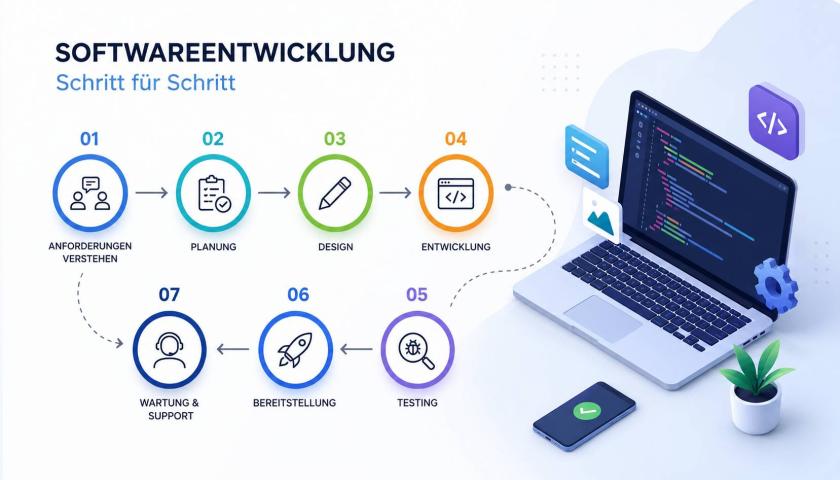
Skipping the discovery phase. Rushing straight into development without a structured discovery and planning phase is one of the most expensive shortcuts a business can take. Discovery sessions align stakeholders, surface hidden requirements, and produce the architectural blueprint that guides the entire project.
Underinvesting in QA. Quality assurance is not optional, and treating it as a final checkbox rather than a continuous process introduces risk at every stage. Automated testing pipelines, user acceptance testing, and load testing should all be non-negotiable requirements.
Neglecting IP ownership. Before a single line of code is written, the ownership of all intellectual property must be explicitly defined in the contract. This includes source code, design assets, data models, and third-party integrations. Ambiguity here creates legal exposure that can be difficult and expensive to resolve.
Building a Partnership, Not Just a Transaction
The most successful software engagements are built on a foundation of mutual accountability. Vendors who function as true partners — who proactively flag risks, suggest optimizations, and invest in understanding your business goals — deliver measurably better outcomes than those who simply execute tickets.
To foster this kind of relationship, business leaders should invest time in onboarding their development partner properly. Share your business model, your competitive landscape, your customer personas, and your long-term product roadmap. The more context a development team has, the better positioned they are to make decisions that align with your strategic objectives rather than just your immediate requirements.
Regular retrospectives — not just sprint reviews — create space for both sides to reflect on what's working and what needs to change. Teams that normalize honest feedback loops improve faster and build stronger working relationships over time.
The Role of Emerging Technologies in Custom Software
AI-assisted development, low-code platforms, and cloud-native architectures are reshaping what's possible and what's expected. By 2026, businesses that are not actively integrating intelligent automation into their software workflows are falling behind competitors who are.
This doesn't mean every company needs to build a large language model from scratch. It means understanding where AI-augmented features — recommendation engines, predictive analytics, intelligent search, automated customer support — can meaningfully improve your product experience. A forward-thinking development partner will help you identify these opportunities and build for them strategically, not reactively.
Making the Final Decision
Selecting a software development partner is an exercise in due diligence, strategic alignment, and trust. Technical credentials matter, but so does cultural fit, communication >
Start with a small, well-defined engagement — a proof of concept, a single module, or a technical audit — before committing to a full build. This lets both sides assess working dynamics with limited risk and creates a concrete baseline for evaluating quality before scaling the relationship.
The companies that build the best digital products in 2026 are not necessarily those with the biggest budgets. They're the ones who treat software development as a strategic capability, choose their partners with rigor, and build long-term relationships with teams who are invested in their success.