Introduction
Understanding road tax is an
essential part of owning a vehicle in Uttar Pradesh. Whether you are purchasing
a new car, transferring ownership, or relocating from another state, compliance
with up
road tax rules ensures
smooth vehicle registration and avoids legal complications. In 2026, with
enhanced digital systems and stricter enforcement, staying updated on road tax
rates and regulations has become more important than ever.
This comprehensive guide covers
everything you need to know about UP road tax, including calculation methods,
applicable rates, payment processes, and its connection to motor insurance.
What
Is UP Road Tax?
UP road tax is a mandatory fee
imposed by the state government on vehicle owners for using public roads. It is
collected at the time of vehicle registration and contributes to the
development and maintenance of road infrastructure.
This tax applies to:
- Private vehicles (cars, bikes, SUVs)
- Commercial vehicles (buses, trucks, taxis)
- Transport and non-transport vehicles
Without paying road tax, a vehicle
cannot be legally registered or driven in Uttar Pradesh.
Why
UP Road Tax Is Important
Paying road tax is not just a legal
formality—it plays a crucial role in:
- Ensuring lawful vehicle ownership
- Supporting infrastructure development
- Avoiding penalties and fines
- Enabling valid motor insurance coverage
- Facilitating hassle-free resale or transfer
Non-payment or delay can lead to
legal issues, including fines and complications during insurance claims.
UP
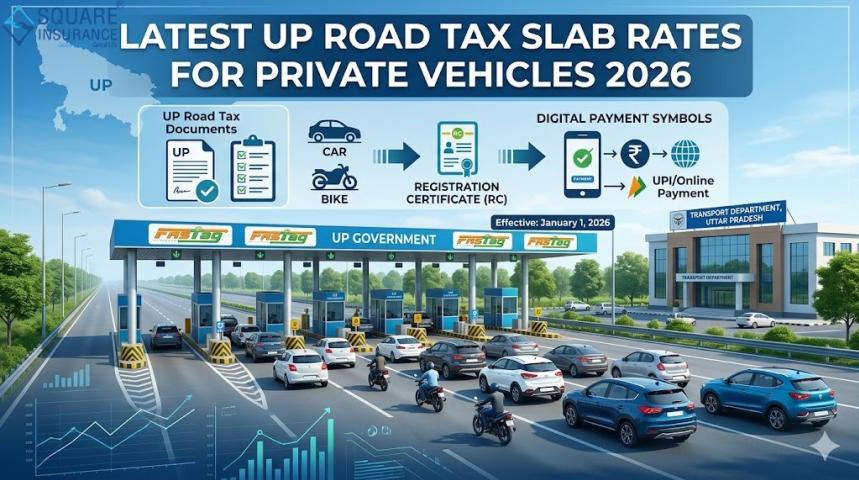
Road Tax Rates in 2026
Road tax rates in Uttar Pradesh vary
based on several factors, including vehicle type, cost, fuel type, and usage.
The tax is typically calculated as a percentage of the vehicle’s ex-showroom
price.
For
Private Vehicles (Non-Transport)
- Up to ₹10 lakh: Approximately 6% – 8%
- ₹10 lakh to ₹20 lakh: Around 8% – 10%
- Above ₹20 lakh: Up to 10% or more
For
Two-Wheelers
- Lower engine capacity bikes: Around 6%
- Higher-end bikes: Up to 8%
For
Electric Vehicles (EVs)
To promote eco-friendly transportation,
many EVs enjoy:
- Partial or full road tax exemptions
- Reduced registration fees
For
Commercial Vehicles
Tax is calculated based on:
- Seating capacity (for buses)
- Load capacity (for trucks)
- Permit type and usage
These rates may be revised periodically,
so vehicle owners should verify current charges during registration.
How
UP Road Tax Is Calculated
The calculation of road tax in Uttar
Pradesh depends on multiple variables:
- Ex-showroom price of the vehicle
- Type of vehicle (private or commercial)
- Fuel type (petrol, diesel, electric)
- Seating or load capacity (for commercial vehicles)
- Age of the vehicle (for re-registration cases)
Example:
If you purchase a car worth ₹10 lakh
and the applicable tax rate is 8%, your road tax would be ₹80,000.
This amount is typically paid as a one-time fee for private vehicles.
How
to Pay UP Road Tax
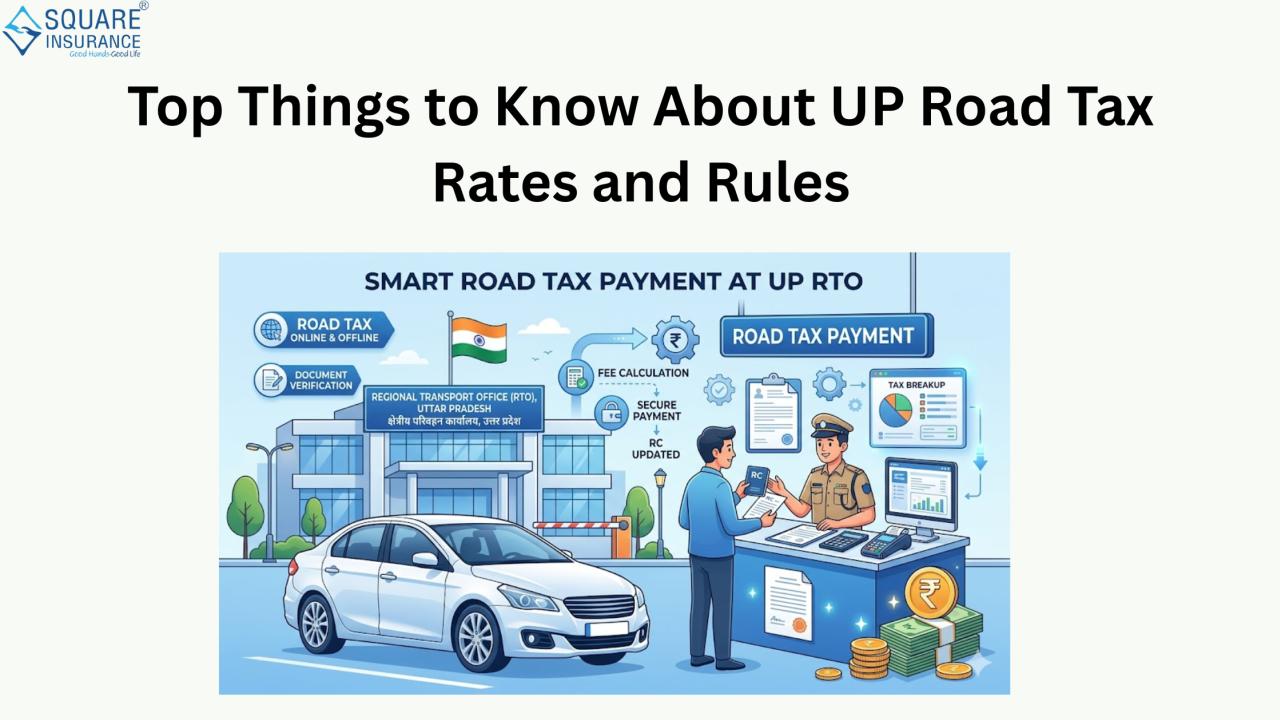
With digital transformation, paying
road tax in Uttar Pradesh has become easier and more convenient.
Online
Payment Process:
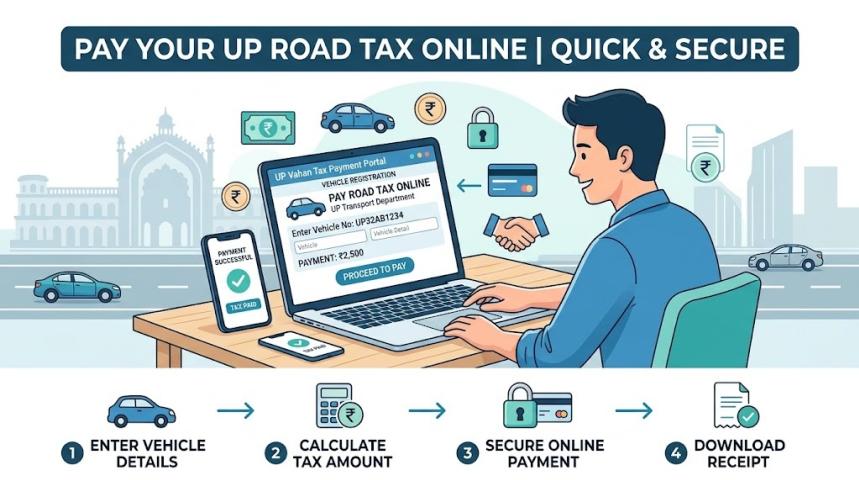
- Visit the official transport portal
- Enter vehicle details or chassis number
- Calculate applicable tax
- Make payment using digital methods
- Download receipt for records
Offline
Payment Process:
- Visit the Regional Transport Office (RTO)
- Submit required documents
- Pay tax at the counter
- Collect payment acknowledgment
Online payment is recommended for
faster processing and transparency.
Documents
Required for Road Tax Payment
To pay road tax in Uttar Pradesh,
you typically need:
- Vehicle invoice
- Identity proof
- Address proof
- Insurance certificate
- Temporary registration details (for new vehicles)
- Form 20 (application for registration)
Ensuring accurate documentation
helps avoid delays in registration.
Penalty
for Non-Payment of UP Road Tax
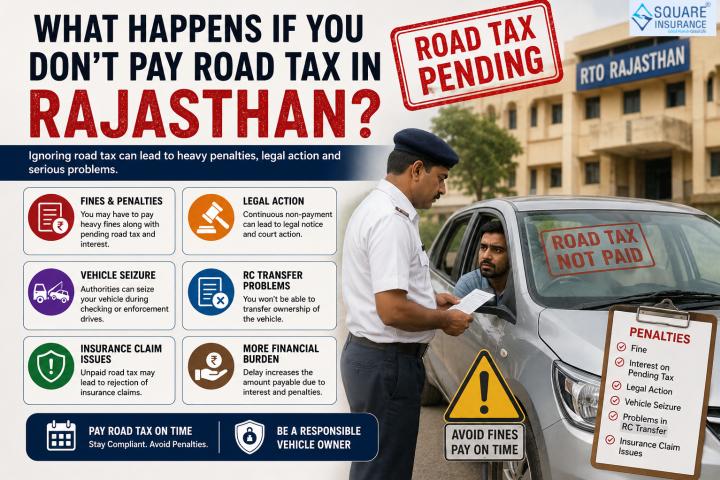
Failure to pay road tax can lead to
serious consequences:
- Monetary fines and penalties
- Interest on delayed payments
- Vehicle seizure in extreme cases
- Legal action under the Motor Vehicles Act
Additionally, unpaid road tax can
affect vehicle resale and transfer processes.
Road
Tax and Motor Insurance Connection
Road tax and motor insurance go hand
in hand when it comes to legal vehicle ownership.
1.
Mandatory for Registration
You cannot complete vehicle
registration without:
- Valid road tax payment
- Active motor insurance policy
2.
Impact on Insurance Claims
In case of an accident:
- Insurance claims may be rejected if the vehicle is not
legally registered
- Unpaid road tax can create compliance issues
3.
Policy Issuance
Insurance companies require:
- Vehicle registration details
- Proof of tax payment
This makes timely road tax payment
essential for uninterrupted insurance coverage.
Road
Tax for Transferred Vehicles
If you bring a vehicle from another
state to Uttar Pradesh:
- You must re-register the vehicle in UP
- Pay applicable road tax based on vehicle age and value
- Apply for a refund from the previous state (if
eligible)
This ensures compliance with
state-specific regulations.
Exemptions
and Concessions
Certain categories of vehicles may
be eligible for road tax benefits:
- Electric vehicles (EVs)
- Government vehicles
- Vehicles used for agricultural purposes
- Special categories (depending on state policies)
These exemptions aim to promote
sustainability and support specific sectors.
Common
Mistakes to Avoid
Vehicle owners should be careful to
avoid:
- Delaying road tax payment
- Entering incorrect vehicle details
- Ignoring updated tax rates
- Not keeping payment receipts
- Failing to re-register out-of-state vehicles
Being proactive can help prevent
unnecessary penalties and complications.
Why
Staying Updated Matters
With the increasing use of digital
systems and stricter traffic enforcement in 2026, authorities can easily track
compliance. Staying informed about UP road tax rules ensures:
- Smooth vehicle registration
- Legal protection
- Hassle-free insurance claims
- Better resale value
Timely compliance not only saves
money but also avoids legal stress.
Conclusion
UP road tax is a vital component of
vehicle ownership that ensures legal compliance and supports infrastructure
development. From understanding applicable rates to completing timely payments,
every step plays a crucial role in maintaining your vehicle’s legal status.
In 2026, with enhanced digital
systems and stricter enforcement, vehicle owners must be more vigilant than
ever. Along with road tax compliance, securing the right motor insurance is
equally important to protect your financial interests. Square Insurance can
assist you in choosing suitable insurance coverage, ensuring your vehicle
remains protected and compliant at every stage of ownership.
FAQ
1.
Is UP road tax a one-time payment?
Yes, for private vehicles, road tax
is usually paid as a one-time fee during registration.
2.
How is UP road tax calculated?
It is calculated based on the
vehicle’s ex-showroom price, type, and usage.
3.
Can I pay UP road tax online?
Yes, road tax can be paid online
through the state transport portal.
4.
What happens if I don’t pay road tax?
You may face fines, penalties, or
even vehicle seizure in severe cases.
5.
Are electric vehicles exempt from road tax in UP?
Many electric vehicles receive
partial or full exemptions, depending on government policies.
6.
Do I need to pay road tax again if I move to UP from another state?
Yes, you must re-register your
vehicle and pay applicable road tax in Uttar Pradesh.