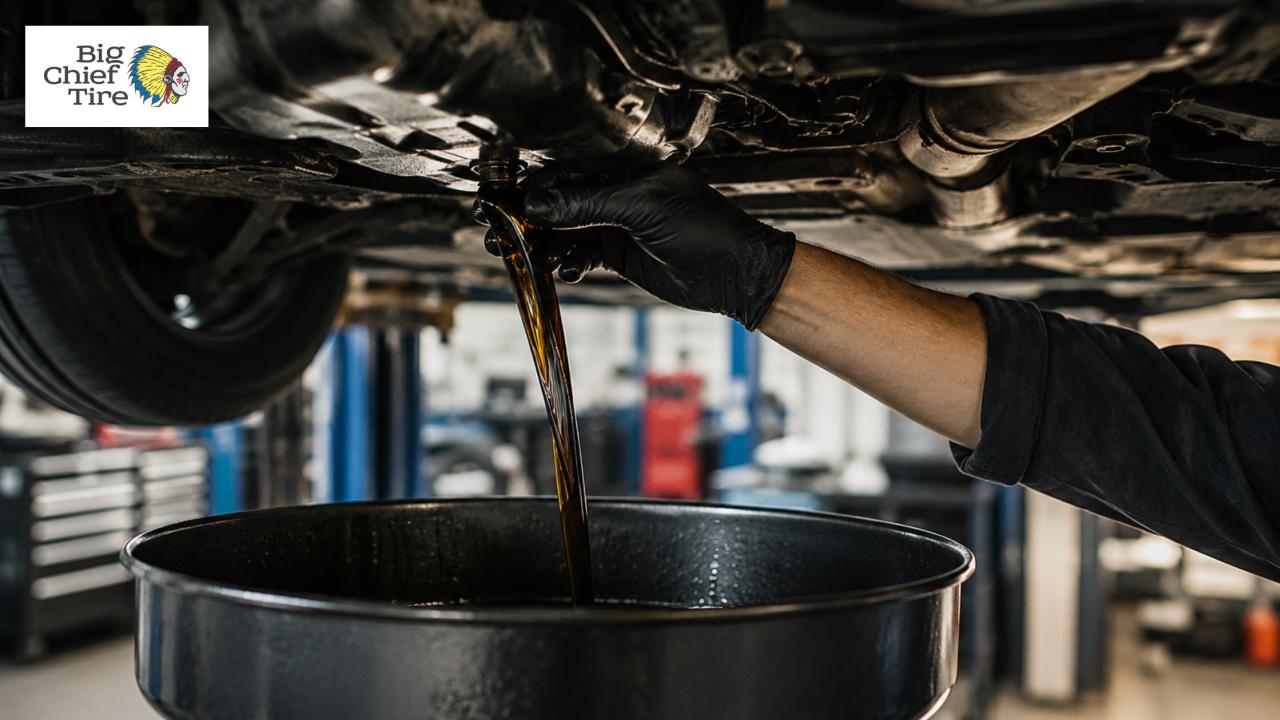
Fresh oil change done. Feeling good about it. Then maybe two, three days later, that dipstick gets pulled out again out of curiosity, and the oil already looks like it belongs in a used engine.
Dark, almost black. The kind of color that makes a person stare at it for a solid ten seconds, wondering if something just went terribly wrong.
Nobody wants to pay for an oil change service and then feel like something went wrong days later when the oil already looks used. It feels like something broke. Like the money was wasted. Like the engine is quietly suffering.
But here is the thing in most cases, it did not break. The oil is just doing its job, and doing it well. Understanding why that color changes so fast is the difference between unnecessary panic and actually knowing what to watch out for.
What Oil Color Is Really Telling
Motor oil is not just a slippery liquid that keeps metal from grinding against metal. Every combustion cycle produces soot, carbon particles, and tiny metal fragments shed by moving components.
If those contaminants were left to float freely, they would eventually coat engine surfaces, clog oil passages, and cause the kind of damage that makes repair bills look like a second mortgage.
Oil prevents that. The additive package inside every bottle of motor oil contains detergents and dispersants that actively grab those particles and hold them in suspension. The oil collects and carries this debris to the filter.
That black color is not always a sign of failure. Often, it is a sign of chemistry doing exactly what it was designed to do.
The Real Reasons Oil Turns Black So Fast
Soot and Combustion Byproducts
Every engine produces soot, even clean, modern ones. No internal combustion engine burns fuel with perfect efficiency on every single cycle.
Microscopic carbon particles from incomplete combustion slip past the piston rings and enter the crankcase, where they immediately get absorbed by the oil.
The dispersants latch onto those particles and suspend them, which progressively deepens the color of the oil. This happens in every engine, and it is completely normal.
Turbochargers and Direct Injection Engines
Modern turbocharged and direct injection engines are harder on oil than older, simpler designs. Turbos spin at staggering speeds and generate extreme heat, which accelerates oil oxidation.
The oil molecules themselves begin to break down faster under that thermal load, darkening the oil more quickly than a naturally aspirated engine would.
Direct injection engines have their own quirk. During cold starts and short trips, small amounts of fuel can wash down the cylinder walls and sneak past the piston rings into the crankcase. This fuel dilution breaks down the additive package at an accelerated rate.
For these engine types, sticking to the manufacturer-recommended vehicle oil change schedule, not stretching it, is genuinely important, not just cautious advice.
Short Trips and Incomplete Warm-Up
Short trips are an engine’s least favorite kind of driving, especially quick errands around the block. When an engine never fully reaches operating temperature, moisture from normal combustion stays trapped in the crankcase instead of evaporating out.
That moisture mixes into the oil, promotes oxidation, and gives the detergents extra work to do. The result is oil that darkens faster than it would in an engine that regularly reaches full operating temperature and stays there.
High-Detergent Oil Formulations
Some synthetic oils are blended with especially aggressive detergent packages, designed to clean up deposit-prone engines or strip away carbon buildup left behind by previous oil.
When this kind of oil goes into an engine with existing deposits, it gets to work immediately, pulling grime off cylinder walls, oil galleries, and valve train components. The oil darkens fast because it is carrying away months or years of accumulated buildup.
The Oil Filter's Role
A clean oil filter is often the unsung hero of engine longevity. The filter catches the particles that the oil has suspended, pulling them out of circulation before they can recirculate and cause wear.
When a filter is overdue for replacement or insufficient for the application, those captured particles get pushed back through the engine, increasing contamination levels and speeding up oil darkening considerably.
Skipping the oil filter is like washing clothes in a dirty machine.
The PCV System: Small Part, Big Impact
The positive crankcase ventilation (PCV) system plays an important role in engine lubrication health. Its job is to route blow-by gases out of the crankcase and back into the intake manifold, where they get burned off during the next combustion cycle.
When the PCV valve sticks or the hoses clog, those gases stay in the crankcase. The result is elevated crankcase pressure, more soot and vapor contaminating the oil, and accelerated oil sludge formation over time.
A stuck PCV valve can also push oil past seals and gaskets, creating leaks. The fix is simple and cheap; a quick inspection at every service visit goes a long way.
When Dark Oil Stops Being Normal
Dark oil by itself does not mean trouble. Dark oil combined with other symptoms is a different story entirely. Here is what to watch for:
• Thick, tar-like texture on the dipstick — this points to oil sludge from overdue changes or overheating
• A noticeable fuel smell when checking the oil — this signals engine oil contamination from fuel dilution, often caused by misfires or stuck injectors
• A milky, foamy, or chocolate-brown color — this is not normal darkening. This is coolant mixing with oil, which usually means a head gasket failure. Stop driving immediately
• Oil level that is rising on its own — fuel or coolant is entering the crankcase from the inside
• Ticking or knocking at startup alongside very dark oil — the additive package may be so depleted that the oil is no longer protecting surfaces properly
Any of those signs warrants an inspection before the engine is driven further. The longer those conditions are ignored, the more expensive the outcome tends to get.
Simple Habits That Keep Oil Healthier Longer
Not every solution requires a mechanic or a product upgrade. Some of the most effective ways to slow oil darkening come down to how a vehicle gets driven and maintained day to day:
• Take at least one longer drive weekly — 20 to 30 minutes of steady driving brings the engine to full temperature and lets moisture evaporate from the crankcase
• Fix misfires quickly — unburned fuel entering the crankcase is one of the fastest ways to degrade oil and push the additive package past its limits
• Always use the viscosity and specification listed in the owner's manual — the wrong oil spec makes the additive package work harder than it should
• Keep the air filter on a regular replacement schedule — a clogged air filter causes rich fuel mixtures, which means more combustion byproducts end up in the oil
• Do not skip the filter — every vehicle oil change should include a fresh, clean oil filter, not just new oil poured into an old, saturated one
• Inspect the PCV valve and hoses at each service — takes minutes, prevents bigger problems
The Smartest Oil Change Service Is the One Done Before a Problem Starts
If the oil went dark within a few days but the engine runs smoothly, the level is holding steady, and there are no warning lights or strange sounds to relax. That is an engine with an active additive package working in real driving conditions. Dark oil in a healthy, well-maintained engine is normal.
If the darkening comes with smell, texture changes, level shifts, or unusual engine behavior, that is the engine asking for attention, and it deserves to get it sooner rather than later.
The best approach is simple: consistent maintenance.
Staying on top of oil changes at the right interval, keeping the filter fresh, monitoring the PCV system, and addressing small issues before they grow, these habits cost very little compared to what they prevent.
Preventative maintenance is not just about avoiding breakdowns. It is about keeping an engine in the kind of shape where it runs confidently for years, long past the point where a neglected engine would have given up.
Dark oil is not the enemy. Ignoring the full picture is.