Modern enterprise networks are no longer simple infrastructures built around basic routing and switching. They have evolved into complex, software-driven ecosystems that integrate cloud platforms, cybersecurity frameworks, SD-WAN, and large-scale automation systems. As organizations expand globally and rely more on digital operations, the demand for highly skilled network engineers continues to grow.
In this environment, CCIE EI Training in Bangalore has become a preferred learning path for professionals who want to build advanced expertise in enterprise networking, infrastructure design, and network automation.
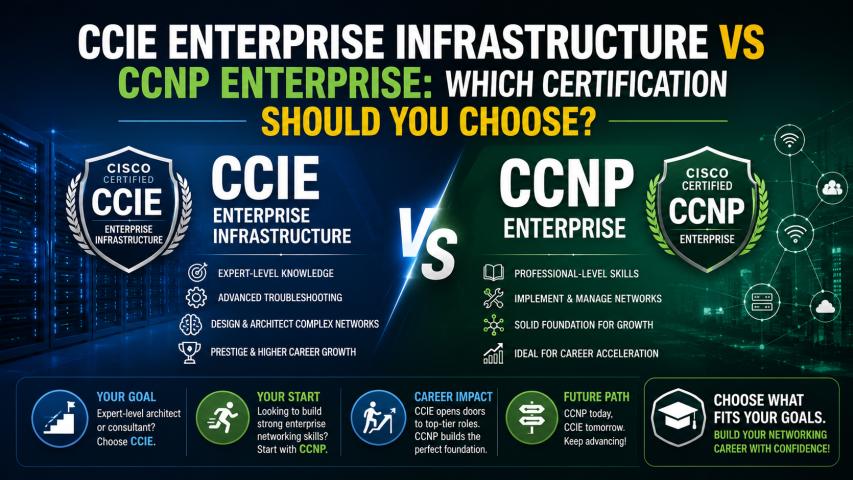
CCIE Enterprise Infrastructure (EI) focuses on transforming network engineers into architects who can design, optimize, and automate large-scale enterprise systems rather than just configure individual devices.
Understanding the Purpose of CCIE EI Training in Modern Networking
CCIE EI Training is designed for professionals who want to move beyond operational networking tasks and develop expert-level design and automation capabilities.
Unlike entry-level certifications, CCIE EI focuses on how entire enterprise networks function as unified, intelligent systems.
Why CCIE EI Skills Are Important Today
Modern enterprises require engineers who can manage:
Large-scale distributed networks
Hybrid and multi-cloud environments
SD-WAN-based connectivity systems
Automated infrastructure operations
High-performance enterprise applications
This makes CCIE EI a critical certification for long-term career growth in networking and infrastructure domains.
Advanced Networking Skills Developed in CCIE EI Training
CCIE EI Training builds deep technical expertise in enterprise networking concepts that are essential for real-world infrastructure environments.
Enterprise Routing and Switching Expertise
Engineers develop strong knowledge in:
Advanced routing protocols such as OSPF and BGP
Route optimization and convergence strategies
VLAN design and segmentation techniques
High availability and redundancy planning
These skills help in building stable and scalable enterprise networks.
Enterprise Network Design Thinking
A key shift in CCIE EI Training is moving from device-level configuration to system-level design thinking.
Engineers learn how to:
Design complete enterprise network architectures
Plan for scalability and long-term growth
Optimize traffic across multiple sites
Build resilient infrastructure systems
This architectural mindset is essential for senior networking roles.
How CCIE EI Training Builds Automation Skills
Automation is one of the most critical components of modern networking, and CCIE EI Training integrates it throughout the learning process.
Why Automation Is Essential
Manual configuration is no longer efficient for modern enterprise networks. Automation helps organizations:
Reduce configuration errors
Accelerate network deployments
Maintain consistency across systems
Improve scalability and operational efficiency
Automation Technologies Covered in CCIE EI
CCIE EI Training introduces engineers to key automation tools and concepts such as:
Python-based network scripting
REST APIs for device communication
JSON and YAML data handling
Controller-based network management
Infrastructure-as-code principles
These skills enable engineers to manage complex networks programmatically and efficiently.
SD-WAN and Its Importance in CCIE EI Training
SD-WAN is a major component of modern enterprise networking, and CCIE EI Training provides deep exposure to its architecture and implementation.
Core SD-WAN Concepts
Engineers learn about:
Application-aware routing techniques
Centralized network control systems
Dynamic path selection mechanisms
Secure branch connectivity models
Why SD-WAN Skills Matter
SD-WAN helps organizations:
Improve application performance
Reduce WAN operational costs
Simplify branch connectivity
Enhance network flexibility and scalability
These capabilities are essential in modern distributed enterprises.
Wireless Networking in Enterprise Environments
Wireless networking plays a crucial role in modern workplaces, and CCIE EI Training covers enterprise wireless design in detail.
Wireless Skills Developed
Engineers gain expertise in:
Wireless network planning and design
Access point deployment strategies
Performance tuning and optimization
Secure wireless access configuration
Wireless infrastructure is critical for supporting mobile and hybrid work environments.
Integration of Security Concepts in CCIE EI Training
Although CCIE EI focuses on infrastructure, security integration is a key part of modern network design.
Why Security Integration Is Important
Today’s networks face threats targeting:
Cloud-based applications
Remote access systems
Enterprise data flows
Distributed infrastructure systems
Security Awareness in CCIE EI
Engineers are trained to:
Design secure network architectures
Implement segmentation strategies
Enforce access control policies
Reduce network vulnerability exposure
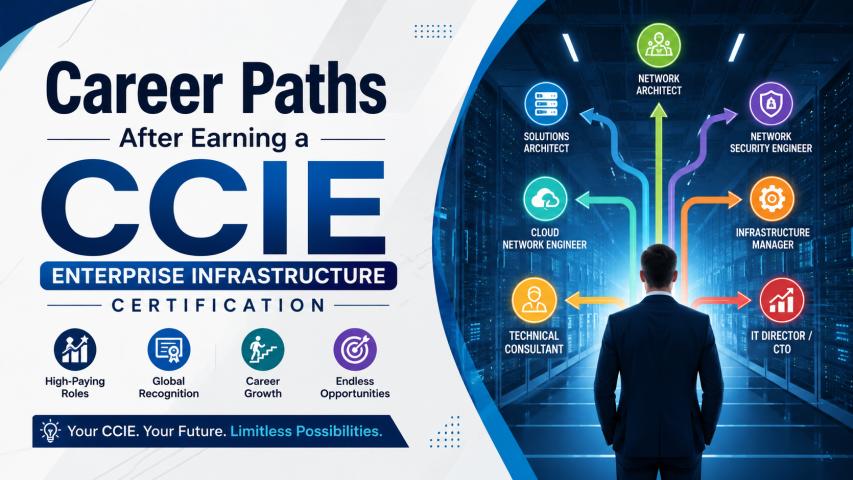
Career Opportunities After CCIE EI Training
CCIE EI certification opens doors to advanced and high-paying career roles in enterprise networking.
Common Job Roles
Professionals can work as:
Enterprise Network Architect
SD-WAN Engineer
Network Automation Specialist
Infrastructure Consultant
Senior Network Engineer
Industries Hiring CCIE EI Professionals
Demand is strong across:
IT services companies
Banking and financial institutions
Telecommunications providers
Healthcare organizations
Cloud service providers
Problem-Solving Skills Developed in CCIE EI Training
CCIE EI Training strongly focuses on real-world troubleshooting and analytical thinking.
Practical Scenarios Covered
Engineers learn to handle:
Large-scale network outages
Routing convergence failures
Performance bottlenecks
Complex configuration conflicts
Analytical Thinking Development
Training improves:
System-level troubleshooting skills
Logical network analysis
Decision-making under pressure
Network optimization strategies
Role of Cloud Technologies in CCIE EI Training
Cloud computing has significantly transformed enterprise networking, and CCIE EI Training reflects this evolution.
Cloud Integration Skills
Engineers learn to:
Connect enterprise networks with cloud platforms
Manage hybrid and multi-cloud environments
Optimize cloud-to-on-prem traffic flow
Ensure secure cloud connectivity
Cloud knowledge is now essential for modern networking professionals.
Why CCIE EI Is an Expert-Level Certification
CCIE EI is considered an expert-level certification because of its depth and real-world complexity.
Key Characteristics
Professionals are expected to demonstrate:
Strong architectural design skills
Advanced troubleshooting capability
Automation and programmability knowledge
Deep understanding of enterprise systems
This makes CCIE EI one of the most respected certifications in the networking industry.
Future Scope of CCIE EI Skills
Networking continues to evolve with automation, AI, and cloud-native technologies shaping the future.
Emerging Trends
AI-driven network optimization
Intent-based networking systems
Fully automated enterprise infrastructures
Cloud-first architecture models
Future Expectations
Engineers will be required to:
Design self-healing networks
Work with programmable infrastructure
Integrate AI-based monitoring systems
Build adaptive and scalable networks
Conclusion
CCIE EI Training plays a crucial role in shaping advanced networking professionals capable of designing, managing, and automating complex enterprise infrastructures. It strengthens core networking fundamentals while also developing automation expertise and architectural thinking required in modern IT environments.
As organizations continue to adopt cloud technologies, SD-WAN, and intelligent automation systems, professionals with CCIE EI expertise will remain highly valuable across industries.
CCIE EI Training in Bangalore continues to be a strong pathway for engineers aiming to build long-term careers in enterprise networking, infrastructure design, and network automation.